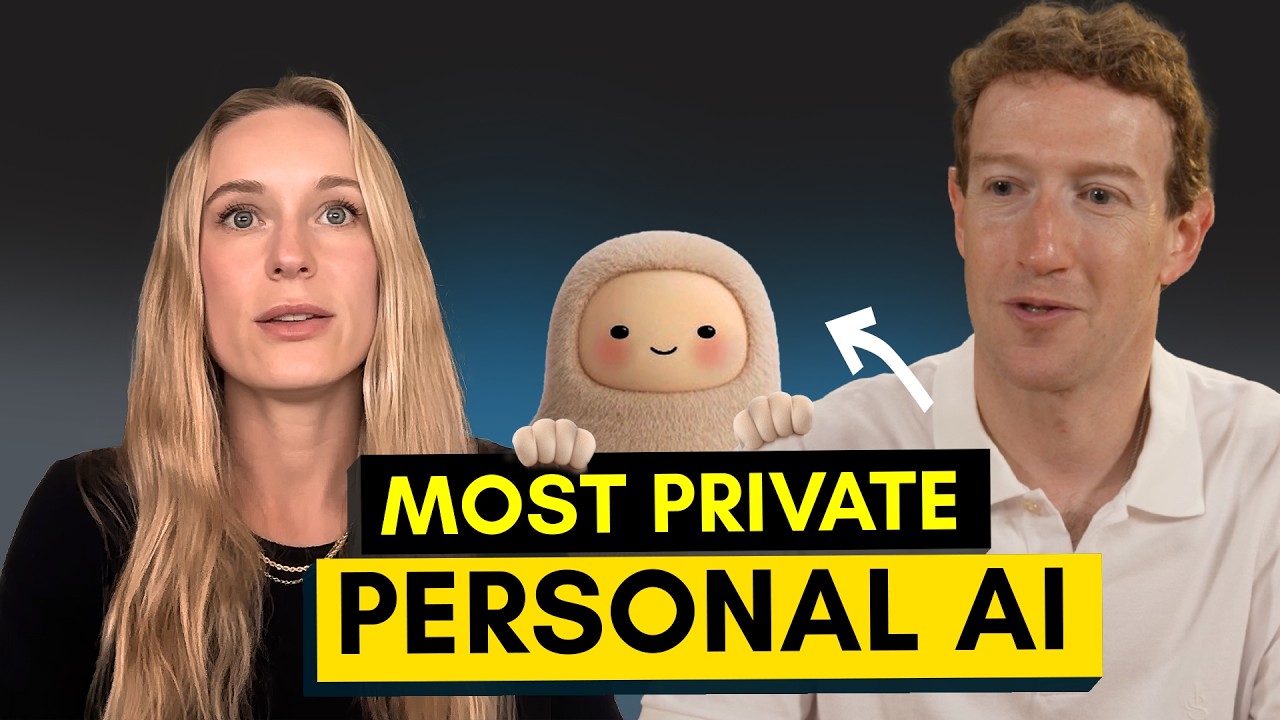
Mark Zuckerberg discusses Meta’s new personal AI agent called Muse, emphasizing its uniqueness and the company’s commitment to privacy and security. Muse operates on a confidential virtual machine architecture, ensuring that even Meta cannot access the content users input into their agents. This design prioritizes user trust by incorporating end-to-end encryption principles and a secure credential store, allowing users to maintain control over sensitive information like passwords and payment details. Additionally, a sentinel agent monitors the main agent’s actions to keep users informed and involved in key decisions, balancing autonomy with oversight.
Zuckerberg shares personal examples of how he uses Muse in his daily life, highlighting its ability to manage complex, personalized tasks. From organizing baking projects with his young daughter to planning multi-week robot-building activities and coordinating mountain climbing permits, Muse helps streamline family activities. He also uses it for health and fitness, integrating data from devices like his Oura ring and even analyzing his MMA training sessions through gym cameras to provide feedback. These examples illustrate Muse’s capacity to handle diverse and meaningful aspects of users’ lives, making it a valuable assistant.
The AI agent is designed to be accessible and affordable, with Meta providing a substantial amount of free compute power to users. Zuckerberg envisions Muse as a tool that can democratize access to advanced AI, enabling billions to benefit from personal superintelligence. He foresees Muse reducing the time people spend on mundane tasks, allowing them to focus more on meaningful activities like spending time with loved ones, pursuing hobbies, and creative endeavors. The system also includes an ideas feed that proactively suggests personalized projects and improvements, fostering creativity and inspiration.
Security and user control are central to Muse’s design, with strict protocols governing when the agent can act autonomously versus when it must seek user permission. For example, new transactions or access to new services require explicit approval. Payment processes utilize virtual credit card numbers to protect users’ real financial information, enhancing privacy during online transactions. The agent also manages long-term memory by compacting daily activities into relevant memories while securely storing sensitive credentials separately, ensuring efficient and secure data handling.
Looking ahead, Zuckerberg envisions Muse evolving to support more complex functions, such as running entire businesses autonomously and providing personalized health treatments. He highlights the potential for AI to address rare diseases by tailoring treatments to individual medical histories, a capability that could revolutionize healthcare. Ultimately, Muse aims to be an indispensable personal assistant that not only manages everyday tasks but also empowers users to achieve their goals and improve their quality of life through advanced, trustworthy AI technology.