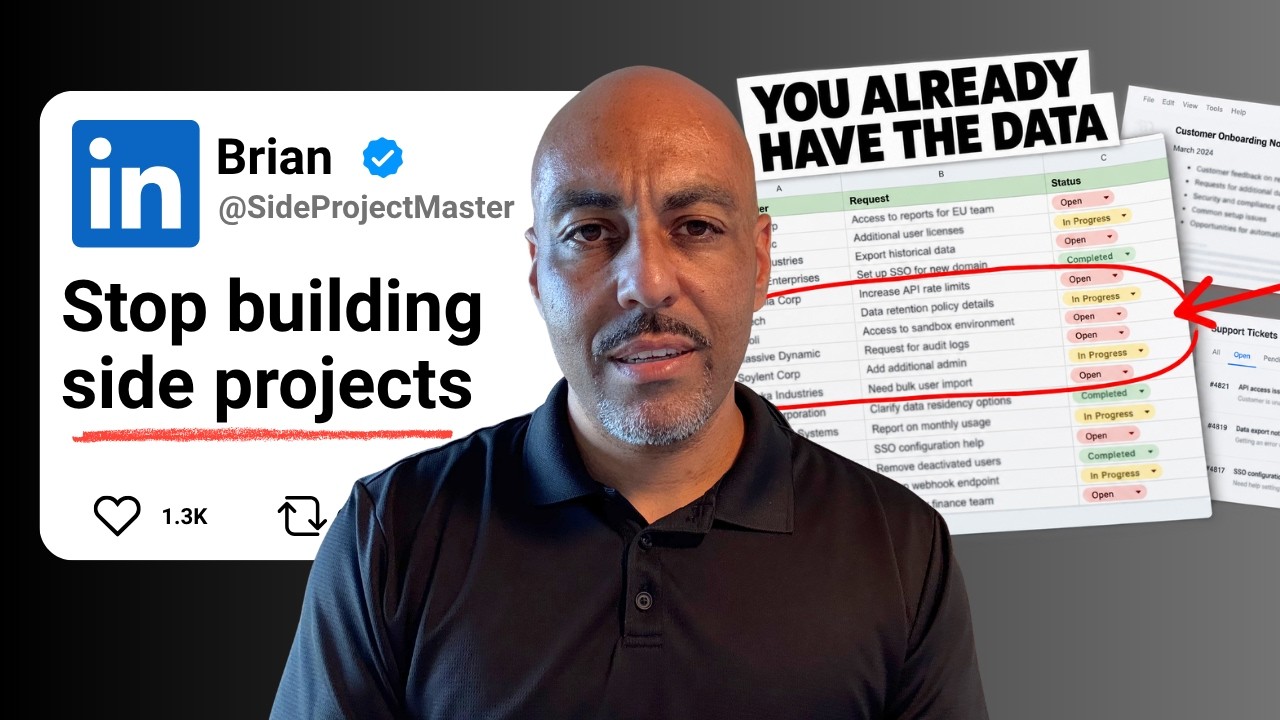
The speaker reflects on the career advice they’ve been giving developers about transitioning into AI engineering roles, acknowledging that while encouraging job switches and learning AI skills is not bad advice, it overlooks a more effective strategy: building AI projects within one’s current job. They emphasize that creating AI solutions at your existing company can be a powerful way to demonstrate value, gain relevant experience, and potentially earn an AI engineering title without needing formal permission or a job change. This approach offers a win-win scenario—either the project gets adopted by the company or it becomes a strong portfolio piece for future opportunities.
Drawing from personal experience, the speaker shares two examples where they successfully built AI projects at their workplaces. In one case, they developed an AI agent to autofill complex forms using existing user data, improving user experience and data quality. In another, they created a semantic search proof of concept for a company that lacked a product, which later evolved into a marketable solution. These examples highlight the practicality and impact of building AI projects aligned with company needs, often without requiring extensive approvals upfront.
The speaker outlines three valuable types of AI projects to consider: semantic search, extraction agents for complex forms, and support assistants. Semantic search helps users find information without exact keywords, ideal for e-commerce or data-heavy platforms. Extraction agents automate filling out complicated forms, enhancing user experience and potentially generating additional revenue. Support assistants, including chatbots or voice AI, can reduce customer service workload by answering common queries or routing requests efficiently. These projects are practical, impactful, and often feasible to prototype quickly.
To choose the right project, the speaker advises focusing on accessible data, identifying real pain points within the company, and ensuring the project can be demoed within a week. They recommend building a simple proof of concept and presenting it to key stakeholders without overwhelming them with technical jargon. If initial feedback is lukewarm, iterating or organizing a company hackathon to source ideas and build momentum can be effective. This approach not only fosters innovation but also positions the developer as a leader in the company’s AI strategy.
Finally, the speaker promotes an upcoming intensive one-day workshop designed to help developers build AI projects tailored to their jobs, covering tools like retrieval-augmented generation and AI agents with human oversight. They stress the value of internal projects for career growth and encourage companies to support such learning initiatives. Overall, the message is clear: building AI projects within your current role is a highly effective way to advance your career, create meaningful impact, and gain credibility as an AI engineer.
Useful Links