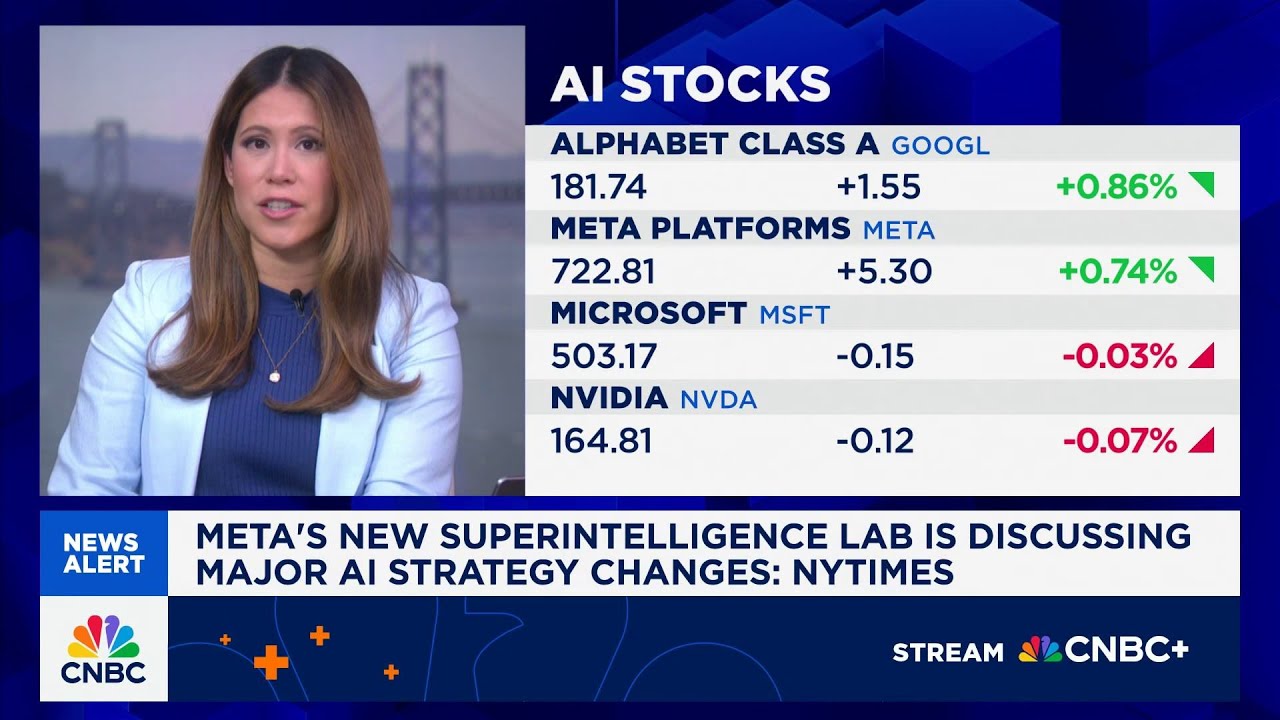
The video discusses the rapidly evolving landscape of AI talent acquisition and strategic shifts among major tech companies, focusing on recent developments involving Meta, Google, OpenAI, and other AI startups. It highlights the intense competition for top AI talent, often described as a “talent war,” where companies are not just acquiring firms but selectively hiring key individuals such as founders, CEOs, and lead engineers through what are termed “pseudo acqui-hires.” This approach leaves behind the original startup structures while absorbing critical expertise into larger organizations.
A significant recent event covered is the unexpected turn in the acquisition of Windsurf, an AI startup initially thought to be acquired by OpenAI for $3 billion. Instead, Google intervened late in the process, securing the CEO and several key developers for $2.4 billion. This move underscores the fluid and competitive nature of AI acquisitions, influenced by strategic concerns such as Windsurf’s reluctance to fully share technology with Microsoft, OpenAI’s partner, due to competitive overlaps in AI coding tools.
The discussion then shifts to a major strategic pivot reported by the New York Times regarding Meta’s new superintelligence lab. The lab is reportedly considering abandoning its most powerful open-source AI model, Behemoth, in favor of a more closed-source approach. This potential shift is significant because it touches on the broader open versus closed source debate in AI development. Meta had been a strong advocate for open source, which offers transparency, cost efficiency, and ecosystem control, but the competitive pressures and strategic considerations may be driving a move toward proprietary models.
This shift has broader implications for the global AI landscape. Open source models have been widely adopted internationally, including by Chinese AI labs, which continue to push forward aggressively with open-source AI development. If major U.S. players like Meta move away from open source, it could signal a strategic retreat in this domain, potentially ceding leadership in open AI innovation to other countries. The balance between open and closed source approaches also affects how AI ecosystems develop and who controls the technology’s future.
Finally, the video touches on the motivations driving AI talent and development trajectories. While monetization is more straightforward with closed-source models through enterprise APIs and direct customer charges, open source offers long-term ecosystem ownership and innovation potential. The “mission” to achieve superintelligence or artificial general intelligence (AGI) remains a powerful draw for top researchers, with companies like Meta promising unprecedented compute power to support this goal. This mission-driven focus may influence where talent chooses to work, shaping the future of AI research and development globally.