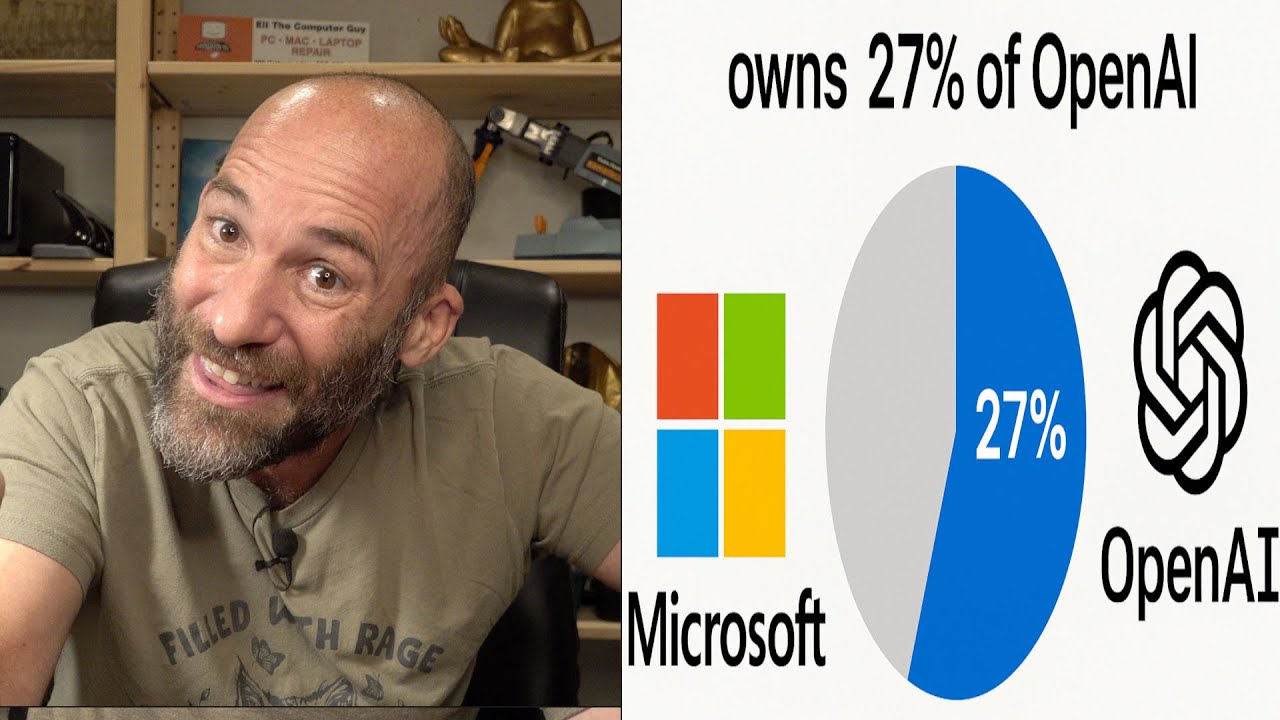
In this video, Eli the Computer Guy discusses the complex and somewhat chaotic financial relationships surrounding OpenAI and its major partners, particularly Microsoft. He highlights how OpenAI transitioned from a nonprofit to a for-profit public benefit corporation to access the massive resources required for AI development. As part of this shift, Microsoft now owns a 27% stake in OpenAI, a company valued at roughly $135 billion. This deal also changes previous agreements, such as Microsoft losing the right of first refusal to be OpenAI’s exclusive cloud provider, although OpenAI has still contracted $250 billion worth of Azure services from Microsoft.
Eli points out the intricate and almost circular financial dealings between big tech companies involved in AI. For example, OpenAI buys hardware from Nvidia, which in turn loans money to OpenAI, and OpenAI purchases massive data services from Oracle. These companies are essentially selling services to each other in a loop, creating what Eli calls a “financial orgy.” He questions the sustainability and sanity of this arrangement, suggesting that much of the money is being recycled within the tech ecosystem rather than being invested in genuinely innovative products.
The video also delves into the implications of Microsoft’s stake and control over OpenAI’s API services. Since OpenAI’s API services must now run through Microsoft’s Azure cloud, this raises concerns about data privacy and risk tolerance for companies using these services. Organizations must consider not only their trust in OpenAI but also in Microsoft, especially given geopolitical concerns and potential government access to data. This layered dependency complicates the security and privacy landscape for AI users and developers.
Eli critiques the current AI business model, emphasizing that while OpenAI has hundreds of millions of users, only a small fraction pay for the service, and even those paying customers do not cover the company’s costs. He compares this to a pizza restaurant giving away most of its product for free to gain popularity, questioning whether this model is truly sustainable or just a bubble inflated by investor money. He expresses skepticism about the hype around AI, noting that many AI outputs are often inaccurate and that users might prefer traditional, reliable services over AI-driven ones.
Finally, Eli invites viewers to reflect on the broader implications of these developments, including the massive contracts between OpenAI and cloud providers like Microsoft and Oracle, and the potential limits on Microsoft’s ability to pursue artificial general intelligence (AGI) independently. He encourages discussion about the future of AI, the role of big tech companies, and the real value being created amid this complex financial web. Throughout, he maintains a critical and somewhat humorous tone, urging viewers to share their thoughts and engage with his ongoing technology education efforts.