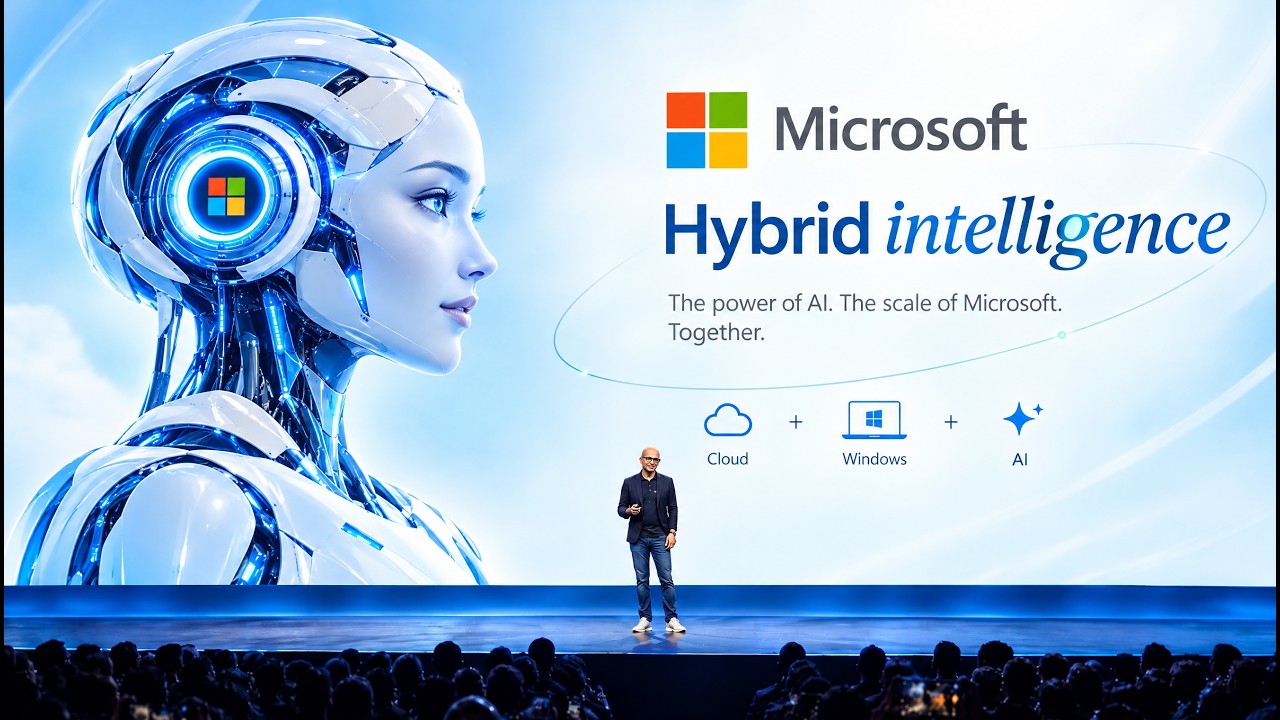
Microsoft has unveiled a transformative vision for personal computing centered around “hybrid intelligence,” which seamlessly integrates AI processing between local devices and the cloud. At a recent Windows and Surface event, Microsoft introduced Windows for hybrid intelligence, where AI agents can run locally on a PC or reach out to the cloud as needed, with Windows managing this balance securely and efficiently. This approach aims to eliminate the user’s need to consider where AI computations occur, creating a unified and seamless experience akin to the evolution from terminals to modern web browsers.
A key driver behind this hybrid model is cost efficiency. AI operations consume tokens that translate into expenses, especially as AI agents perform complex, continuous tasks involving numerous decisions and tool calls. By running simpler, frequent tasks locally on a device’s chip, Microsoft effectively offers “free” token usage, reducing costs significantly. This strategy also enhances privacy, reduces latency, and supports offline functionality, which is crucial for businesses handling sensitive data. Microsoft’s Copilot Plus PCs already leverage this model, performing trillions of local inferences monthly across various applications.
Copilot, Microsoft’s AI assistant, has been enhanced to utilize this hybrid intelligence fully. It can now access local files and context, perform actions directly on the PC, and use local AI models alongside cloud-based ones. This enables Copilot to manage workflows autonomously, such as organizing files and drafting emails based on user requests. However, granting AI agents such deep access raises security concerns, which Microsoft addresses with a new security framework called Microsoft Execution Containers (MXC). MXC provides dynamic, fine-grained control over what agents can access and do, coupled with distinct identities for each agent to ensure accountability and observability.
The hardware foundation for this new era is a powerful collaboration between Microsoft and Nvidia. Nvidia’s RTX Spark chip, combining advanced GPU and CPU capabilities with massive AI performance, enables running large AI models locally on devices like the new Surface Laptop Ultra. This chip brings supercomputer-level AI power into a thin, portable laptop form factor. Complementing this, Microsoft has developed compressed, efficient AI models like MAI code 1.1 Flash that maintain high performance while fitting on local hardware. Together, these advances allow AI workloads to be distributed intelligently between local and cloud resources.
Finally, Microsoft introduced Decision 1, a specialized AI model designed solely for fast, accurate decision-making to route tasks efficiently between local and cloud models. This model dramatically speeds up workflows and reduces costs by handling the myriad small decisions AI agents make. The broader implications of AI agents acting autonomously raise questions about responsibility and trust. Microsoft emphasizes containment, identity, and monitoring as essential safeguards, suggesting that insurance and marketplace mechanisms may evolve to manage risks. While these innovations are rolling out gradually and require powerful hardware, they signal a fundamental shift in how personal computing and AI will coexist in the future.
Useful Links