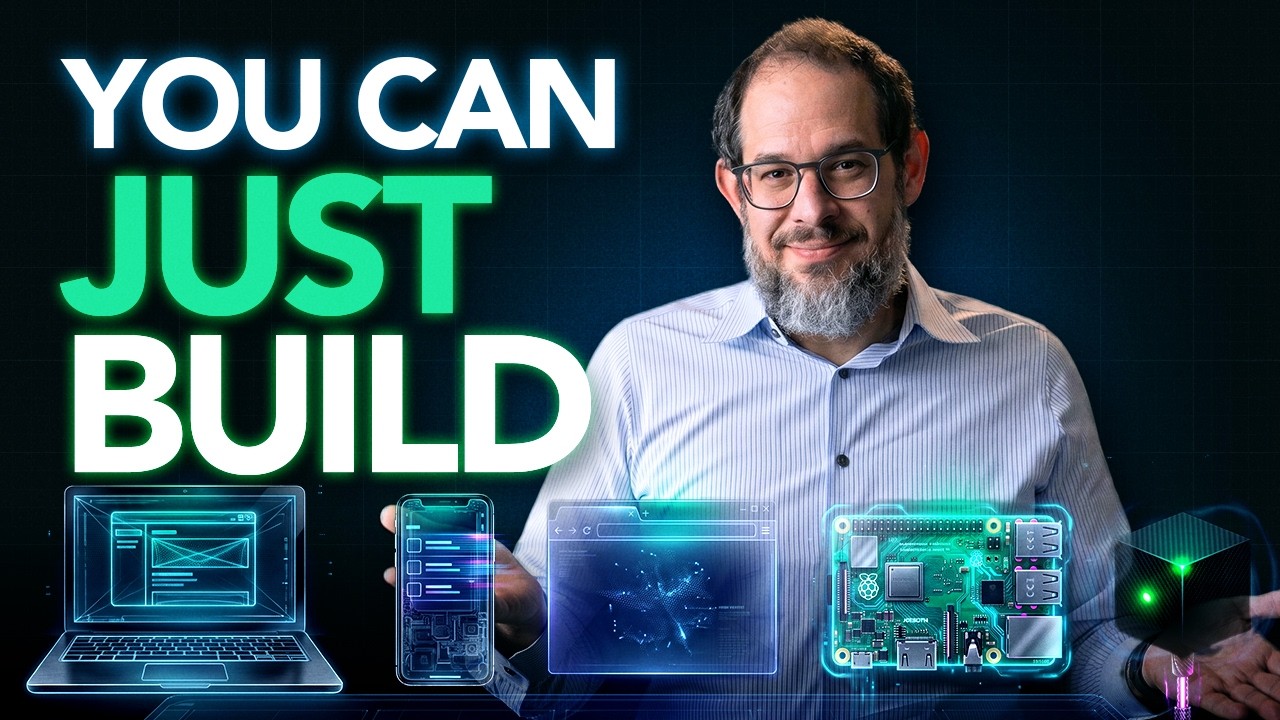
In this video, Nate B. Jones breaks down the process of building personal AI-powered software into five distinct types or “shapes” to simplify the journey for non-technical creators. He emphasizes that many people have ideas for software that could improve their lives but feel overwhelmed by the technical barriers. Nate categorizes software into five main forms: local tools running on a single computer, web apps accessible via browsers, native phone apps requiring deeper device integration, background services that operate without a user interface, and hardware projects that interact directly with physical devices. Understanding these categories helps clarify what kind of software to build and which tools or platforms to use.
Nate advocates starting with the simplest solution possible, especially for personal projects. For most personal software needs, he recommends web apps built with hosted AI builders like Lovable, Replit, or Bolt, which provide easy-to-use environments without requiring deep technical knowledge. Lovable, in particular, is highlighted as an excellent choice for beginners because it handles hosting, database management, and publishing with minimal setup. For projects needing more control or complexity, Nate suggests using coding agents like Codex or Claude Code combined with services like GitHub, Superbase, and Vercel, which allow for more customization and modularity but require more setup and management.
When projects involve physical hardware or sensors, such as the ferry arrival example using AIS radio signals and a Raspberry Pi, Nate explains that tools like Raspberry Pi, ESP32, and Home Assistant can bridge the gap between software and the physical world. Coding agents can assist even non-technical users by interpreting hardware setups, troubleshooting, and guiding wiring or configuration. For native phone apps that require features like push notifications or Bluetooth, Nate recommends using Expo with backend services, but advises proving the concept first as a web app to avoid unnecessary complexity and costs associated with app store distribution.
Nate stresses the importance of clear communication and decision-making when working with AI coding agents. He suggests maintaining simple documentation files that outline the project’s purpose, decisions made, real-world scenarios to handle, and instructions for the coding agent. This approach ensures transparency about choices affecting cost, privacy, and deployment, and helps avoid common pitfalls like exposing sensitive data or making the app public unintentionally. He also highlights best practices such as using managed login systems, enforcing authorization at the database level, keeping secrets secure, and thoroughly testing the software in real scenarios to ensure reliability.
Finally, Nate encourages viewers to embrace personal software development as a way to create tools that evolve with their unique needs. He points out that the traditional divide between technical experts and end-users is narrowing thanks to AI-powered coding agents, making it possible for anyone to build useful, customized software. He invites viewers to start by clearly defining a personal wish or problem, choosing the simplest software shape that fits, and using the recommended tools to bring their ideas to life. For ongoing support, he offers a Slack community linked to his Substack, where builders of all skill levels share advice and collaborate.