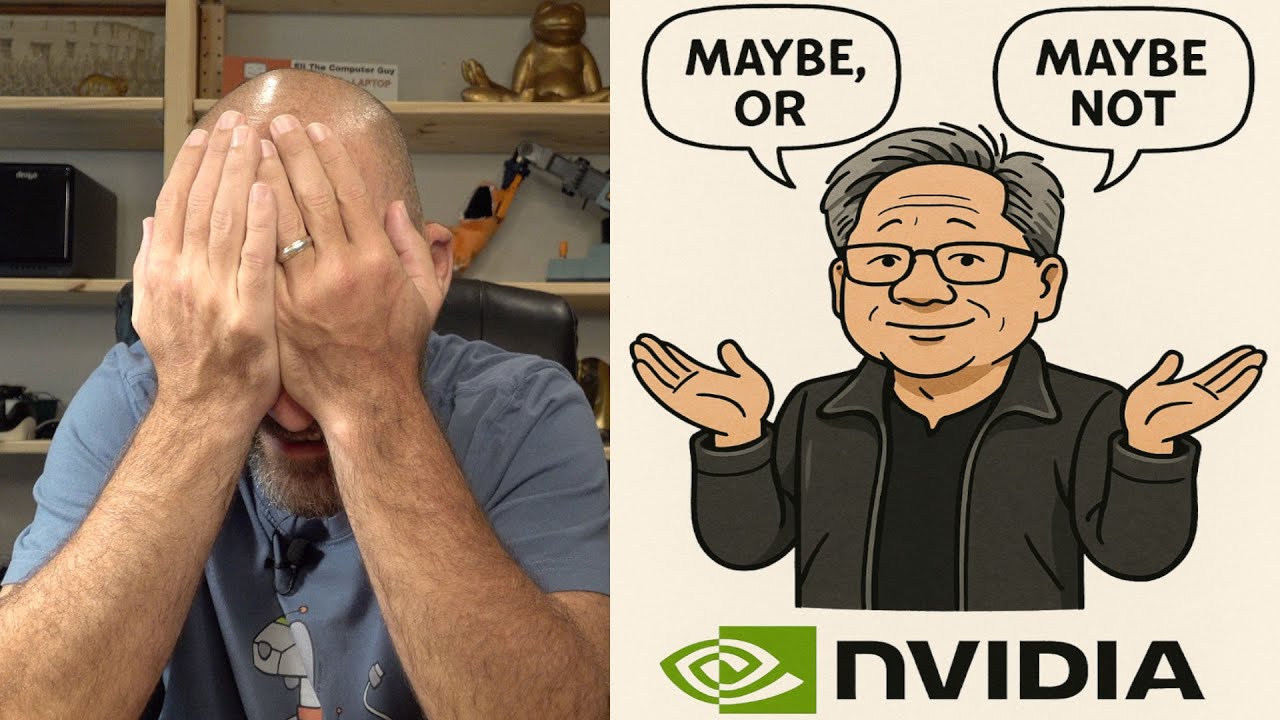
Eli the Computer Guy critiques the AI industry’s complex web of circular investments, highlighting Nvidia’s tentative $100 billion deal with OpenAI as an example of potentially inflated valuations and financial hype that may not reflect real market value. He urges skepticism toward these headline-grabbing deals, warning they could mislead investors and contribute to an unsustainable AI investment bubble.
In this video, Eli the Computer Guy discusses the complex and somewhat troubling financial dynamics currently unfolding in the AI industry, particularly focusing on Nvidia’s recent investment dealings with OpenAI. He highlights a circular economy where companies like Nvidia, Microsoft, Anthropic, and Google are involved in a web of investments and service contracts that seem to feed back into each other. For example, Nvidia invests billions into OpenAI, which in turn buys Nvidia hardware, while Microsoft invests in Anthropic, which also buys services from Microsoft and Nvidia. Eli criticizes this cycle as potentially misleading and questions the real value behind these massive financial figures.
Eli emphasizes that while AI technology, especially large language models (LLMs), is indeed transformative and valuable, the scale of investment—such as OpenAI’s proposed $1.4 trillion capital expenditure—is disproportionate to the actual market value. He draws a parallel to the Internet of Things (IoT) market from 2012, which was projected to be a $1 trillion market, to illustrate how the AI industry’s current spending expectations seem inflated. He argues that the hype around AI has led to exaggerated valuations and investments that may not be sustainable or justified by the technology’s real-world impact.
The video also covers Nvidia’s recent backtracking on its $100 billion investment deal with OpenAI. Despite initial announcements of a massive partnership involving significant compute capacity buildout, Nvidia’s official filings reveal that these deals are not guaranteed and may never materialize. Eli points out that such filings are risk disclosures required by the SEC, indicating that the agreements are still tentative and subject to change. Nvidia CEO Jensen Huang has acknowledged the need for disciplined execution and alignment with OpenAI’s financing capabilities before proceeding, suggesting a more cautious approach than the initial hype suggested.
Eli expresses concern that these large headline-grabbing deals might be more about creating an illusion of success and attracting investor money than about actual business transactions. He warns that the circular investments—where companies invest in each other to boost valuations and appear more successful—could be a form of financial puffery. This could mislead investors into overvaluing companies like OpenAI and Nvidia, potentially setting the stage for a market correction or collapse similar to past tech bubbles, such as the SoftBank fiasco.
In conclusion, Eli urges viewers to remain skeptical and vigilant about the AI industry’s financial claims. He stresses the importance of verifying facts and not getting swept up in the hype. The video ends with a call for viewers to share their thoughts on Nvidia’s deal with OpenAI and the broader circular investment practices in the AI sector. Eli also promotes his Silicon Dojo technology education classes in Durham, North Carolina, encouraging support for hands-on learning amid the ongoing technological and financial turbulence.