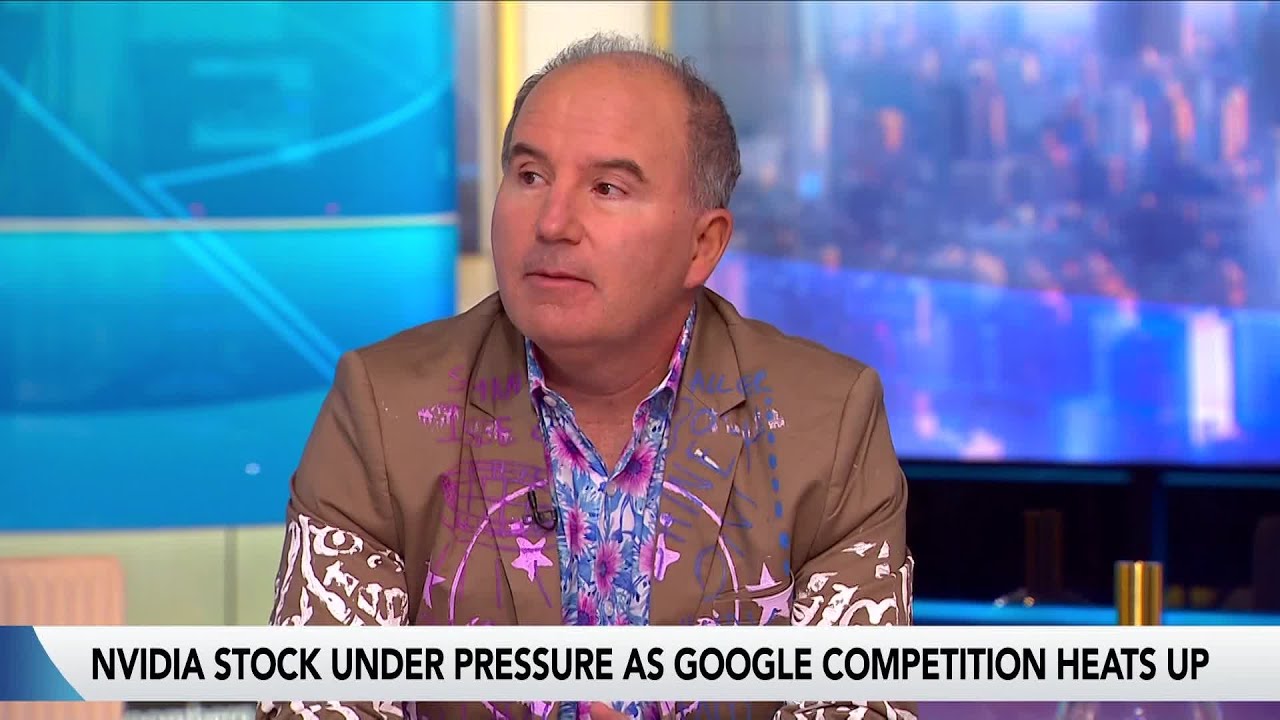
In this discussion, Dan Ives of Wedbush expresses strong bullish sentiment on Nvidia, describing the company as the “Rocky Balboa” champion of the AI revolution. He emphasizes that Nvidia, led by CEO Jensen Huang, remains transparent and dominant in the AI chip market, with demand for their chips outstripping supply by a ratio of 12 to 1. Ives highlights that despite competition from companies like Google and AMD, Nvidia continues to lead the industry, and their recent public relations efforts reflect confidence rather than desperation.
The conversation touches on concerns about vertical integration, comparing Nvidia’s position to Intel’s past dominance and subsequent struggles when companies like Apple began making their own chips. Ives counters this by noting that Nvidia is currently about four years ahead of any competitor globally, including Huawei, and that the massive demand for AI chips means Nvidia is not vulnerable to the same risks Intel faced. He argues that the AI market is still in its early stages, likening it to a 1996 moment rather than a late-1990s tech bubble, with trillions of dollars expected to be spent on AI development.
When questioned about how the enormous projected AI spending will be funded, especially given that companies like OpenAI have relatively modest revenues compared to their ambitions, Ives points out that AI adoption is still in its infancy. Only about 3% of U.S. companies have fully embraced AI, and enterprise applications currently drive most revenue. He believes that as AI adoption grows, the return on investment will be substantial, with companies potentially earning back many times what they spend on AI technologies.
The discussion also explores the competitive landscape beyond Nvidia, particularly the roles of Google, Microsoft, Oracle, and Apple. While Google has strong enterprise relationships and brand recognition, Ives suggests there will be multiple winners in the AI space. He notes that partnerships, such as Apple’s potential collaboration with Google’s Gemini AI, will shape the market. Overall, he maintains that Nvidia will continue to be the primary driver of the AI revolution, but the broader ecosystem will also see significant growth and innovation.
Finally, Ives reiterates his view that Nvidia’s recent stock price dips represent a prime buying opportunity, given the company’s central role in fueling AI advancements. He praises Jensen Huang as the singular leader propelling the AI chip industry forward and predicts that Nvidia’s influence and valuation will continue to rise. The conversation closes on a lighter note, with some friendly banter about sports and holiday gatherings, underscoring the cordial and optimistic tone of the discussion.