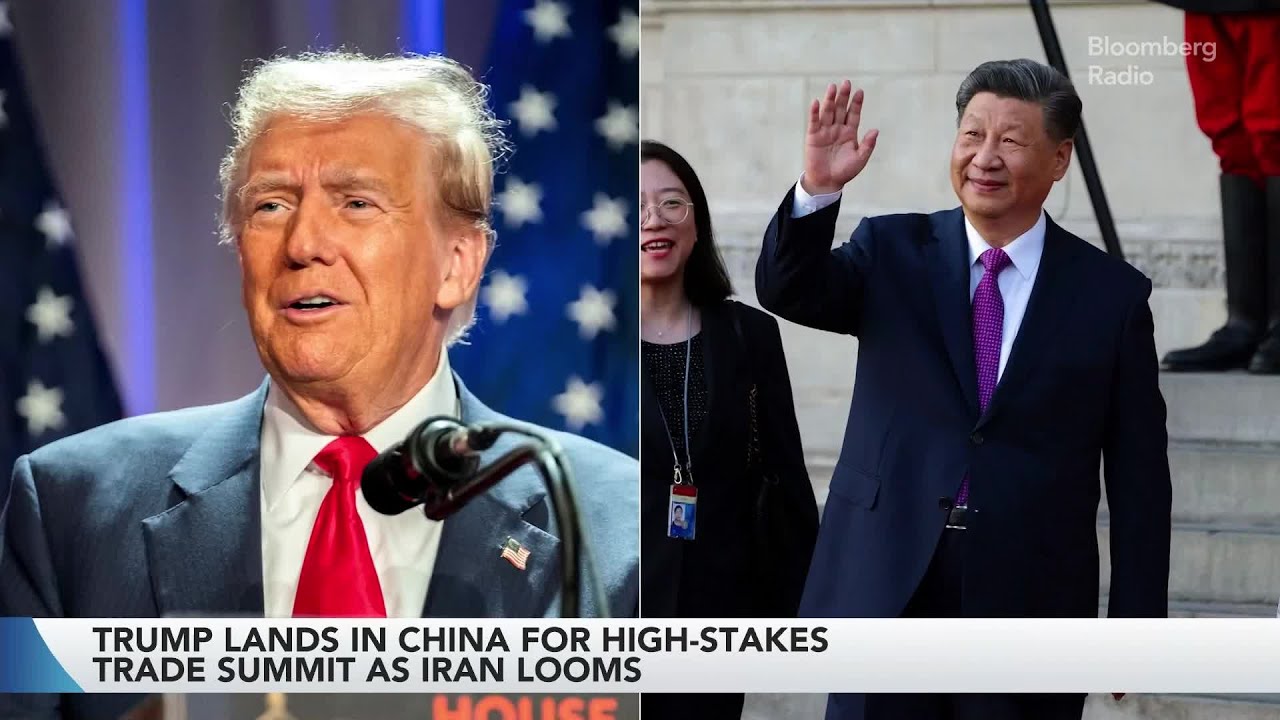
The video highlights President Trump’s upcoming meeting with Xi Jinping, emphasizing efforts to manage U.S.-China economic competition through trade openness and significant business deals, with a delegation of 12 CEOs from diverse industries underscoring the administration’s focus on securing large-scale agreements. Key figures like Nvidia’s Jensen Huang and other tech leaders spotlight the strategic importance of semiconductor trade and technology cooperation amid ongoing diplomatic and economic negotiations.
The video discusses the dynamics of the ongoing relationship between the United States and China, particularly focusing on the upcoming meeting between President Trump and Xi Jinping. The president’s primary request to Xi is to “open it up,” signaling a desire for more openness in trade and economic exchanges. The relationship is framed as a management of competition between the two economies, with a current détente on export controls that is set to last until October, possibly extending further. The recent meeting between the U.S. Treasury Secretary and his Chinese counterpart in Seoul adds an element of unpredictability to the talks, as such discussions are usually finalized well in advance of the leaders’ meetings.
A notable aspect of this trip is the presence of no fewer than 12 CEOs accompanying President Trump, highlighting the administration’s focus on securing significant business deals. The short two-day visit is packed with high-profile executives from various sectors, indicating the breadth of economic interests at play. The Boeing CEO’s presence points to a potential massive deal involving Boeing jets, while the Cargill CEO’s attendance suggests ongoing talks about China increasing its agricultural purchases from the U.S. These large-scale purchase agreements are a key objective for the administration.
In addition to traditional industries, tech companies are also prominently represented. Dina Powell from Meta is part of the delegation, which is significant given recent tensions, such as China ending Meta’s $2 billion deal for managers. Her presence may be aimed at smoothing over issues that American tech companies face in China. Elon Musk’s involvement is also critical, as Tesla’s Shanghai factory represents a major infrastructure investment, and Musk is seeking regulatory approval for autonomous driving technology in China.
Jensen Huang, CEO of Nvidia, is another important figure on the trip, raising questions about the status of semiconductor trade between the two countries. There is speculation about whether chip sales will be back on the table, including the possibility of Chinese firms being allowed to purchase advanced chips like Nvidia’s Blackwell series. This points to the broader strategic importance of technology and chip manufacturing in U.S.-China relations.
Overall, the trip encapsulates a complex blend of diplomacy, trade negotiations, and corporate interests. The presence of numerous CEOs alongside political leaders underscores the intertwined nature of economic and geopolitical competition between the U.S. and China. The outcomes of these discussions could have significant implications for trade policies, technology transfers, and the future of bilateral economic relations.