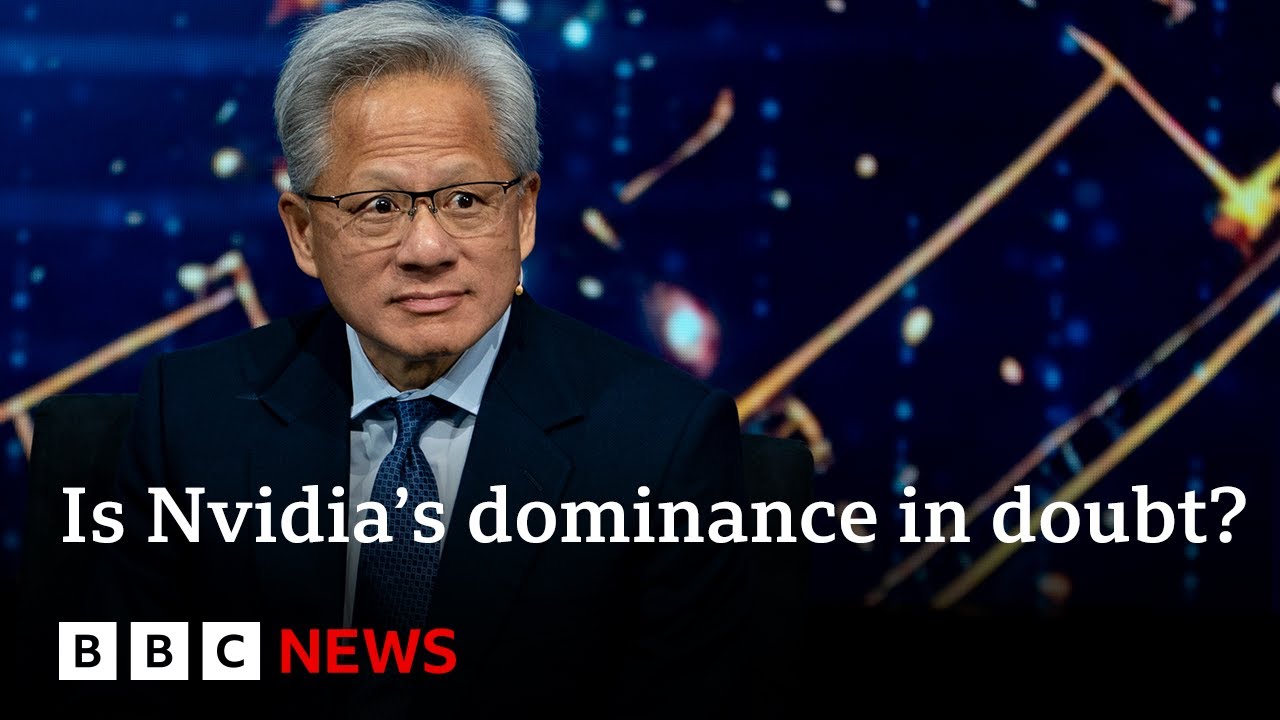
Shares in chipmakers, particularly Nvidia, have been impacted by reports that Meta, the parent company of Facebook, is considering purchasing billions of AI chips from Google to power its data centers. Currently, Meta is one of Nvidia’s largest customers, and Nvidia holds the position as the world’s most valuable chip maker. This potential shift in supplier relationships has caused concern in the market about Nvidia’s future dominance.
Malcolm Penn, founder and CEO of Future Horizons, weighed in on the situation, explaining that while Nvidia’s dominance has been strong since the launch of ChatGPT three years ago, competition is now catching up. Nvidia was well-positioned early on with its chips that power AI applications, but it typically takes two to three years for competitors to develop comparable technology. Google, having started designing its own AI chips earlier, is now entering the market with products aimed at competing directly with Nvidia’s offerings.
A key point of discussion is the difference between Google’s Tensor Processing Units (TPUs) and Nvidia’s Graphics Processing Units (GPUs). Google’s TPUs are specifically designed for machine learning tasks and are optimized for handling multi-dimensional data arrays. Nvidia’s chips, originally developed for the gaming market, have been adapted for AI workloads. Despite these differences, the fundamental function of both types of chips is to drive the servers that power AI applications, and if Google’s chips perform well, they could be a viable alternative.
One significant factor favoring Google’s chips is cost. Nvidia’s chips are known for their high prices and exceptionally high profit margins, around 70%, which is unusual in the semiconductor industry. This profitability attracts competitors who see an opportunity to offer more cost-effective solutions. Google’s chips, whether labeled as GPUs or TPUs, could undercut Nvidia on price while still meeting performance needs, making them attractive to large customers like Meta.
The analyst Dan Ives compared Nvidia to the “Rocky Balboa” of this contest, implying Nvidia is a strong incumbent but facing serious challengers. If Meta shifts its AI chip purchases from Nvidia to Google, it could be a game-changer in the industry. Since there are only a limited number of major customers for these high-performance AI chips, losing one like Meta could lead others, such as Amazon, to follow suit, potentially reshaping the competitive landscape in AI hardware.