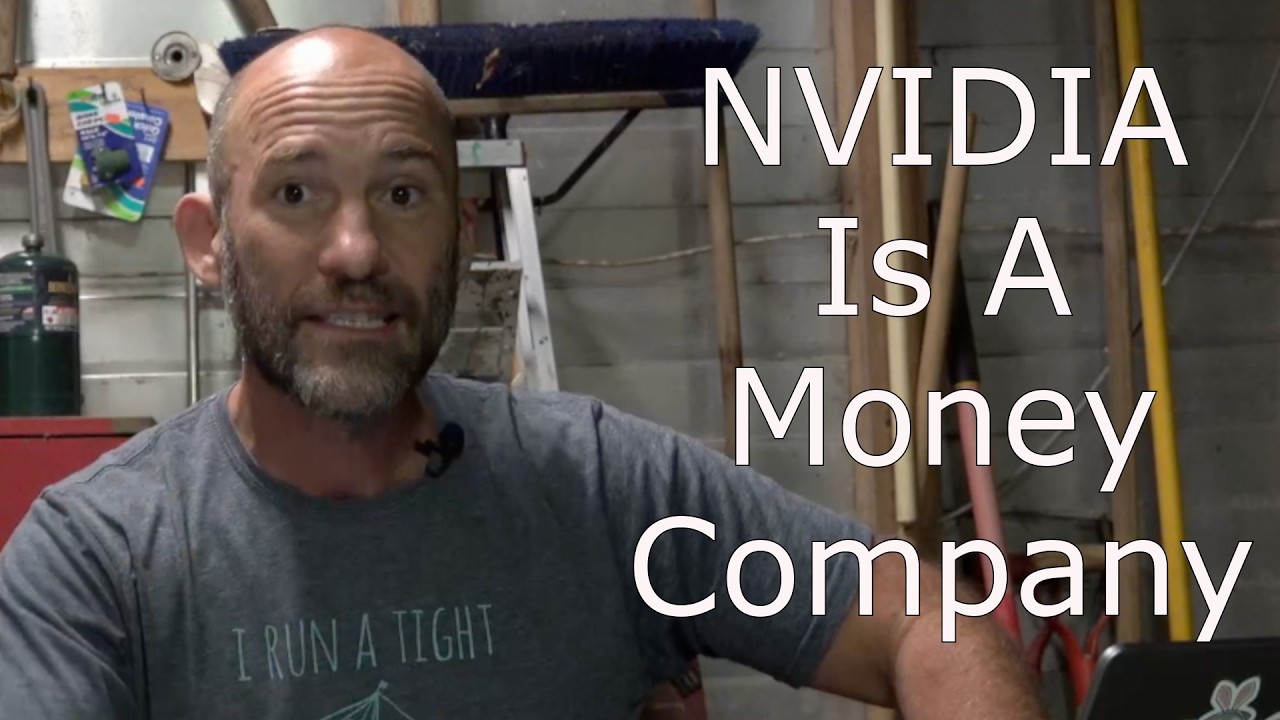
The video argues that Nvidia has shifted from being a technology-focused GPU company to a financial powerhouse, using its vast capital to sustain AI demand through funding startups and data centers, raising concerns about the sustainability of this model. It warns that this financial overreach, coupled with the AI industry’s reliance on Nvidia’s backing despite limited practical AI deployment, could lead to a significant crisis undermining the sector’s long-term viability.
The video discusses the evolving nature of major tech companies, particularly focusing on Nvidia and its role in the AI industry. It begins by highlighting how companies like Tesla and SpaceX, often perceived in traditional terms, actually operate in broader, more complex ways that defy simple categorization. The speaker points out a pattern in the tech world where industry leaders set trends that others quickly follow, such as Elon Musk’s massive layoffs at Twitter prompting similar actions at Meta, Amazon, and Google. This sets the stage for a deeper critique of Nvidia’s business model and the AI sector at large.
The core argument centers on Nvidia no longer being just a GPU or AI company but essentially a financial powerhouse. Nvidia’s competitive advantage, or “moat,” is shifting from technological innovation to sheer capital strength. The company is using its vast financial resources to support AI startups and data centers, effectively funneling money to customers so they can buy more Nvidia products. This financial engineering is seen as a form of circular financing or a Ponzi-like scheme, where Nvidia’s success depends on continuously injecting capital to sustain demand, raising concerns about the sustainability and eventual fallout of this approach.
The video also critiques the AI industry’s infrastructure, particularly the data centers that power AI development. Despite the trillion-dollar valuations of companies like OpenAI and Anthropic, these frontier AI labs struggle to secure leases without Nvidia’s financial backing. This lack of confidence from data center operators suggests underlying instability and raises questions about the real viability of these AI ventures. The speaker emphasizes the irony that these supposedly cutting-edge companies require co-signers for their leases, highlighting a disconnect between hype and financial reality.
Furthermore, the speaker expresses skepticism about the actual utility and understanding of AI technology within the industry. Many technology professionals reportedly do not know how to effectively deploy AI despite having budgets allocated for it, and much of the AI infrastructure is described as “critical” in name only. The rapid growth in Nvidia’s revenue and market dominance is framed as reaching a natural limit, with the company now aggressively using its capital to maintain its position rather than relying solely on technological superiority.
In conclusion, the video warns of a looming crisis in the AI sector driven by financial overreach and unsustainable business practices. Nvidia’s transformation into a “money company” symbolizes a broader trend where financial engineering overshadows genuine innovation. The speaker predicts that this trajectory will lead to significant negative consequences, potentially destabilizing the industry and broader society. Viewers are invited to reflect on these developments and consider the implications of an AI ecosystem heavily reliant on capital rather than technological breakthroughs.