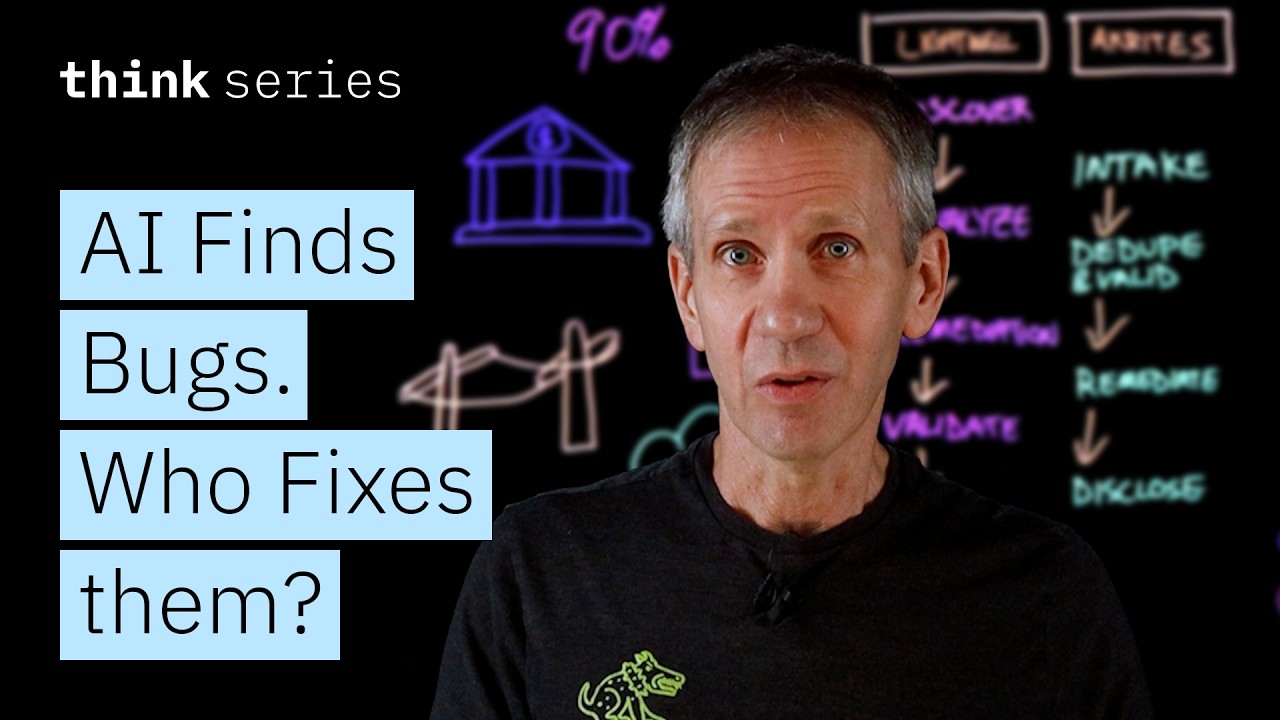
The video discusses the critical role of open-source software in modern enterprises, noting that approximately 90% of the codebase in sectors like banking, healthcare, and telecommunications relies on open-source contributions. While this model fosters innovation, it struggles with timely maintenance and security support, especially since many projects are maintained by small teams or volunteers. The interconnected nature of software means vulnerabilities in one library can affect thousands of downstream applications, highlighting the urgency of securing open-source components effectively.
A significant shift has occurred with the advent of AI, which drastically reduces the time needed to discover vulnerabilities—from weeks to mere minutes. Projects like Anthropic’s Glass Wing have uncovered thousands of vulnerabilities across hundreds of open-source projects, including some long-standing bugs unnoticed for decades. However, while AI accelerates discovery, attackers also benefit from these advancements, making the race to patch vulnerabilities before exploitation more critical than ever. The bottleneck now lies not in finding flaws but in the complex process of safely fixing and deploying patches.
Fixing vulnerabilities involves multiple challenging steps: identifying affected versions, understanding dependencies, assessing business impact, developing and testing fixes, and ensuring compatibility across diverse environments. Simply upgrading to the latest software version is often impractical due to dependency conflicts, regulatory constraints, and custom code. Therefore, tailored fixes and engineering judgment remain essential, with AI serving as an aid rather than a replacement for skilled engineers. Without scaling remediation efforts to match discovery rates, increased vulnerability detection could paradoxically worsen security.
The video emphasizes the importance of upstream trust and collaboration in open-source security. Human maintainers play a vital role in validating fixes and maintaining project stability, and contributing patches upstream benefits the entire ecosystem by preventing fragmentation. No single entity can secure open-source software alone; coordinated efforts among AI providers, vendors, cloud platforms, security firms, maintainers, and nonprofits are necessary. Initiatives like Lightwell and Akrites exemplify this approach by connecting discovery, remediation, validation, disclosure, and deployment into a unified workflow.
In conclusion, the future of open-source security hinges not on who finds the most vulnerabilities but on who can effectively and responsibly fix them at scale. AI has transformed vulnerability discovery into a relatively easy task, but safe and scalable remediation remains complex. Programs like Lightwell and Akrites provide essential infrastructure to manage the volume and speed of vulnerability management in open-source software. The video encourages organizations to leverage these new capabilities to enhance security and keep pace with rapidly evolving threats.
Useful Links