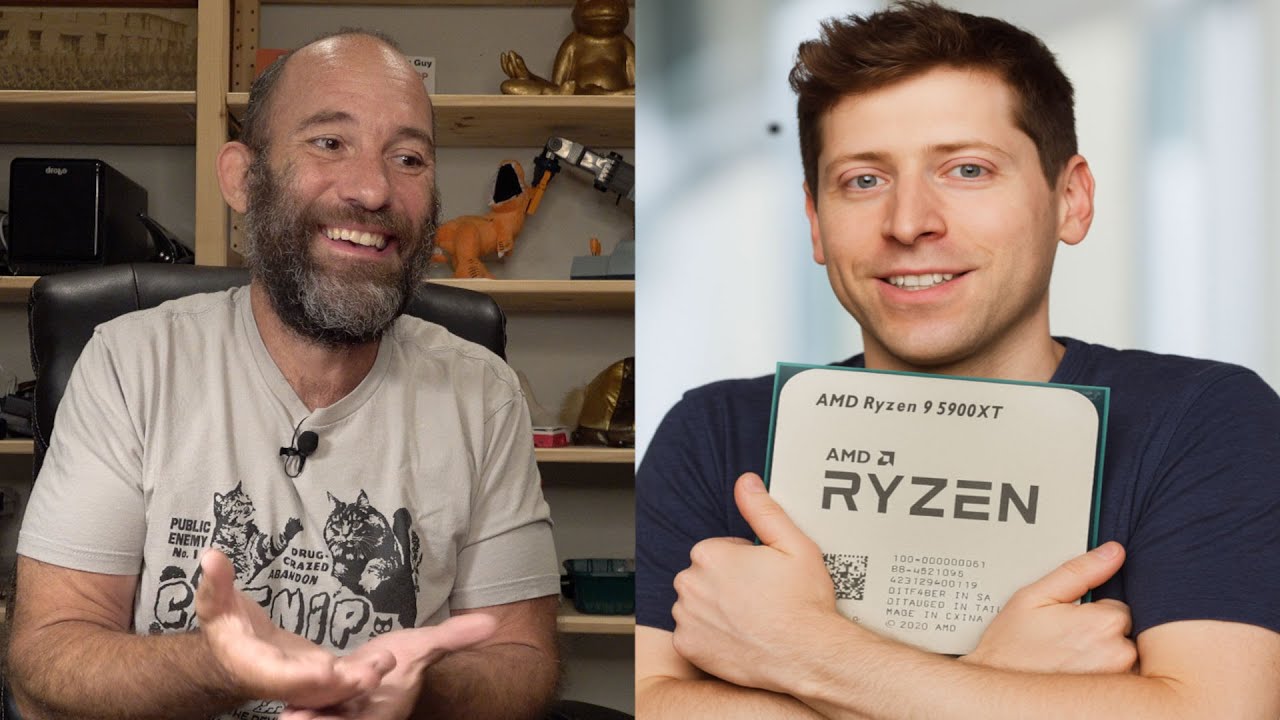
Eli the Computer Guy critiques the AI industry’s hype and market manipulation, highlighting OpenAI’s potential 10% investment in AMD as part of a closed loop of tech giants inflating stock valuations without reflecting true technological value. He warns viewers to be skeptical of AI narratives driven by financial interests rather than genuine innovation, urging a focus on practical infrastructure improvements and critical thinking about AI’s real-world impact.
In this video, Eli the Computer Guy discusses the recent news of OpenAI potentially acquiring a 10% stake in AMD, a major chipmaker, amidst a complex and intertwined AI industry ecosystem. He opens by explaining his motivation for creating daily educational content funded by YouTube ad revenue, despite the mental toll it takes on him. Eli expresses his deep frustration with the current AI hype, emphasizing that while technologies like large language models (LLMs), retrieval-augmented generation (RAG), and fine-tuning have value, the broader AI industry is caught in a cycle of hype and market manipulation that benefits a select few at the expense of the general public.
Eli outlines the convoluted relationships between major tech players in the AI space, highlighting deals such as OpenAI’s $300 billion contract with Oracle, Microsoft’s $10 billion investment in OpenAI, and Nvidia’s massive hardware commitments. He points out how these companies are essentially collaborating in a closed loop, driving up stock valuations and creating an artificial market bubble. The recent surge in AMD’s stock price, following OpenAI’s potential investment and plans to deploy six gigawatts of AMD’s Instinct GPUs, is a prime example of this phenomenon. Eli criticizes this as a form of market manipulation that inflates valuations without reflecting the true value or impact of the underlying technology.
The video also delves into the broader tech industry’s search for the next “iPhone moment” — a breakthrough innovation that can drive massive growth and excitement. Eli compares the current AI frenzy to past tech trends like blockchain and virtual reality, which were heavily hyped but ultimately failed to deliver widespread practical value. He argues that much of the AI hype is driven by storytelling and perception rather than the actual capabilities of the technology. This disconnect between hype and reality is fueling unrealistic valuations and expectations, which Eli believes will eventually lead to significant fallout for ordinary people, not the tech elites.
Eli further critiques the government’s approach to AI, noting that while there is a push to appoint AI leads across federal departments, many government IT systems remain outdated and in dire need of basic infrastructure upgrades rather than AI solutions. He suggests that focusing on improving existing technology infrastructure might yield more tangible benefits than chasing AI hype. Throughout the video, Eli stresses that many in the tech community are becoming increasingly disillusioned with AI, as the technology often fails to solve real-world problems despite the enormous investments and attention it receives.
In conclusion, Eli warns viewers to be cautious about the current AI market dynamics, which he describes as a “meme economy” driven more by hype and financial maneuvering than by genuine technological progress. He encourages critical thinking about the narratives surrounding AI and urges people to look beyond the buzzwords to understand what the technology can truly deliver. Eli invites viewers to share their thoughts on OpenAI’s investment in AMD and the broader AI industry, while also promoting his in-person tech classes at Silicon Dojo for those interested in hands-on learning about AI and related technologies.