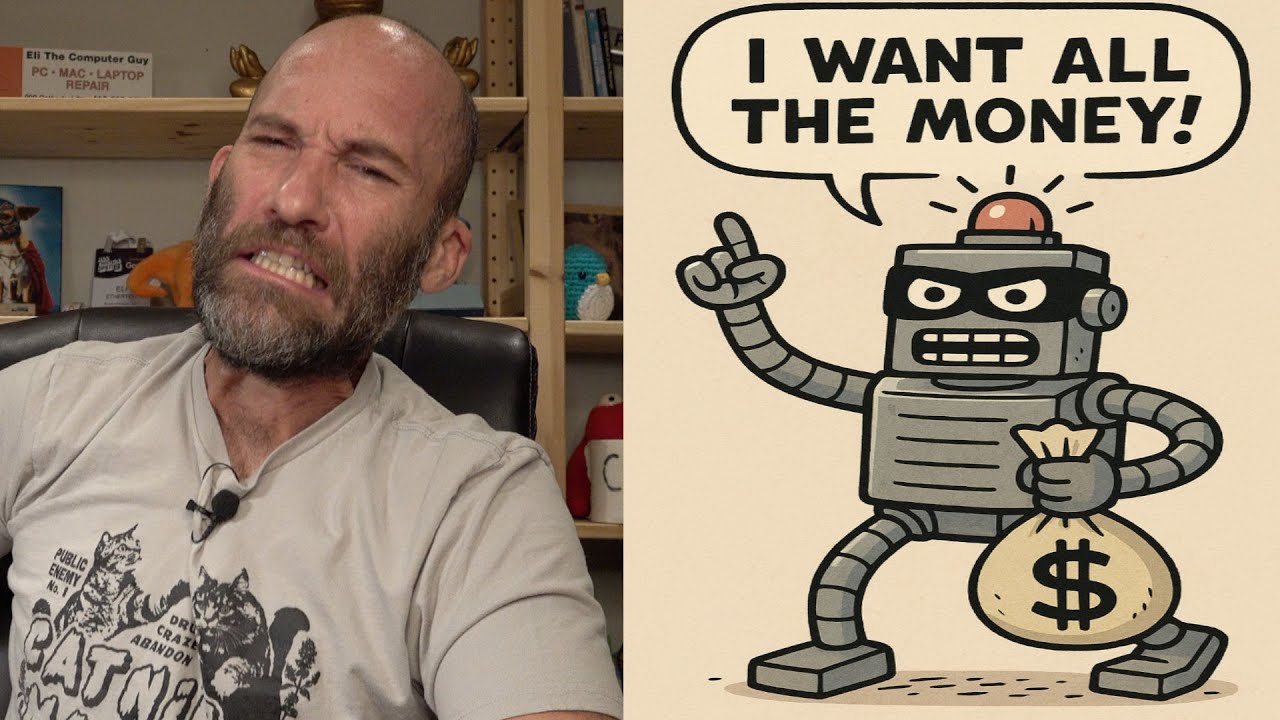
In this video, Eli, the computer guy, discusses the potential IPO of OpenAI, speculated to be valued at an unprecedented $1 trillion by 2026 or 2027. He draws parallels between the current AI investment hype and the WeWork bubble, where valuations were artificially inflated by major investors like SoftBank, only to collapse dramatically once the company’s financials were scrutinized. Eli expresses skepticism about OpenAI’s lofty valuation, suggesting that much of the hype is driven by groupthink among investors who have a vested interest in AI being a massive market opportunity.
Eli explains that OpenAI’s transition from a nonprofit to a for-profit entity was driven by the enormous capital requirements for AI infrastructure, particularly the need for thousands of expensive GPUs and data centers. He highlights that OpenAI reportedly burned through $11 billion in a recent quarter, with only a small fraction of users paying for the service, making the business model appear unsustainable at current levels. The CEO, Sam Altman, has indicated plans for massive capital expenditures, potentially reaching $4 trillion, which would necessitate raising funds through public markets via an IPO.
The video also touches on the broader AI hardware market, focusing on Nvidia’s dominant position in AI training GPUs and the challenges it faces, including losing market share in China and increasing competition in inference hardware. Eli questions whether Nvidia’s $5 trillion valuation is justified given these competitive pressures and the immature state of the AI technology stack. He argues that while AI is transformative and valuable, the current valuations of companies like OpenAI and Nvidia are excessively inflated and may not be sustainable.
Eli further discusses the ripple effects of a potential AI bubble burst, comparing it to the fallout from WeWork’s collapse. He points out that the impact would extend beyond investors to include electricity providers, construction companies, and local economies that have invested heavily in AI data centers. The uncertainty around whether these massive data centers will come to fruition is already causing headaches for utility companies, which must prepare infrastructure without guaranteed returns, highlighting the broader economic risks tied to the AI hype.
In conclusion, Eli urges viewers to critically assess the hype surrounding AI valuations and IPOs, emphasizing that while AI technology holds significant promise, the current market exuberance may be disconnected from economic realities. He invites viewers to share their thoughts and promotes his free, hands-on technology classes in Durham, North Carolina, aimed at empowering people with practical AI and tech skills. Eli’s tone is skeptical but informative, blending technical insights with a cautionary perspective on the AI investment frenzy.