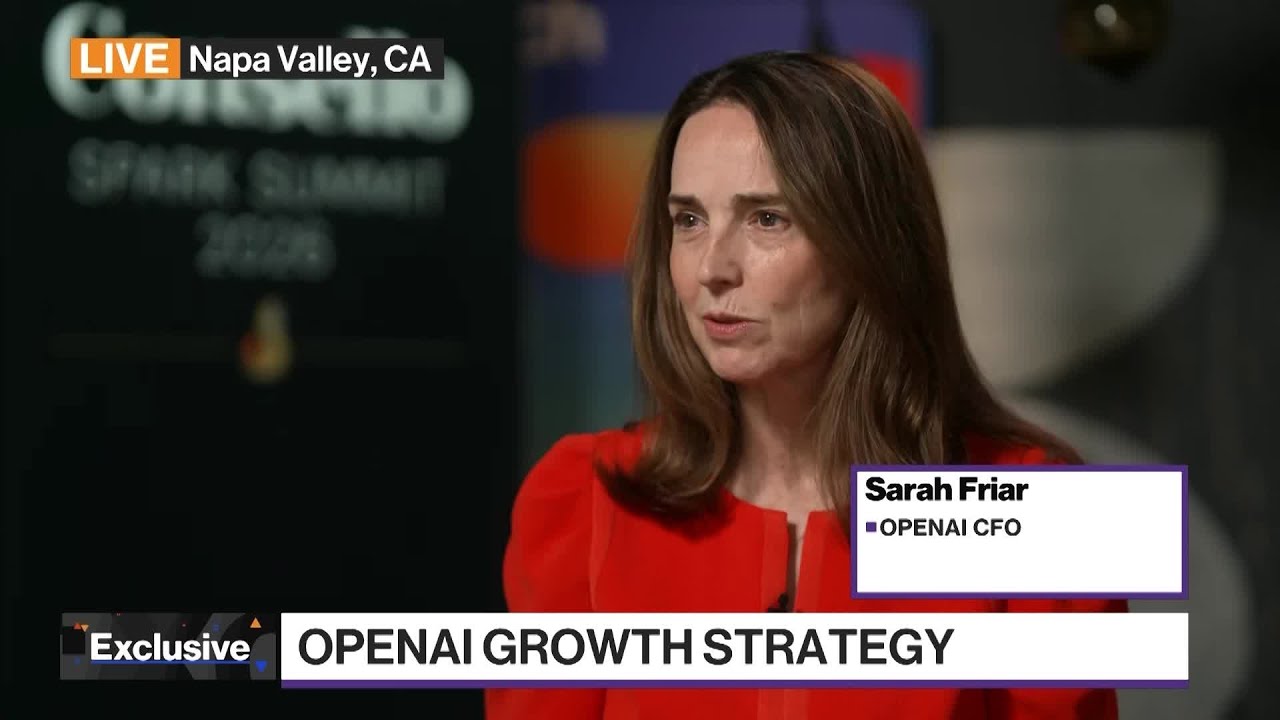
OpenAI’s CFO emphasized the critical role of securing compute power to meet soaring AI demand, highlighting the company’s proactive capital raising and global partnerships to scale infrastructure and expand access. Despite challenges, OpenAI remains focused on innovation, safety, and workforce reskilling, viewing AI as a transformative force with vast potential across industries and job markets.
OpenAI’s CFO highlighted the critical importance of compute power as a competitive advantage amid soaring demand for AI models like the recently launched GPT-5.5 Cyber and the rapidly growing user base for tools such as codecs, which recently surged from 3 million to 4 million users in just two weeks. Despite the scarcity of compute resources projected for 2026, OpenAI is proactively seeking ways to secure compute capacity ahead of time. The company has raised over $22 billion in private funding, providing significant optionality, but remains open to raising more capital either privately or publicly to meet future demand and scale its infrastructure.
The company continues to see strong growth in both consumer and enterprise adoption, with over 900 million weekly active users on ChatGPT. OpenAI’s mission to democratize AGI for humanity is reflected in its efforts to expand access to its technology globally through partnerships with companies like Kakao in South Korea and PhonePe in India. While the relationship with Apple was questioned, the CFO emphasized ongoing efforts to maintain and strengthen partnerships with major distribution channels to reach more users.
Access to compute remains a key differentiator in the AI race, alongside data and top-tier researchers. The CFO noted that while OpenAI has a world-class research team, the availability and cost of compute have become bottlenecks due to unprecedented demand. The 5.5 Cyber model is praised for its efficiency and affordability, making it more accessible to customers. Safety and security are also priorities, especially for models capable of identifying software vulnerabilities, which are in high demand among financial institutions.
Regarding leadership and company culture, the CFO described a strong, collaborative relationship with CEO Sam Altman, highlighting their complementary roles in driving innovation and business growth. Despite external scrutiny and legal challenges faced by OpenAI’s leadership, the CFO expressed confidence in their shared mission and teamwork. The company remains focused on its own path and views the AI industry as still in its early stages, with vast potential for transformation across sectors like banking and wealth management.
Looking ahead, the CFO addressed concerns about the future of work, emphasizing that technological advances have always reshaped jobs and skills. OpenAI is investing in education and reskilling initiatives, such as its EDU program adopted by Estonia, to prepare the workforce for evolving demands. The company envisions AI freeing people from mundane tasks, allowing them to focus on more fulfilling aspects of their professions. While the full impact on job creation is uncertain, recent trends show rapid emergence of new roles, underscoring the transformative potential of AI technologies.