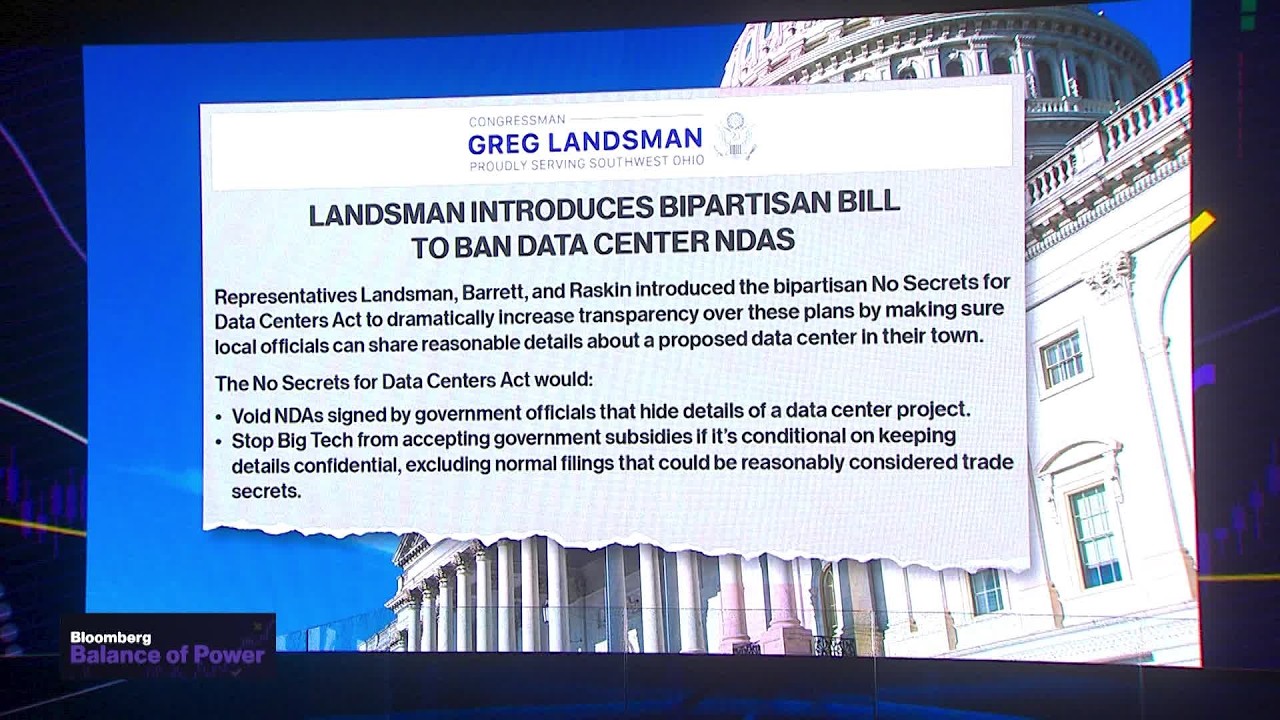
Rep. Landsman argues that appointing an AI czar is insufficient for addressing challenges posed by data centers and AI, advocating instead for concrete protections like banning NDAs, enforcing full cost coverage by data centers with hefty fines, and ensuring transparency and accountability. He has introduced stronger legislation to replace the ineffective Ratepayer Protection Act, emphasizing bipartisan support to protect consumers, promote environmental standards, and counter political dynamics that favor the status quo.
Rep. Landsman expresses skepticism about the effectiveness of appointing an AI czar as a solution to the challenges posed by data centers and AI technologies. He emphasizes that what the American people truly need are concrete protections, including transparency in data center deals. He advocates for banning nondisclosure agreements (NDAs) that Big Tech companies have with politicians, which currently keep the public in the dark and contribute to frustration and higher costs for consumers. According to Landsman, there must be federal requirements ensuring that data centers cover all associated costs so that individuals are not burdened financially, alongside robust oversight to prevent harm and promote beneficial uses of AI.
Landsman critiques the Ratepayer Protection Act, which was not advanced by the Senate, noting that it lacked enforceable measures and did not mandate data centers to pay for all costs. In response, he has introduced a stronger bill that requires data centers to cover all expenses and imposes a hefty fine of $50 million per day for non-compliance. This legislation would shift regulatory authority to the Federal Energy Regulatory Commission (FERC) and is designed to protect ratepayers effectively. He believes this bill should garner bipartisan support, highlighting that he himself voted for similar measures despite political differences.
The congressman downplays the role of politics in the failure to advance the Ratepayer Protection Act, suggesting that concerns about the bill’s effectiveness and potential downsides were more influential than partisan motives. He acknowledges that some narratives blame political maneuvering, particularly involving a Republican senator from Ohio, but insists that the primary issue was the bill’s lack of real impact. On the other hand, he anticipates that political dynamics will be significant in upcoming elections, especially with former President Trump’s visit to Ohio, which Landsman argues will hurt Republican candidates who align with the status quo.
Landsman criticizes the Republican candidates, including John Husted, for supporting policies such as tariffs and the ongoing war, which he claims are unpopular among Ohioans. He points out that many voters are frustrated with rising costs, immigration issues, and a perceived alignment of politicians with wealthy interests rather than ordinary citizens. This dissatisfaction, he believes, will be a liability for Republicans who campaign with Trump and maintain the current political and economic approaches that many Ohioans oppose.
Looking ahead, Landsman outlines his legislative priorities if Democrats regain control of the House. He plans to push for banning NDAs related to data centers, enforcing his “do no harm” bill that mandates data centers pay all costs and face significant fines for non-compliance, and establishing environmental standards. He stresses that these measures should be bipartisan efforts aimed at protecting consumers and the environment while ensuring transparency and accountability in the rapidly evolving AI and data center landscape.
Useful Links