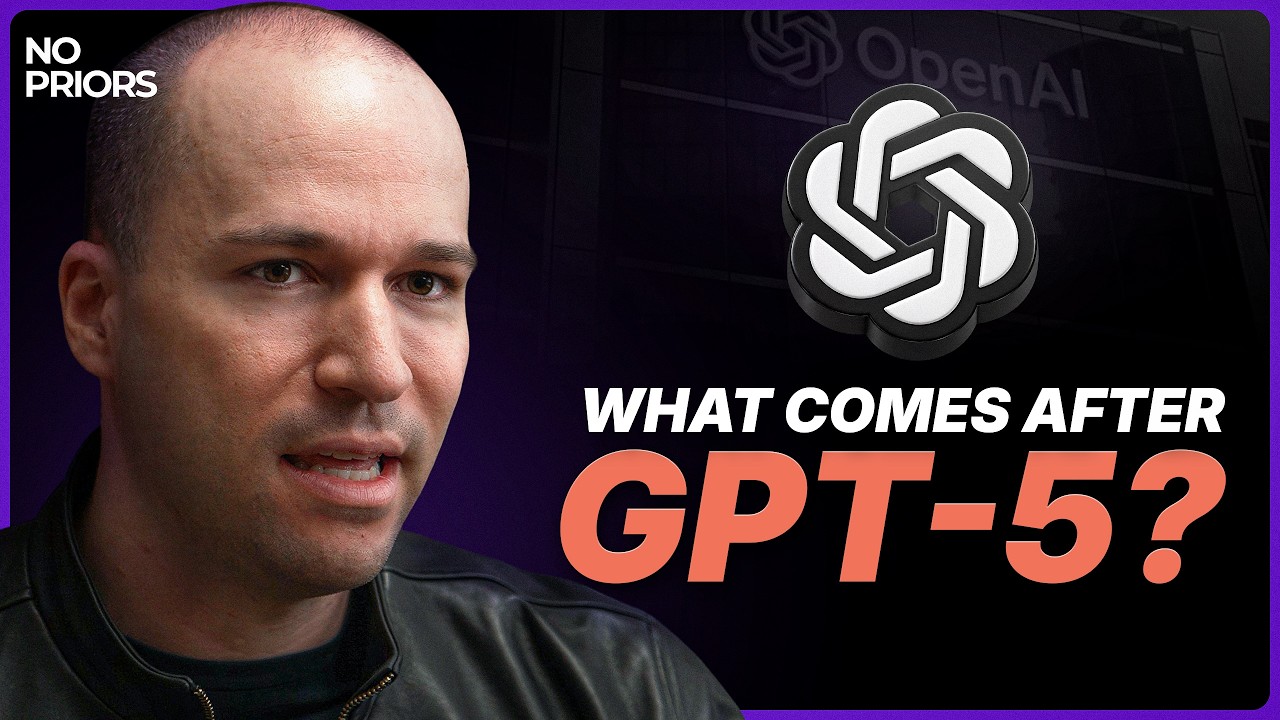
In the conversation, OpenAI President Greg Brockman highlights AI’s transformative role in accelerating scientific discovery, improving drug development, and revolutionizing cybersecurity by enhancing human intelligence and agency. He emphasizes the importance of human control, transparency, and collaboration to ensure AI technologies, including future AGI, benefit all of humanity while addressing challenges in verification, regulation, and security.
In this insightful conversation with Greg Brockman, co-founder and president of OpenAI, the discussion centers on the transformative potential of AI in accelerating scientific discovery and revolutionizing cybersecurity. Brockman emphasizes that AI is now capable of generating genuinely new knowledge, exemplified by recent breakthroughs in solving long-standing mathematical problems. He highlights the synergy between human intelligence and AI tools, suggesting that this collaboration can unlock unprecedented advancements across various domains, including biology and drug discovery. The conversation underscores the importance of AI not just providing answers but delivering insights that are accessible and meaningful to humans.
Brockman elaborates on the challenges and opportunities in communicating complex AI-generated knowledge, particularly in specialized fields like mathematics where only a few experts can fully verify new theorems. He discusses techniques such as AI debate and iterative amplification, which help ensure that AI outputs are understandable and verifiable by humans. This approach aligns with OpenAI’s commitment to keeping humans in control and ensuring AI serves to amplify human agency. The conversation also touches on the potential for AI to democratize knowledge, making advanced understanding more accessible to a broader audience.
The discussion then shifts to the application of AI in drug discovery and biology, where Brockman identifies significant bottlenecks such as data availability and regulatory hurdles. He expresses optimism that AI can drastically shorten drug development timelines and reduce costs by automating complex tasks and improving predictive accuracy. However, he acknowledges that some challenges, like clinical trials and regulatory approval, will require systemic changes and innovation beyond AI alone. Brockman stresses that biology, while currently data-constrained compared to mathematics, is a promising frontier where AI’s capabilities can lead to profound improvements in human health.
On the cybersecurity front, Brockman presents a compelling case that the physics of cybersecurity are fundamentally changing due to AI. He describes a “defenders window,” a critical period where defenders can leverage advanced AI tools to outpace attackers by identifying and fixing vulnerabilities more efficiently. OpenAI’s proactive approach includes dedicating significant engineering resources to securing their own infrastructure using AI and collaborating with the broader security community. Brockman argues that cybersecurity spending should vastly exceed software development budgets to ensure the reliability and security of increasingly AI-generated software, marking a paradigm shift in how organizations prioritize security.
Finally, Brockman reaffirms OpenAI’s core mission to ensure that artificial general intelligence (AGI) benefits all of humanity by keeping humans firmly in the driver’s seat. He stresses the importance of human agency and control over AI technologies, drawing parallels to historical examples like the design of the iMac to illustrate the need for users to feel empowered. Brockman envisions a future where AI acts as a powerful tool that enhances human decision-making and quality of life, reinforcing OpenAI’s commitment to developing AI that aligns with human values and societal progress.
Useful Links