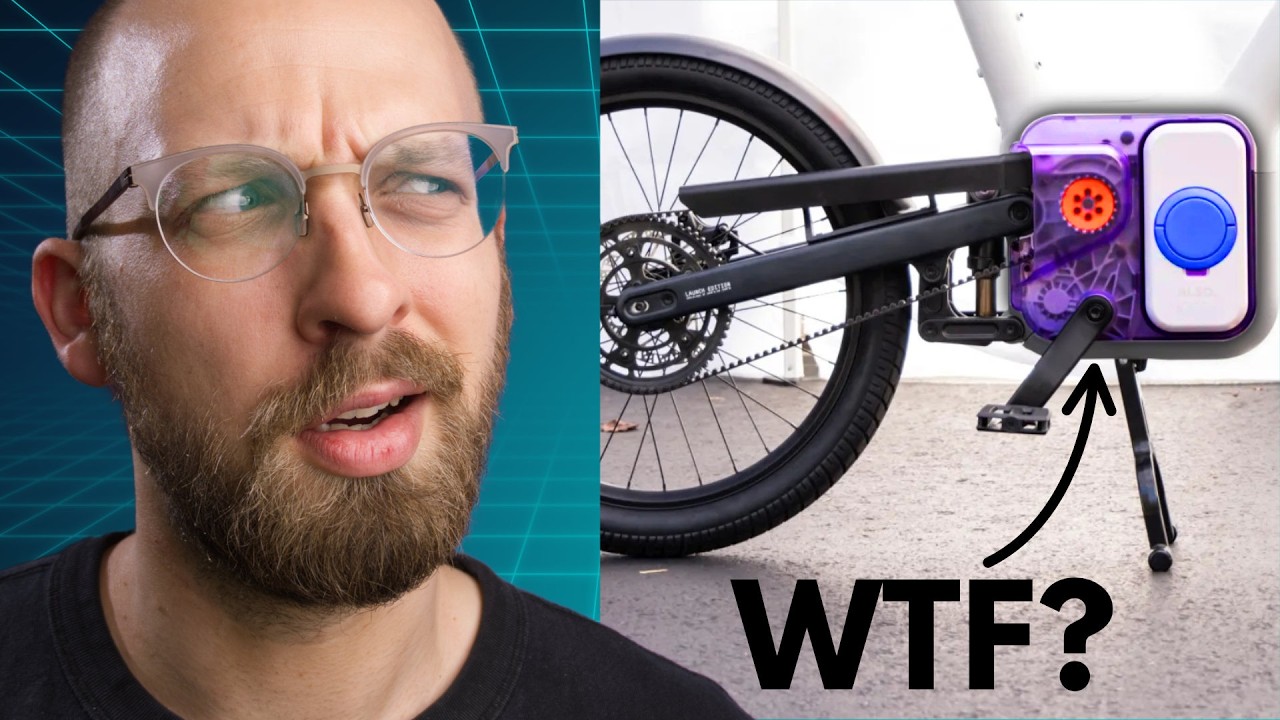
This week’s tech roundup begins with Rivian’s bold entry into the e-bike market through a new brand called Also. Rivian has introduced two e-bike models: the TMAB, a standard e-bike, and the TMQ, a delivery quad bike, along with a high-tech helmet called the Alpha Wave featuring lights and speakers. The standout innovation is their pedal-by-wire system, where pedals generate electricity rather than directly driving the wheel. This allows riders to adjust pedal resistance and benefit from regenerative braking, making the bike feel more like an electric motorbike. The bike also features removable batteries charged via USB-C and interchangeable top frames to switch between cargo, commuter, or trail bike configurations. However, concerns remain about the bike’s weight, efficiency losses from converting pedal power to electricity and back, reliance on Rivian for repairs, and the inability to pedal without battery power.
Next up, Samsung launched the Galaxy XR headset, a competitor to Apple’s Vision Pro, and it impresses in several key areas. Priced at $1,800, it costs about half as much as the Vision Pro and is lighter at 545 grams compared to Apple’s 750 grams. The headset features a comfortable headband design inspired by the MetaQuest Pro and offers similar display quality and tracking. While it lacks an external display to show the user’s eyes and has slightly lower camera quality and performance, Samsung’s software shines with natural voice interaction powered by Gemini AI. This allows users to control apps, search, and arrange windows through conversation, making it a practical solution for VR where traditional input devices are limited. Despite these strengths, consumer interest in such headsets remains low.
The third major story highlights the apparent decline of ultra-thin smartphones. Apple has reportedly cut production of the iPhone Air due to poor sales, with the model accounting for only 10-15% of new iPhone production and even less in the US and China. This follows similar struggles for Samsung’s Galaxy S25 Edge, which has been discontinued. Market data suggests the iPhone Air is selling worse than the previously discontinued iPhone Mini, signaling that the market for thin, lightweight phones may be shrinking or disappearing altogether.
In other tech news, Anker released new Prime chargers, including a compact 160W charger with three USB-C ports and a massive power bank capable of 250W input for ultra-fast charging. Casio introduced a new G-Shock Nano WN5600 watch ring available in multiple colors. Microsoft announced Miko, a more personable animated co-pilot head that can morph into Clippy and supports group collaboration. OpenAI launched ChatGPT Atlas, a Chromium-based browser with integrated AI chat that can interact with websites and perform tasks like online shopping. Meanwhile, political and industry updates include Trump pardoning the convicted Binance founder, a French company Visora developing a new AI inference chip for data centers, and Nvidia and TSMC producing the first Blackwell wafer in the US.
Finally, the video touches on regulatory and scientific developments. The EU updated USB-C charger laws to require detachable cables and higher energy efficiency starting in 2028. The Trump administration is reportedly considering equity stakes in quantum computing firms in exchange for federal funding. Google announced a quantum computing breakthrough with its Willow chip, claiming a 13,000x speed advantage over classical supercomputers. The video concludes with a recommendation for IEEE Spectrum magazine, praising its in-depth, distraction-free articles on cutting-edge technology and engineering topics, making it a valuable resource for tech enthusiasts and professionals alike.