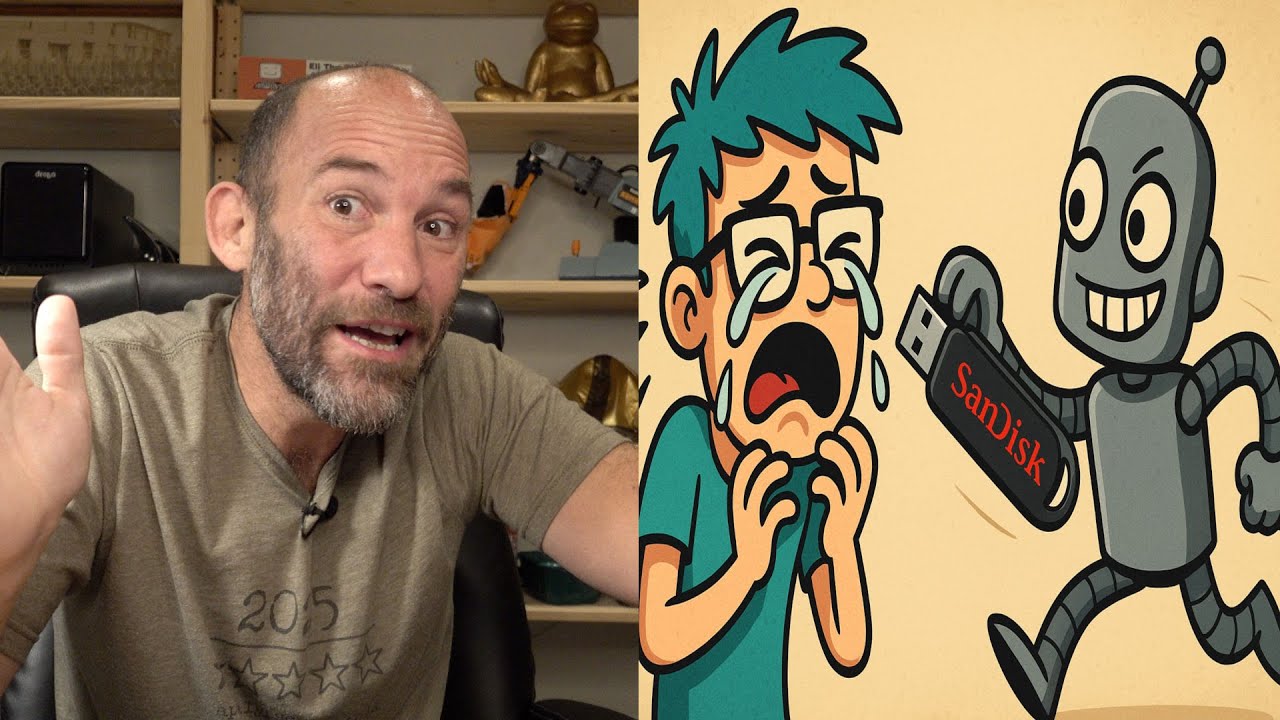
Eli explains that the AI investment boom is causing a surge in demand for computer hardware, leading to a 50% price increase in SanDisk SSDs and widespread supply shortages across components like flash storage, RAM, and hard drives. He advises businesses to accelerate hardware upgrades and extend the lifespan of existing equipment to navigate these challenges, while criticizing the irrational investment levels fueling the AI bubble and its negative impact on the tech supply chain.
In this video, Eli, the computer guy, discusses the significant impact the AI bubble is having on the technology hardware market, particularly focusing on SanDisk’s recent decision to increase SSD flash memory prices by 50%. He explains that the surge in AI-related investments and data center expansions, such as Sam Altman’s massive $1.44 trillion capital expenditure plans, is driving unprecedented demand for computer hardware. While most people associate AI infrastructure spending with GPUs and processors, Eli highlights that the entire ecosystem—including motherboards, RAM, and storage—is affected, creating bottlenecks and supply shortages across the board.
Eli points out that this increased demand is causing price hikes not only in flash storage but also in RAM and enterprise-grade platter hard drives, with some segments experiencing backlogs of up to two years. SanDisk’s price increase has sent shockwaves through the supply chain, forcing companies like Transcend, InnoDisk, and Apacer Technology to pause shipments and reevaluate pricing strategies. These companies rely on SanDisk’s NAND flash chips to manufacture their SSDs, and the sudden price volatility complicates their ability to maintain profitability and stable supply.
The video also delves into the broader implications for businesses and technology decision-makers. Eli advises that organizations planning hardware refresh cycles—especially those purchasing in bulk—should consider accelerating their upgrade timelines to avoid supply shortages and inflated prices. He explains that many OEMs are currently receiving only about 70% of their ordered hardware, and mismatches in component availability could further reduce the number of complete systems they can deliver. This situation calls for strategic planning to mitigate the risks posed by the ongoing supply constraints.
Eli further discusses the importance of extending the life expectancy of existing equipment as a way to cope with these challenges. Unlike two decades ago, modern computers and devices can often function effectively for a decade or more, reducing the urgency for frequent refresh cycles. He encourages IT managers and consultants to rethink their maintenance and upgrade strategies, balancing the costs and benefits of prolonged equipment use against the difficulties of acquiring new hardware in the current market environment.
In conclusion, Eli expresses frustration with the AI bubble, acknowledging the transformative potential of large language models but criticizing the excessive and sometimes irrational investment levels that are driving hardware shortages and price surges. He invites viewers to share their thoughts on the situation and promotes his hands-on technology education classes at Silicon Dojo in Durham, North Carolina. He also reminds viewers that while his content is free, support through donations helps sustain his work.