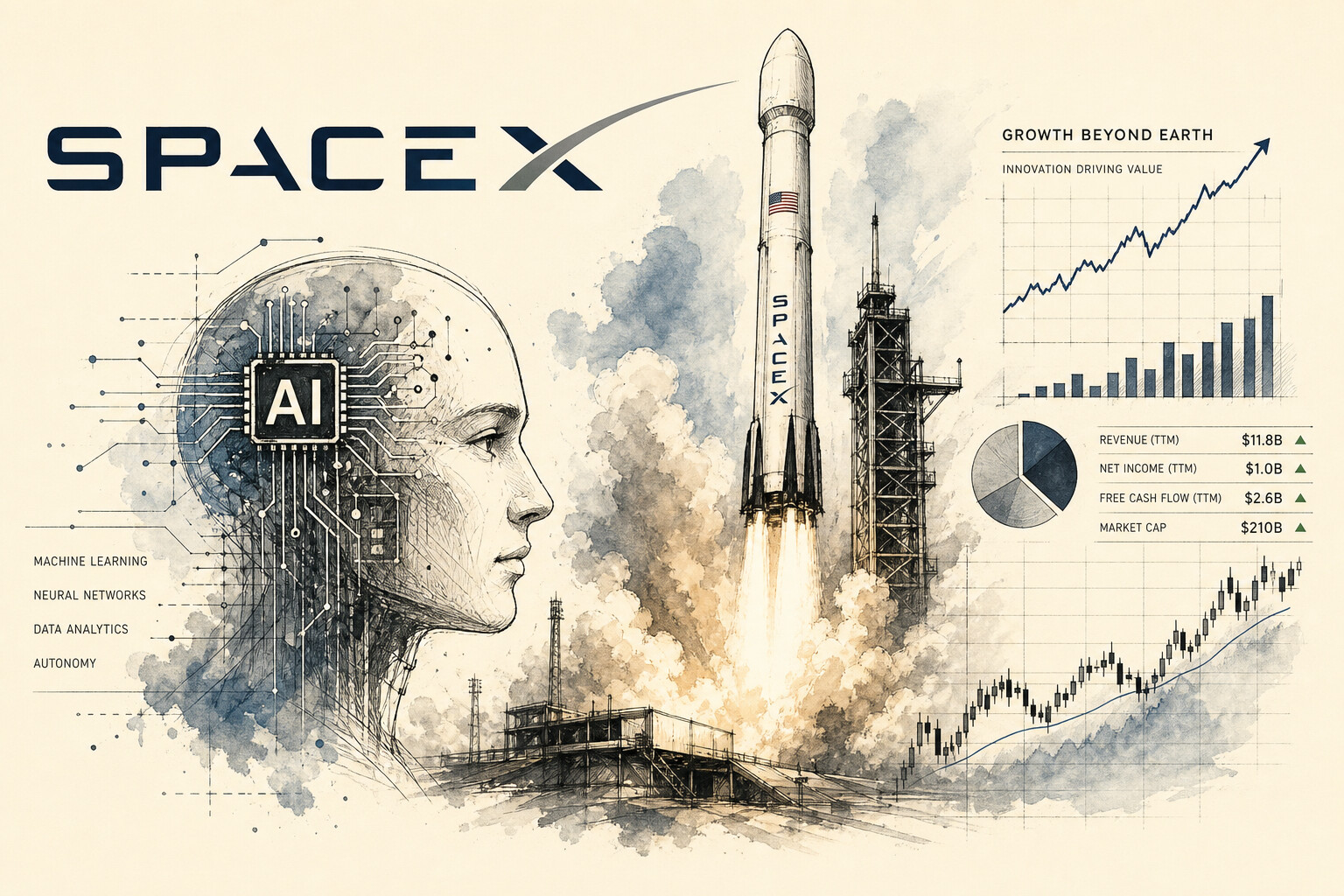
Shares of SpaceX have fallen sharply following the company’s first earnings report as a public company, with investors expressing concern over a dramatic surge in spending on artificial intelligence (AI) initiatives. Despite nearly doubling its quarterly revenue to $7.8 billion compared to a year earlier, SpaceX’s expenses soared to $18.3 billion, with the majority allocated to AI development and infrastructure. According to Reuters, quarterly capital spending reached $18.4 billion, including $15.8 billion on AI infrastructure alone.
The company’s net loss for the second quarter was $143 million, and it reported a $2 billion loss for the first half of the year. The space segment, including SpaceX’s core rocket business, posted a $542 million net loss on $962 million in revenue for the quarter. Meanwhile, the AI business lost $1.2 billion on $2.5 billion in revenue, though AI revenue more than tripled from a year earlier. Starlink, SpaceX’s satellite internet service, was the standout performer, generating $1.6 billion in profit for the quarter and doubling its subscriber base to 12 million.
CEO Elon Musk defended the heavy AI investment during an investor call, arguing that such spending is necessary for SpaceX to reach $1 trillion in annual revenue by 2030, a year earlier than previously projected. Musk also highlighted the company’s growing business in selling compute power for AI projects, with clients including Google and Anthropic. He projected that SpaceX’s compute capacity could reach 10 gigawatts next year, up from 1.4 gigawatts currently, and described data center construction as a “trivial problem compared to making reusable rockets.”
Chief Financial Officer Bret Johnsen stated that the economics of AI investments are improving rapidly, with new compute capital deployments achieving less than a one-year payback. SpaceX has signed $6.7 billion in additional cloud computing contracts since the end of the second quarter and expects to exceed two gigawatts of compute capacity by year-end. However, Johnsen also signaled that capital expenditures would remain elevated for the rest of the year.
Despite these growth areas, the company’s aggressive AI spending has unsettled investors. SpaceX shares dropped between 9% and 12% on Wednesday, falling well below their $135 IPO price just two months after the company’s public debut. Analysts note that while Starlink is profitable, the rest of SpaceX’s business units are not yet generating operating profits. Some investors remain optimistic about the company’s long-term vision, citing Musk’s track record and potential synergies with his other ventures, such as Tesla. Others caution that the scale of AI investment—potentially reaching $30 billion in annual losses—could test investor patience if tangible results are not delivered soon.
The company’s stock volatility has also been exacerbated by the expiration of a lockup provision, allowing some insiders to sell shares, and by broader market anxieties about high cash burn rates in the tech sector. Some analysts warn that controversies surrounding Musk’s leadership and political views remain a “live risk” for SpaceX.
As SpaceX continues to pursue ambitious projects in space, AI, and global connectivity, investors will be watching closely for evidence that its massive spending can translate into sustainable growth and profitability. The debate now centers on whether the company’s AI infrastructure can begin to fund its own expansion, or if Starlink’s cash flows will continue to bankroll these costly investments.
Sources
Internal sources
- SpaceX Can Compete in AI, Former Tesla Board Member Says
- Stocks Rally on Strong Earnings; SpaceX’s AI Spending Hits Shares | Bloomberg Brief 08/05/26
- Trump’s Hormuz Update, OpenAI & Anthropic AI Alarms | The Pulse 8/5/2026
External sources
- SpaceX slides as AI spending worries overshadow early returns
- SpaceX posts smaller-than-expected loss despite scrutiny over AI spending
- SpaceX shares sink after first earnings report reveals huge AI spending plans
- File or directory not found.
- Value Investor Insight
- SpaceX slides as AI spending worries overshadow early returns