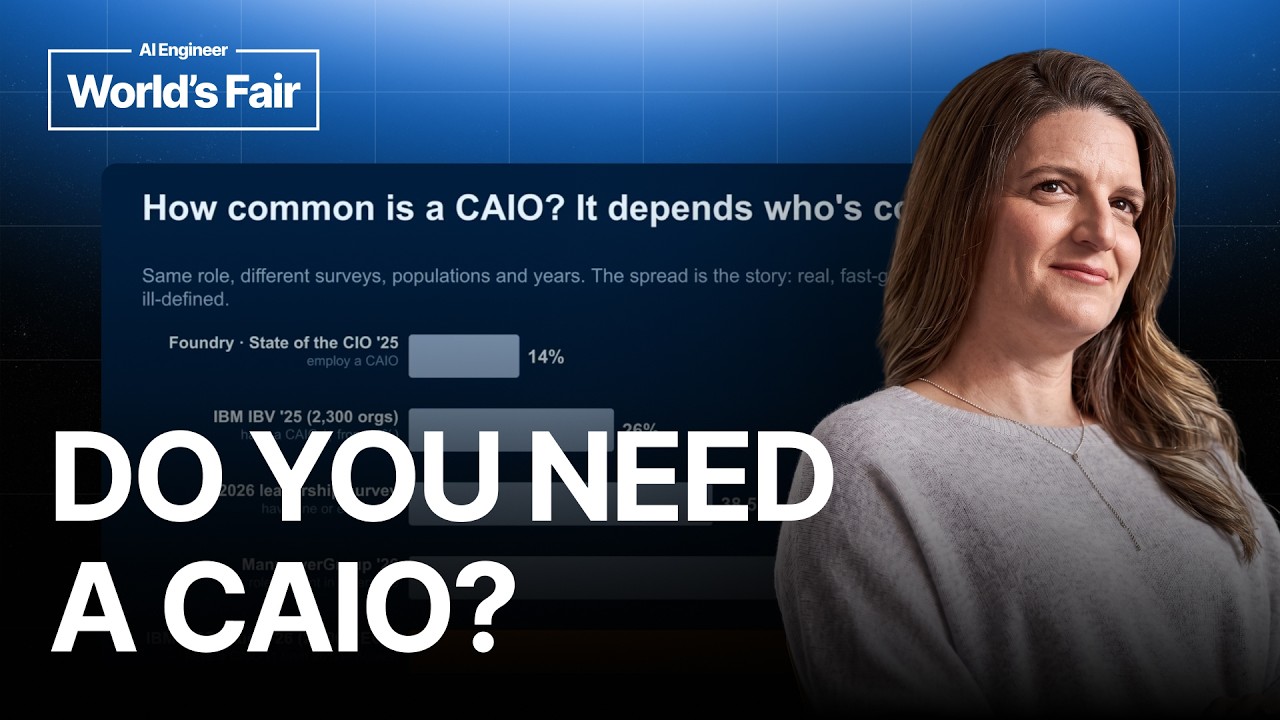
Rania Khalaf, Chief AI Officer at WSO2, shares her insights and experiences in the emerging and evolving role of Chief AI Officer (CAIO). She explains that the role varies significantly depending on the type of company, its AI maturity, and the individual’s skill set. The CAIO role often blends responsibilities across three main focus areas: scientist, architect, and coach. As a scientist, the CAIO experiments and explores AI technologies; as an architect, they shape AI strategy and product integration; and as a coach, they evangelize and educate both internal teams and customers about AI adoption and benefits.
Khalaf highlights that the CAIO role is complex because AI permeates nearly every aspect of business, making it essential to maintain discipline to avoid overwhelm. She emphasizes the importance of adapting the role to the company’s needs, whether that means deep technical involvement or more strategic and operational oversight. For example, some CAIOs focus on managing AI projects and budgets without deep technical expertise, while others, like Khalaf herself, are deeply involved in shaping company-wide AI strategy and innovation.
Drawing from her career journey, Khalaf contrasts her experiences at IBM Research, a biotech startup, and WSO2. At the biotech company, her role involved integrating AI into agricultural gene editing processes and managing IT infrastructure, which was quite different from her current focus at WSO2, where she balances AI research, strategic architecture, and outward coaching. She notes that the AI maturity of the company and the technical background of the workforce influence how much coaching and evangelism are needed internally versus externally.
Khalaf also discusses how she measures AI progress within her organization, focusing on AI fluency across teams, the level of AI adoption in products, tool availability, and market visibility rather than simplistic metrics like token usage. She stresses that what is measured should evolve with the company’s AI journey to ensure alignment with strategic goals. At WSO2, a 20-year-old open-source software company, she has helped integrate AI capabilities into their API, identity, and integration platforms, emphasizing open-source contributions and community engagement.
In closing, Khalaf advises those interested in the CAIO role to find a position that aligns with their skills, passions, and what the world needs, as the role is still fluid and varies widely. She underscores the importance of strong collaboration with the CEO and other company leaders to succeed. The role requires flexibility and a willingness to shape it according to personal strengths and company context, making it a unique and evolving leadership position in the AI landscape.
Useful Links
- WSO2 Official Website — Direct source for WSO2’s AI product offerings and platform capabilities relevant to the Chief AI Officer role.
- WSO2 GitHub Repository — Primary source for WSO2’s open source AI software and agent platform implementations discussed in the video.
- LinkedIn Profile of Rania Khalaf — Direct profile of the speaker providing context and background relevant to the video content.
- WSO2 Team Page - Rania Khalaf — Official company page confirming the speaker’s role and affiliation relevant to the video discussion.