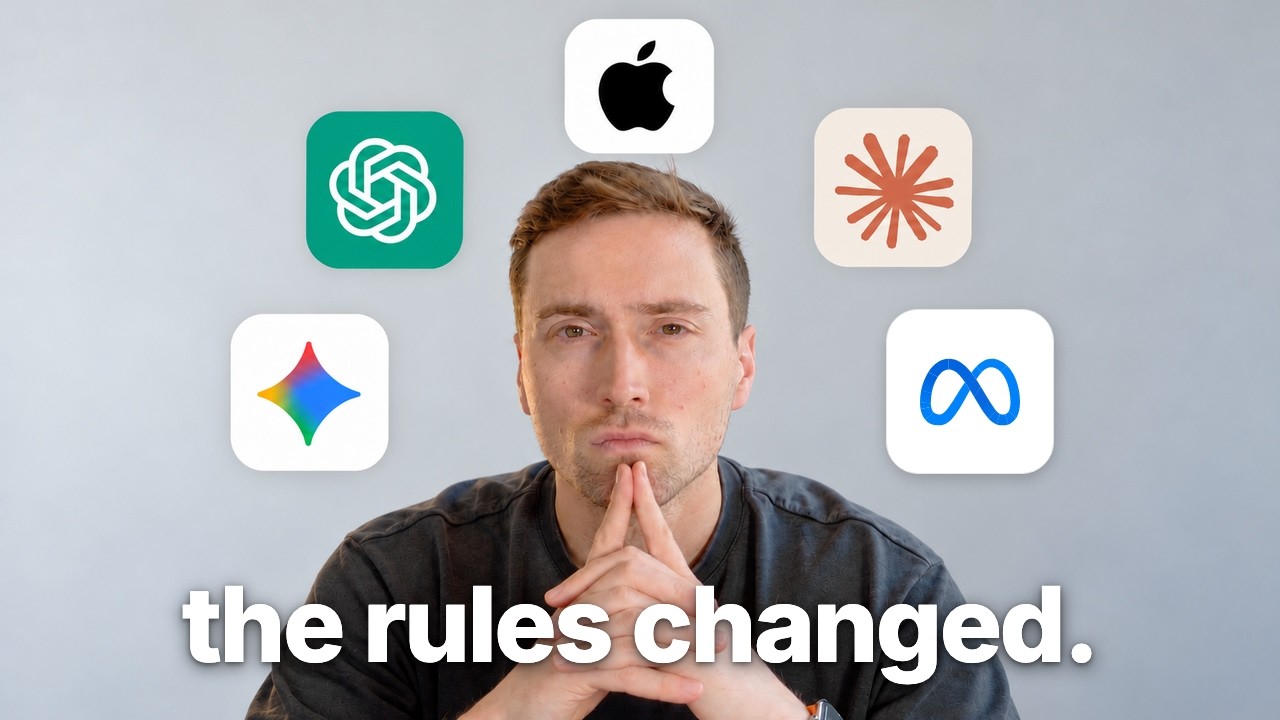
The video discusses how the rules of working with AI have evolved significantly in 2027, moving away from the old method of simply pasting prompts into chatbots and copying responses. Instead, the focus is now on setting up personalized AI agents that proactively manage tasks independently, such as chasing unpaid invoices or handling client outreach. These agents are briefed once, connected to relevant tools like email or accounting software, and operate autonomously while still requiring user approval before taking critical actions. This shift allows users to deploy multiple specialized agents tailored to different aspects of their work, greatly enhancing productivity.
A key development highlighted is the importance of connecting AI agents to all the tools you use daily. Unlike earlier in the year when users had to manually input context, AI can now access emails, notes, transcription services, project management software, and more, enabling it to work with accurate and up-to-date information. Users can control permissions to ensure data security and prevent unauthorized actions. This integration is essential for AI to function effectively and independently, marking a major step forward from the previous reliance on isolated chat interactions.
The video also emphasizes the need to select the appropriate AI model for each task. While earlier in the year, only the most powerful models could handle complex jobs, smaller and more efficient models have now become capable of managing most routine tasks at a fraction of the cost. High-end models are reserved for strategic, research-intensive, or high-stakes work where precision is critical. This tiered approach optimizes resource use and performance, much like assigning tasks to employees based on their expertise and seniority.
Local AI models running on personal devices have transitioned from experimental to practical tools. These models offer privacy, unlimited usage, and independence from cloud services, making them ideal for sensitive or private work. Recent advancements have brought local AI performance closer to that of cloud-based frontier models, enabling users to handle many everyday tasks securely on their own machines. The video encourages learning about and adopting local AI to safeguard data and reduce reliance on external servers.
Finally, the video addresses the changing landscape of AI-generated content and discoverability. With AI content becoming indistinguishable from real content, platforms and governments are introducing mandatory labeling and watermarking to maintain transparency. Businesses must focus on being discoverable through AI-driven search and recommendation systems, as traditional methods like Google rankings are losing effectiveness. Despite AI’s capabilities, human oversight remains crucial; users must review AI outputs carefully to avoid errors and maintain quality. Ultimately, working with AI in 2027 means managing a team of specialized agents, balancing automation with thoughtful supervision.
Useful Links