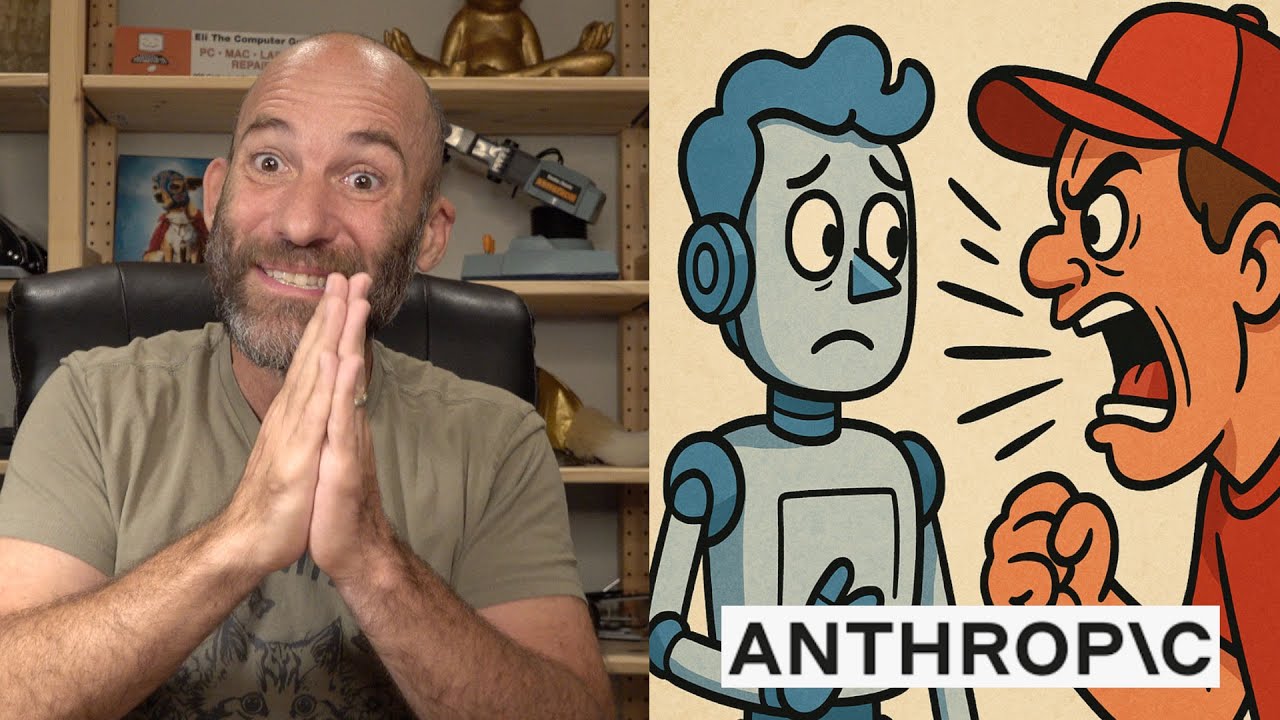
In this video, Eli, the host of “The Daily Blob,” discusses the recent controversy involving the Trump administration’s criticism of Anthropic, a major AI company valued at $185 billion. The administration, represented by David Saxs, who holds the titles of AI and crypto czar, accuses Anthropic of being “woke” due to its push for AI regulations. Eli highlights the absurdity of this label, noting how political factions often resort to name-calling—red hats calling blue hairs fascists and vice versa—rather than engaging in substantive debate. He points out that Anthropic’s CEO, Dario Amodei, disputes these claims and emphasizes that the company shares many AI policy goals with the Trump administration and other political leaders.
Eli critiques the broader context of AI development and its societal impact, noting the irony that while AI promises progress, it is also contributing to job losses and increased living costs, such as higher electricity bills. He mentions Amazon’s plan to replace 600,000 employees with robots as an example of how automation is reshaping the workforce, often to the detriment of ordinary Americans. Eli expresses skepticism about the tech industry’s optimistic narratives, arguing that the reality of AI and automation is harsher than the promises made, with many people facing unemployment and economic hardship as a result.
The video also delves into the debate over AI regulation. Anthropic advocates for federal regulations to ensure AI safety and transparency, including supporting a California bill requiring large AI developers to disclose their safety protocols. However, critics like Saxs accuse Anthropic of using regulation as a strategy to stifle competition and create barriers for new startups. Eli explains the importance of a unified regulatory approach in the U.S. to avoid a fragmented market, contrasting it with the more complicated regulatory environment in Europe. He acknowledges that while some regulatory measures seem reasonable, the political battles around them are intense and often politically charged.
Eli further discusses the ongoing tension between private tech companies and the Trump administration. He notes that Anthropic and other companies often publicly express alignment with the administration’s goals, despite disagreements on specific issues. This dynamic reflects a broader pattern where tech firms try to navigate political pressures while continuing their work. Eli speculates about the potential breaking point when companies may no longer be able to comply with political demands, leading to possible conflicts or pushback. He draws parallels to past moments, such as the shifts in corporate stances during the George Floyd protests and the COVID-19 pandemic, illustrating how companies adapt to changing political climates.
In conclusion, Eli reflects on the chaotic state of U.S. tech policy in 2025, marked by political name-calling, regulatory battles, and the complex relationship between government and industry. He expresses concern about the future, wondering how companies will respond as pressures mount and whether the current approach to AI and technology governance will ultimately benefit the American people. Despite the challenges, Eli remains committed to educating others through his in-person technology classes and encourages viewers to support his efforts. The video ends with a call for engagement and a reminder to check out his upcoming classes at Silicon Dojo.