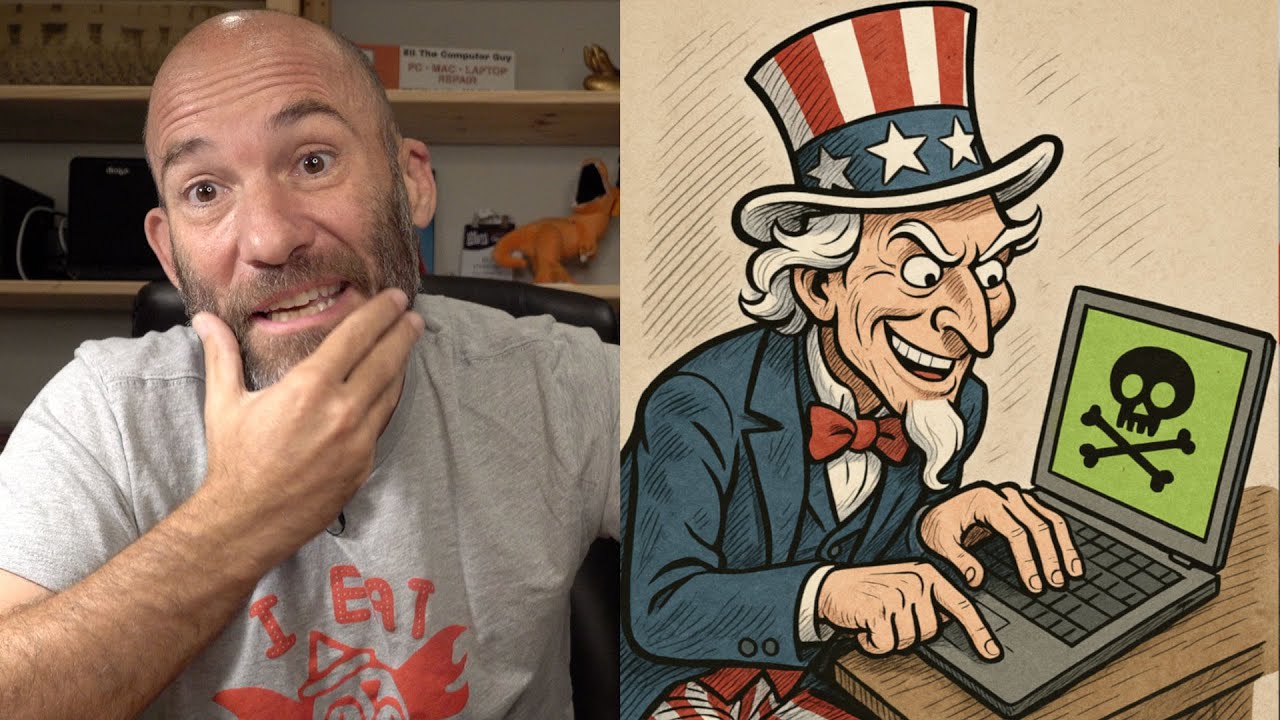
In the video, Eli from Silicon Dojo discusses the U.S. Department of Homeland Security’s request for OpenAI to reveal a ChatGPT user’s identity as part of a criminal investigation, highlighting concerns about government surveillance and privacy in AI communications. He warns that AI interactions, unlike confidential human conversations, can be accessed by authorities, raising important questions about the future of digital privacy and the need for stronger protections.
In this video, Eli, the computer guy from Silicon Dojo in Durham, North Carolina, discusses a significant and concerning development regarding government access to AI communications. He highlights a recent case where the U.S. Department of Homeland Security (DHS) requested OpenAI to unmask a user behind ChatGPT prompts. This request is reportedly linked to an investigation involving a child sex predator who allegedly used ChatGPT in communications on a child abuse website. The DHS is seeking chat logs to gather more evidence, marking what Forbes describes as the first known federal search warrant for OpenAI user data.
Eli emphasizes that this situation is a reminder that government agencies have broad capabilities to monitor and access various forms of communication, including phone calls, text messages, emails, and now AI interactions. He points out that while many people may forget or overlook this fact, anything shared with AI systems like ChatGPT can be recorded, saved, and potentially handed over to authorities. This raises important questions about privacy and the legal frameworks governing government access to AI-generated communications.
The video also touches on broader concerns about government surveillance and discretion, especially under the Trump administration. Eli discusses how agencies like ICE are reportedly developing social media surveillance divisions to monitor speech and behavior, with potential consequences for international students and others in the U.S. He warns that if the government can subpoena AI chat logs in criminal cases, it might also extend such surveillance to other groups, raising fears about a slippery slope toward increased monitoring and control over personal communications.
Eli further explores the implications of AI as a tool for therapy and personal expression. He notes that people might share deeply personal or sensitive information with AI systems, expecting a level of confidentiality similar to that with human therapists or psychologists. However, unlike human professionals bound by confidentiality laws, AI interactions could be subject to government scrutiny, which could have serious consequences for users if their private conversations are accessed and used against them.
In conclusion, Eli urges viewers to consider the broader implications of government access to AI communications and the potential erosion of privacy in the digital age. He critiques the current focus on AI safety and guardrails, suggesting that more attention should be paid to how these systems are managed and protected overall. He invites viewers to share their thoughts on the DHS’s request to OpenAI and the future of privacy and surveillance in the context of AI technology. Throughout the video, Eli also promotes his Silicon Dojo classes and encourages support through donations to continue providing technology education.