# What does China’s AI revolution look like from inside? | The Global Story
**URL:** https://www.artofsm.art/t/what-does-china-s-ai-revolution-look-like-from-inside-the-global-story/24235
**Category:** Content Creators
**Tags:** bbc-news, china, tech
**Created:** [23 September 2026 18:19 UTC](https://www.artofsm.art/t/what-does-china-s-ai-revolution-look-like-from-inside-the-global-story/24235 "2026-09-23T18:19:33Z")
**Posts on this page:** 2
**Page:** 1
### Author:  [@artesia](https://www.artofsm.art/u/artesia)
#### Post date: [23 September 2026 18:19 UTC](https://www.artofsm.art/t/what-does-china-s-ai-revolution-look-like-from-inside-the-global-story/24235/1 "2026-09-23T18:19:33Z")
[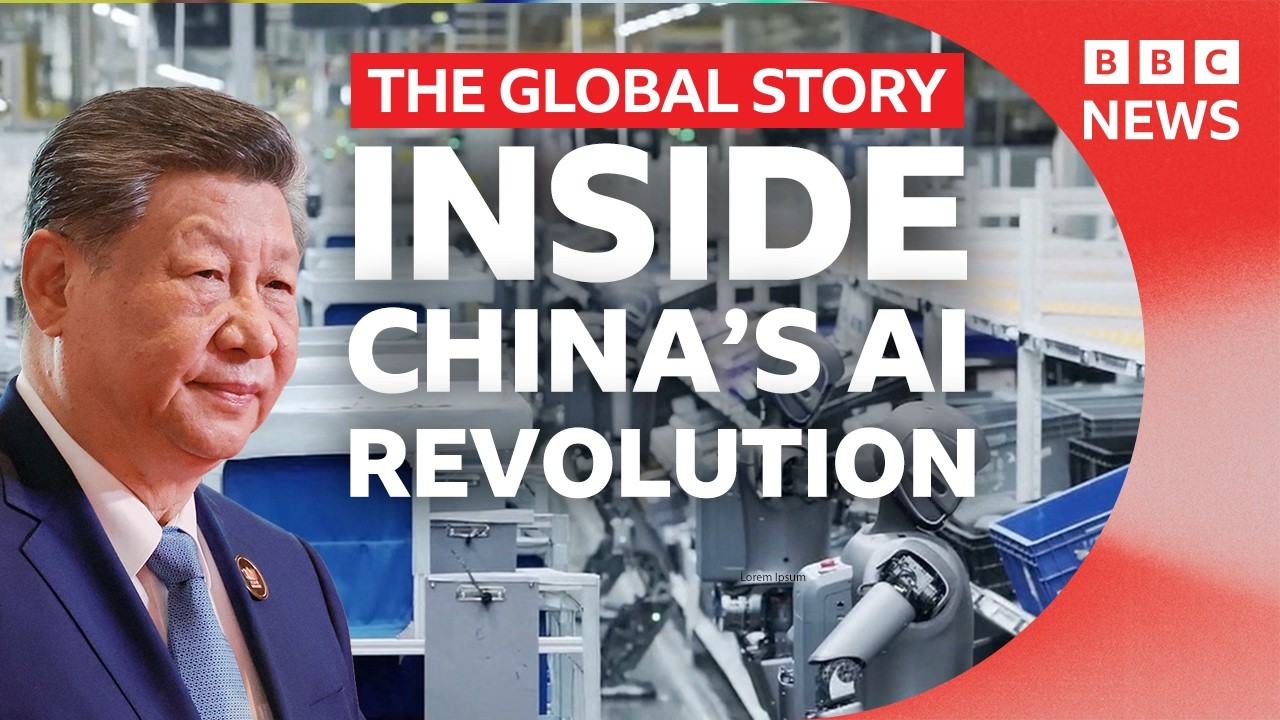 ](https://www.youtube.com/watch?v=zFx8DQTFlxs)
The video provides an inside look at China’s ambitious AI revolution, highlighting massive investments in renewable-powered data centers, educational initiatives, and government support aimed at establishing global AI leadership amid geopolitical competition with the United States. However, it also reveals the challenges of economic disparity and limited local benefits, emphasizing that while AI is a strategic priority, its practical impact on everyday life in rural China remains limited.
---
### Author:  [@artesia](https://www.artofsm.art/u/artesia)
#### Post date: [23 September 2026 18:39 UTC](https://www.artofsm.art/t/what-does-china-s-ai-revolution-look-like-from-inside-the-global-story/24235/3 "2026-09-23T18:39:50Z")
The video explores the reality of China’s AI revolution from an on-the-ground perspective, particularly in the context of the high-profile visit of President Xi Jinping to the White House amid escalating AI competition between China and the United States. AI has become a central topic in the geopolitical dialogue, overshadowing other contentious issues like trade and Taiwan. The discussion highlights the intense race for AI dominance, with both nations investing heavily in infrastructure and technology, while also grappling with concerns about AI safety and ethical development.
A significant part of China’s AI push is visible in Inner Mongolia, where vast data centers powered predominantly by renewable energy are rapidly being constructed. This region, traditionally known for its grasslands and nomadic lifestyle, is transforming with towering wind turbines, solar panels, and massive data storage facilities rising from former farmland. The scale and speed of this development, described as “China speed,” reflect a $75 billion investment and a national ambition to lead in AI technology. However, local opinions are mixed; while some see it as a source of pride and economic opportunity, others feel marginalized, with limited job benefits and concerns over land compensation.
The contrast between China’s technological ambitions and the everyday realities of its rural population is stark. Many locals, including farmers, remain disconnected from the AI revolution, with limited access to modern technology and uncertain about the practical benefits of AI in their lives. This duality underscores the broader challenge China faces: advancing cutting-edge technology while addressing economic disparities and ensuring that the benefits of AI development reach all segments of society. The video suggests that despite the hype, AI is not yet a solution to China’s immediate economic challenges.
Education and skill development are central to China’s long-term AI strategy. AI and coding are integrated into school curricula from an early age, with children interacting with AI-powered robots and learning to coexist with the technology. Beyond schools, AI study centers across the country offer opportunities for adults to learn about AI, reflecting a national effort to cultivate homegrown talent. This approach aims to retain Chinese students who might otherwise study abroad, supported by government incentives and a more challenging international visa environment, thereby fostering a robust domestic AI ecosystem.
Finally, the video touches on the role of state media and propaganda in promoting China’s AI achievements, framing technological progress as a symbol of national strength and global leadership. While China may not yet be at the forefront of AI innovation, its comprehensive infrastructure development, educational initiatives, and government backing position it as a formidable player in the global AI race. The narrative concludes with the recognition that AI is both a strategic asset in international relations and a complex domestic challenge that China continues to navigate.