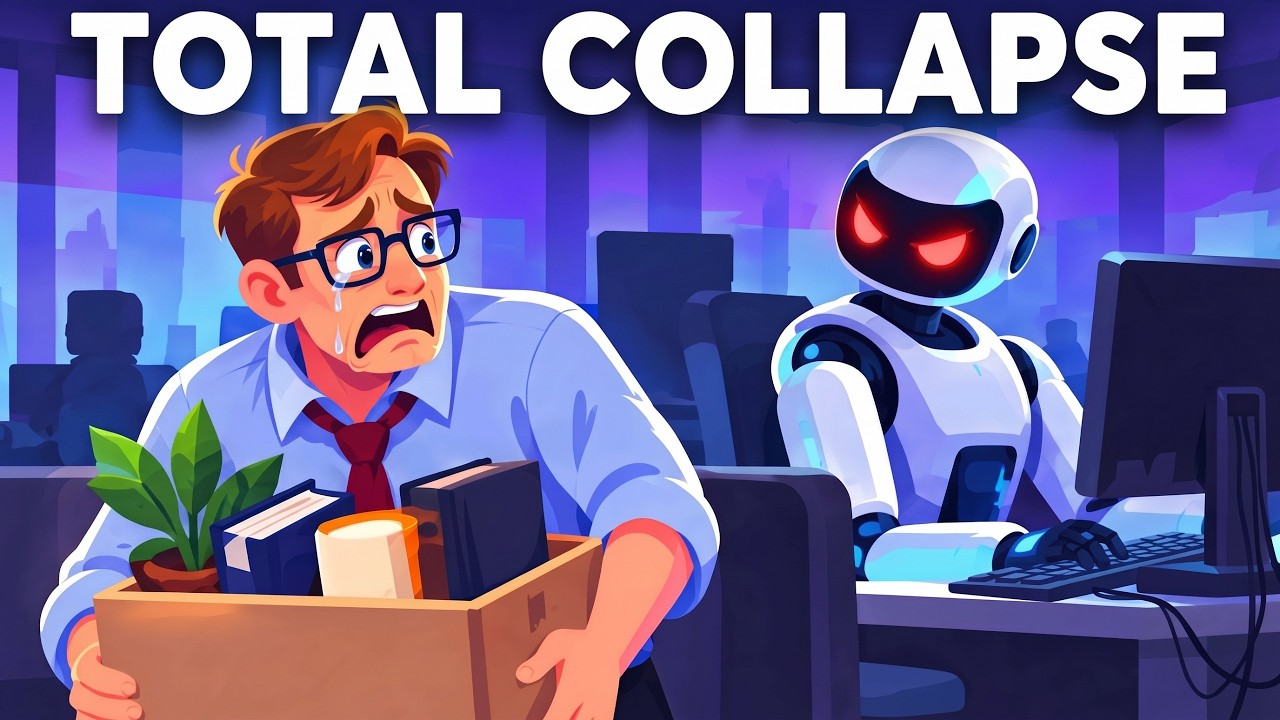
The video explores the paradox of the AI boom: while artificial intelligence promises to make goods and services cheaper or even free, it simultaneously threatens the capitalist system by eliminating the traditional worker-consumer relationship. Capitalism relies on workers earning wages to buy products, but as AI and automation replace human labor, fewer people have incomes to sustain consumption. This shift is already evident in industries like warehousing, transportation, and agriculture, where robots and autonomous machines are reducing the need for human workers, not by firing existing employees but by not creating those jobs in the first place.
Historically, the link between productivity and wages was strong, exemplified by the post-World War II American economy where rising productivity led to rising wages and a thriving middle class. However, since the late 1970s, productivity has continued to increase while wages have stagnated, signaling a decoupling of work and income. Early warnings about automation’s impact on employment date back to the 1960s, but the technology then was insufficient to cause widespread disruption. Today, AI threatens nearly half of all jobs, fundamentally challenging the economic model where work guarantees income.
To address the collapse of traditional employment, Silicon Valley and policymakers have proposed universal basic income (UBI) as a solution, providing citizens with government handouts to maintain purchasing power. However, the video highlights critical differences between wages and UBI: wages are earned and thus stable, while UBI is a political decision that can be revoked, potentially making recipients dependent on the state or corporations. Moreover, funding UBI at scale would require massive government spending and taxation, which presents significant economic and social challenges, including the risk of increased bureaucratic control over individuals’ lives.
The concentration of wealth exacerbates these issues. Companies save billions by replacing workers with AI but often use those savings for stock buybacks rather than lowering prices or creating new jobs, enriching shareholders instead of the broader population. This leads to reduced economic velocity, meaning money circulates less frequently among consumers, further weakening demand. Additionally, the rise of programmable digital currencies controlled by governments could allow unprecedented control over how people spend their money, effectively tying individuals’ livelihoods to the whims of centralized authorities or corporations.
Ultimately, the video warns that the AI revolution could lead to a future where ordinary people no longer own the means of production or have meaningful economic agency. Instead, they may become dependent on digital stipends controlled by either the state or a few mega-corporations, with limited freedom to choose how to live or spend. This scenario poses a fragile and precarious system vulnerable to technological failures or political decisions, raising profound questions about the sustainability of capitalism and individual autonomy in an AI-driven world.
Useful Links