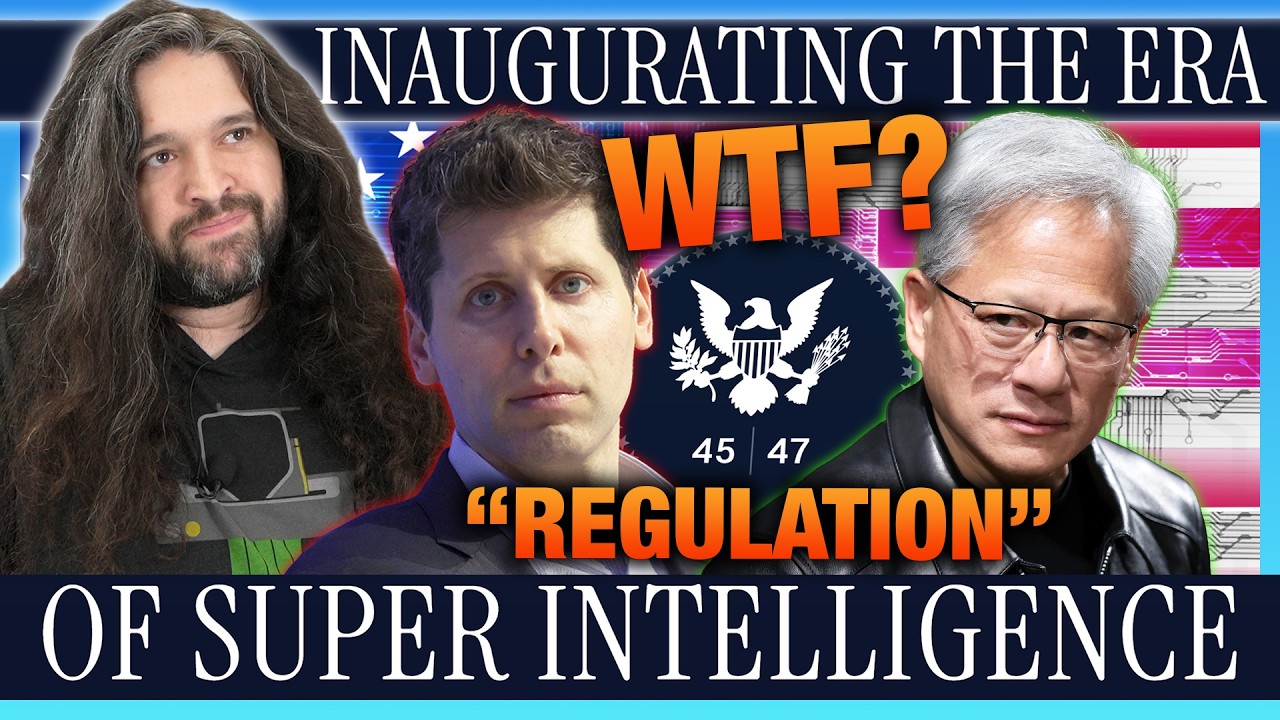
The video discusses a recent gathering of top AI executives and government officials in Washington DC, where they signed the “White House Accord on Super Intelligence” (SI), a voluntary framework aimed at ensuring AI safety. Notably, the term “artificial intelligence” was officially rebranded as “super intelligence” by these leaders, including companies like Nvidia, OpenAI, Anthropic, Google, Meta, and even former President Donald Trump. Despite the grandiose language and the president likening the accord to a constitution, the agreement lacks any binding legal force or concrete regulatory measures. Instead, it relies heavily on self-policing, internal monitoring, and undefined independent audits by the companies themselves, raising skepticism about its effectiveness.
The accord outlines four main commitments: implementing robust internal controls during AI development, empowering internal teams to oversee these controls, partnering with independent external auditors, and establishing independent board committees to supervise the process. However, the specifics of these controls, the nature of the audits, and the independence of the oversight remain vague and undefined. Critics argue that this framework essentially allows the tech giants to regulate themselves without meaningful external accountability, potentially enabling collusion and prioritizing corporate profits over public safety.
The video highlights the complex relationship between the tech industry and the federal government, emphasizing the extensive financial ties and lobbying efforts by AI companies. Many of these companies have donated millions to political campaigns and government initiatives, fostering a close-knit alliance that influences policy decisions. This cozy relationship appears to have resulted in the government avoiding stringent AI regulations, instead opting for symbolic agreements that favor industry growth and economic benefits, particularly through the expansion of data centers and AI infrastructure.
There is also internal tension among AI leaders regarding the pace of AI development. While some executives, like Anthropic’s CEO Dario Amodei, advocate for slowing down AI progress to address safety concerns, others, notably Nvidia’s Jensen Huang, push for accelerating development, arguing that faster progress will enhance safety. This divide was evident during the White House meeting, where Amodei appeared uncomfortable amid the more aggressive pro-development stance of his peers. Despite these disagreements, the industry presented a united front publicly, emphasizing collaboration and responsible innovation.
Ultimately, the video portrays the White House Accord on Super Intelligence as largely symbolic, serving more as a public relations move than a substantive regulatory framework. It suggests that the public has been excluded from meaningful participation in AI governance, with decisions dominated by powerful corporations and government insiders. The video concludes with a critical view of the current state of AI oversight, warning that without enforceable regulations, the industry’s self-regulation may prioritize profit and control over genuine safety and ethical considerations.
Useful Links