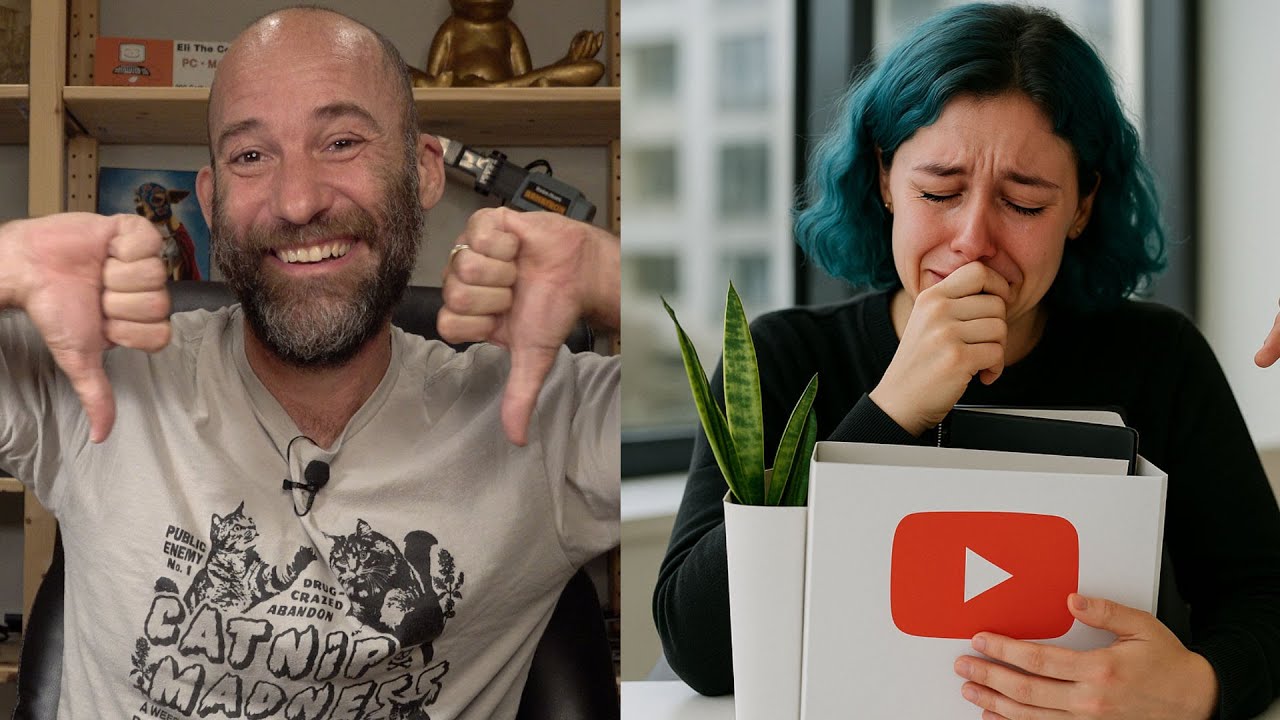
In this video, Eli, a long-time YouTube content creator, discusses recent news about YouTube offering voluntary buyouts to its employees as part of a company reorganization focused on artificial intelligence (AI). Eli expresses mixed feelings about this development, noting that while layoffs are common across major tech companies like Amazon, Microsoft, and Intel, it is somewhat ironic and even amusing to see YouTube employees facing similar challenges to content creators who have long struggled with the platform’s unpredictability and lack of support. He highlights the emotional difficulty for employees who may feel abandoned by the company, drawing a parallel to content creators’ experiences of seeking YouTube’s attention and support.
Eli explains how voluntary buyouts typically work, describing them as a softer approach to layoffs where employees are offered severance pay to leave voluntarily. However, he warns that this can be a double-edged sword, especially in the current tough job market where hiring freezes and economic uncertainty make finding new employment difficult. He advises employees to carefully consider their options, as declining a buyout might only delay an inevitable layoff, potentially leaving them worse off without severance benefits. Eli emphasizes the importance of taking control of one’s career and being prepared for changes driven by broader economic and corporate forces.
The video also touches on YouTube’s shift towards AI, with the company restructuring its product teams to focus more on AI-driven initiatives. Eli is skeptical about what this means for content creators, recalling the many challenges creators have faced with AI moderation and management tools in the past. He notes that while YouTube claims no roles are being eliminated, the offer of buyouts suggests otherwise. He expresses curiosity about how these changes will impact the platform and content creators, acknowledging that YouTube has historically been a difficult platform to navigate but also noting some recent improvements under the current CEO, Neil Mohan.
Eli reflects on his long history with YouTube, from its early days to the present, and how the relationship between creators and the platform has evolved. He points out that despite many frustrations, outright quitting YouTube has become less common among creators in recent years. He also discusses the disconnect between content creators and YouTube’s corporate side, noting that creators often have little direct contact with the company beyond automated systems and occasional partner managers. This distance makes it hard for creators to understand or influence corporate decisions that affect their livelihoods.
In closing, Eli encourages both YouTube employees and content creators to have a plan B and to stay adaptable in the face of ongoing changes. He plugs Silicon Dojo, his hands-on technology education platform, as a resource for learning new skills, especially related to AI and technology. Eli’s tone is candid and sometimes irreverent, mixing humor with practical advice, and he invites viewers to share their thoughts on the situation. Ultimately, he frames the current upheaval as part of a familiar, if challenging, ride through the tech industry’s ups and downs.