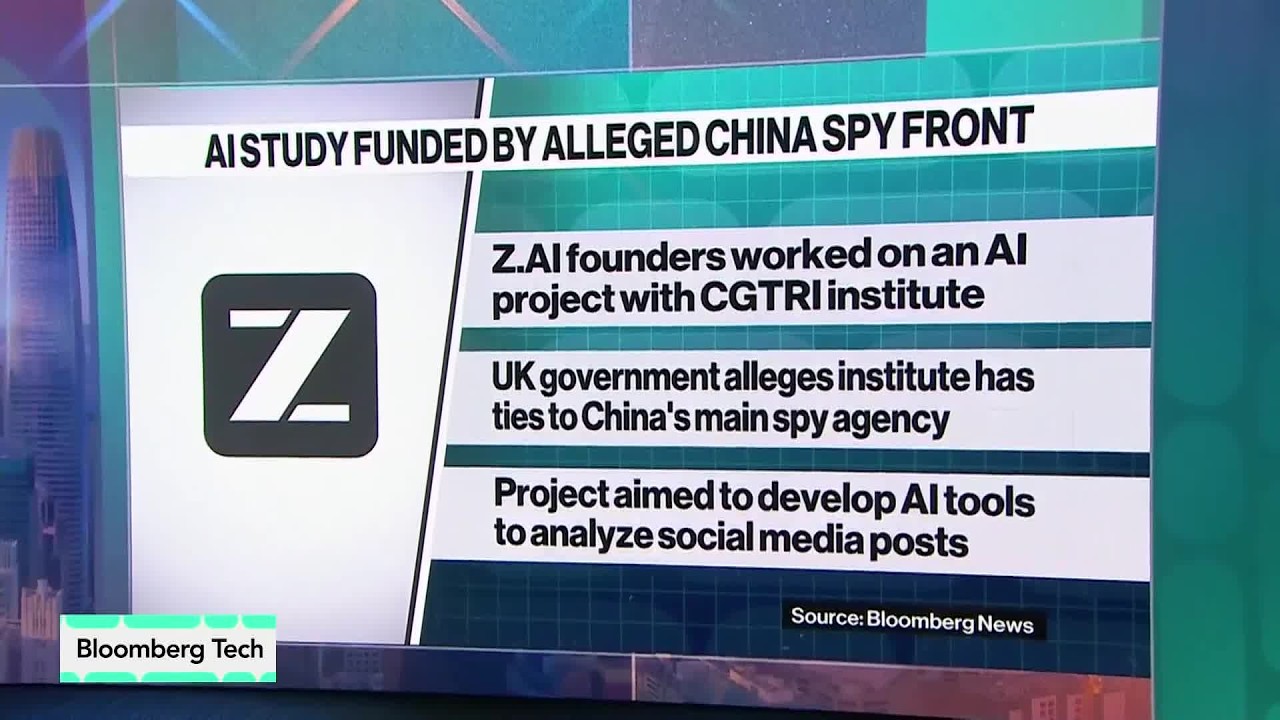
The US government has blacklisted Chinese venture capital firm Miracle Plus and scrutinized Z.AI founders due to their involvement with a research project linked to the China General Technology Research Institute, which is suspected of ties to Chinese state intelligence. This highlights growing Western concerns over the intersection of AI innovation, investment, and espionage amid efforts to regulate China’s expanding AI sector and protect national security.
The US government has blacklisted Miracle Plus, a Chinese venture capital firm founded by former Microsoft AI executive Liu Qi, due to its investment in a startup accused of stealing Google AI technology. This move is part of a broader effort by Washington to scrutinize and regulate China’s rapidly growing AI ecosystem. Potential sanctions against Miracle Plus could include freezing of US assets and banking restrictions, reflecting heightened concerns over technology transfer and national security.
A key focus of recent scrutiny is Z.AI, one of China’s leading artificial intelligence companies, which recently became the first major Chinese AI firm to go public on the Hong Kong stock exchange. While Z.AI itself has not been directly flagged for espionage, attention has turned to four of its founders who participated in a research project co-funded by the China General Technology Research Institute (CGTRI). This collaboration has raised alarms due to CGTRI’s alleged ties to China’s Ministry of State Security, the country’s main intelligence agency.
The UK government’s MI5 issued an espionage alert on September 30, highlighting CGTRI’s close connections to Chinese state intelligence. This alert has brought CGTRI into the spotlight, as it was previously relatively unknown outside China. The research project involving Z.AI’s founders and CGTRI lasted four years and overlapped with the founding of Z.AI, suggesting a potentially significant link between China’s AI industry and its intelligence apparatus.
This development is particularly relevant amid ongoing debates in the US about how to regulate AI technology and companies. While US policymakers are still grappling with domestic AI regulation, the connections between Chinese AI firms and state intelligence agencies add a complex international dimension. The global nature of AI technology means that developments in China’s AI sector have implications far beyond its borders, influencing national security considerations worldwide.
Overall, the story underscores the growing concerns in Western countries about the intersection of AI innovation, investment, and espionage. The involvement of Z.AI’s founders in a project linked to a suspected Chinese spy agency highlights the challenges of disentangling commercial AI advancements from state intelligence activities. As AI continues to be a critical area of technological competition, governments are increasingly vigilant about the potential risks posed by foreign AI entities with ties to intelligence services.
Useful Links