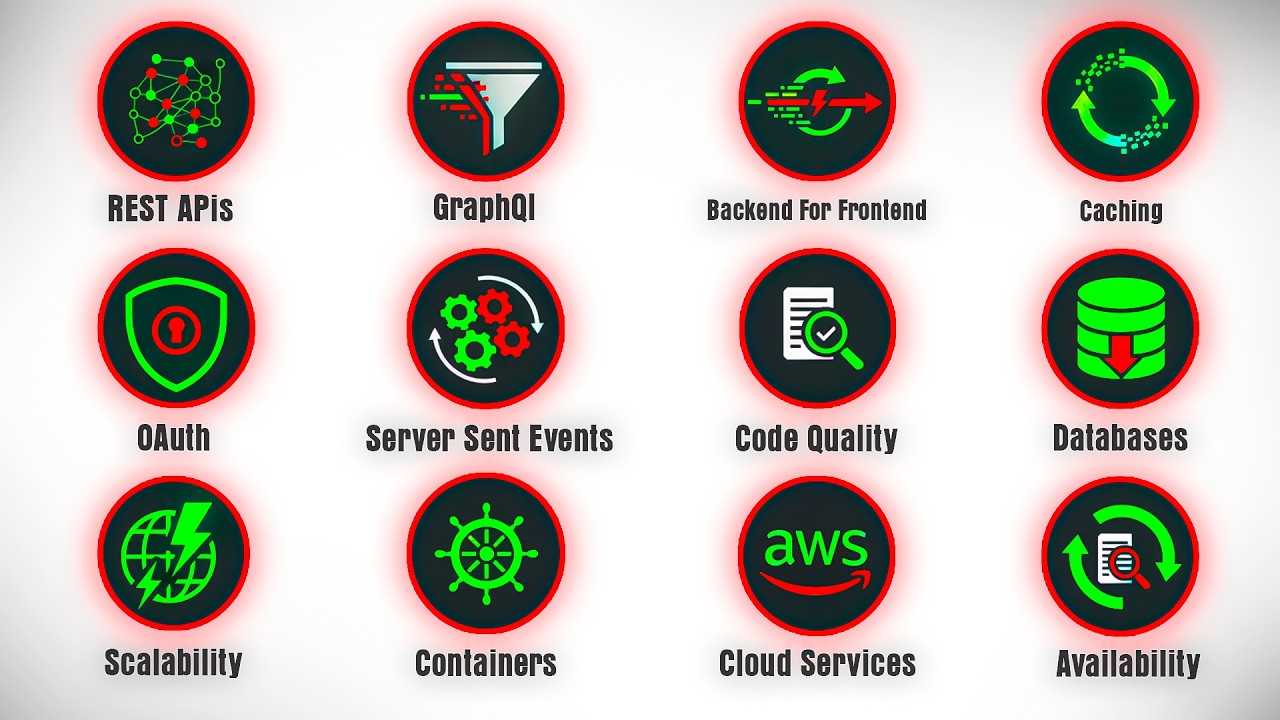
The video emphasizes that modern front-end engineers need to expand their skill set beyond just building UI components with frameworks like React or Angular. Companies increasingly expect front-end developers to contribute to back-end development to deliver end-to-end solutions. The first key concept introduced is understanding REST APIs and the HTTP protocol that underpins them. Front-end engineers should familiarize themselves with HTTP methods, status codes, and how RESTful endpoints are structured. Gaining hands-on experience by exploring existing APIs, reading OpenAPI (Swagger) documentation, and even extending endpoints can significantly boost independence and confidence in full-stack roles.
Next, the video explores GraphQL as a modern alternative to REST APIs, designed to address limitations like underfetching and overfetching of data. GraphQL allows clients to request exactly the data they need in a single query, making it highly flexible for different front-end clients such as mobile and web apps. The concept of Backend for Frontend (BFF) is introduced, where tailored back-end layers serve specific front-end clients, often implemented using GraphQL. The video also highlights common GraphQL challenges like the N+1 problem, where inefficient querying can overload databases, and suggests solutions like data loaders to optimize performance.
The discussion then moves to data streaming technologies such as WebSockets and Server-Sent Events (SSE). These are essential for real-time applications like chat apps or live data updates. WebSockets provide full-duplex communication channels but can be complex to implement and scale. SSE offers a simpler, more scalable alternative when communication is mostly one-way—from server to client—making it suitable for scenarios like streaming AI-generated content. Understanding these technologies is increasingly important, especially as real-time features become more common in modern applications.
The video further delves into the back-end architecture, focusing on the business logic layer and the persistence layer. Business logic is described as the “brain” of the application, where rules, validations, and processing occur before data is stored. The use of Data Transfer Objects (DTOs) is explained as a way to package and sanitize data before it reaches the database. Regarding databases, the video contrasts SQL (structured, relational) and NoSQL (unstructured) databases, explaining their use cases, advantages, and challenges. It also covers database scalability techniques such as read replicas, indexing, and sharding, along with the CAP theorem, which outlines trade-offs between consistency, availability, and partition tolerance.
Finally, the video touches on the infrastructure layer, including deployment and CI/CD processes, which are increasingly expected knowledge areas for senior front-end engineers transitioning to full-stack roles. The presenters recommend a gradual learning approach, starting with identifying knowledge gaps and building expertise within one’s comfort zone before expanding further. They also mention a free technical assessment to help viewers pinpoint areas for improvement. For those seeking structured guidance, they promote a mentorship program designed to help JavaScript engineers level up to senior full-stack positions with community support and personalized feedback.