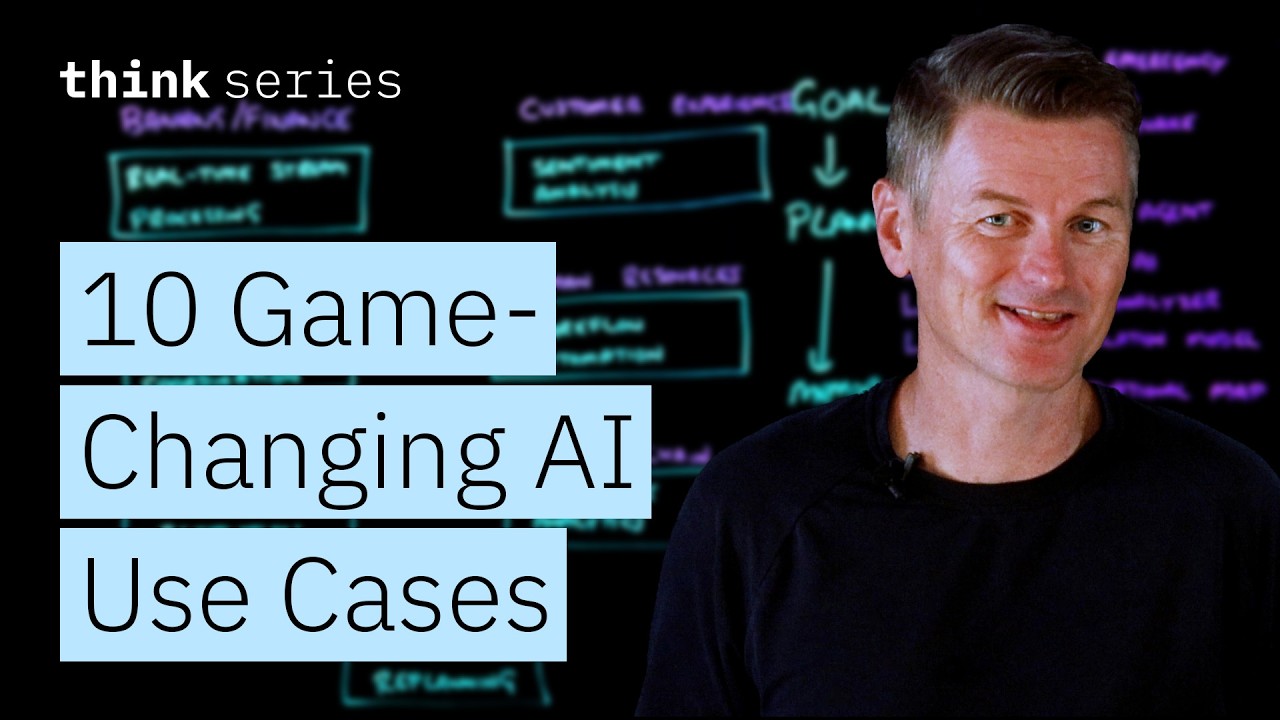
The video explores the capabilities and practical applications of AI agents, which differ from traditional chatbots by maintaining state, breaking down complex tasks, and autonomously planning and executing actions toward defined goals. Unlike single-prompt chatbots, AI agents can operate iteratively and in parallel, adjusting their strategies based on intermediate results. The video focuses on three primary use cases—Internet of Things (IoT), Retrieval Augmented Generation (RAG), and multi-agent workflows—demonstrating how AI agents bring real-world benefits through continuous planning, execution, and feedback loops.
In agriculture, AI agents interface with IoT devices to optimize farming practices. By setting a goal such as maximizing crop yield, the agent uses a planner to gather real-time data from weather and soil sensors via APIs, combines this with historical data stored in memory, and generates an action plan like activating irrigation systems. This process is iterative and self-improving, as the agent learns from outcomes such as crop growth to enhance resource efficiency over time, showcasing how AI agents can autonomously manage complex environmental conditions.
The content creation use case highlights the power of Retrieval Augmented Generation (RAG). Here, an AI agent tasked with writing a blog post on solar energy for students uses a planner to search for up-to-date information, loading relevant documents into a vector database that serves as its memory. When drafting, the agent retrieves specific facts from this database to ensure accuracy and relevance, iteratively refining the content by critiquing its own work and adjusting tone and detail. This approach enables authentic, data-driven content generation beyond the limitations of static training data.
Disaster response exemplifies the use of multi-agent workflows, where a coordinator agent manages several specialist agents working in parallel. These agents analyze satellite imagery, social media posts, and simulation models to assess damage and identify urgent needs after events like earthquakes. Shared memory allows all agents to update a situational map, while the executor and action components coordinate emergency responses such as dispatching resources and issuing alerts. This multi-agent system enhances situational awareness and speeds up critical decision-making in high-stakes environments.
The video concludes by briefly outlining seven additional use cases across various industries, all following the same AI agent framework of goal setting, planning, memory, execution, and action. These include fraud detection in banking, sentiment analysis in customer service, healthcare coordination, HR workflow automation, IT operations remediation, supply chain demand forecasting, and dynamic route planning in transportation. Together, these examples illustrate the broad applicability and transformative potential of AI agents in automating complex, multi-step processes across diverse domains.