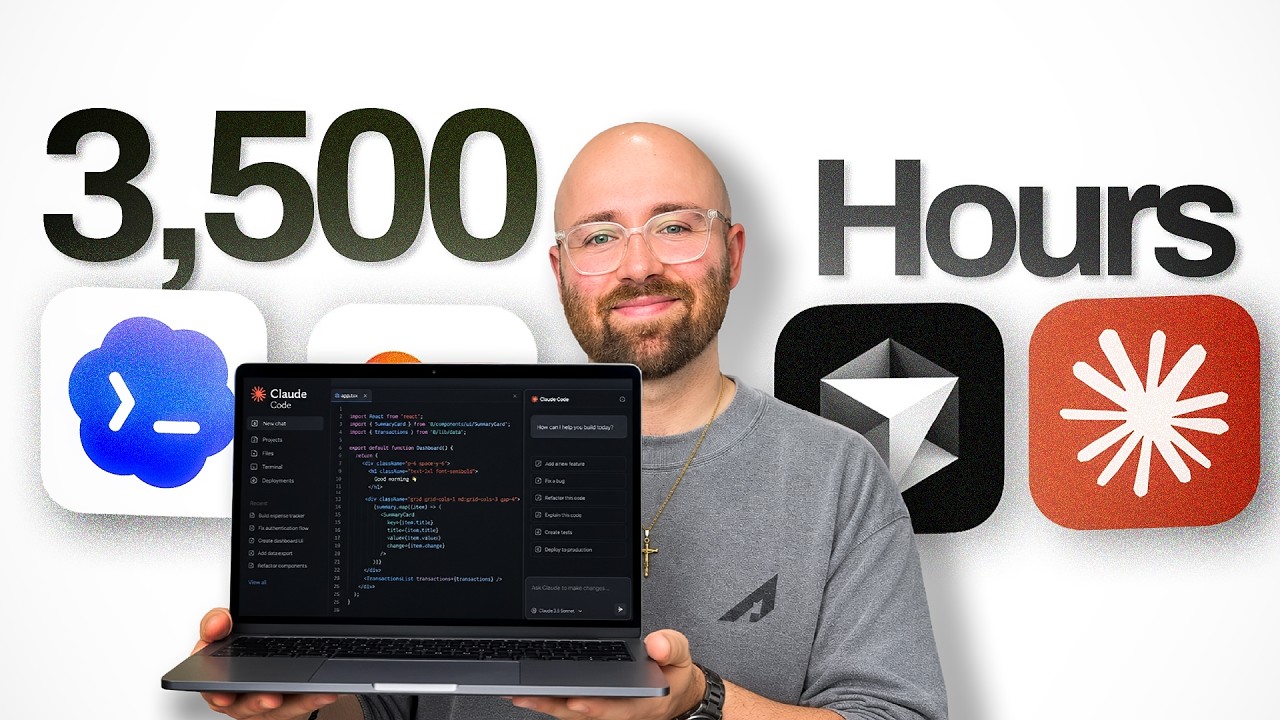
After 3,500 hours of vibe coding, the creator realized that while AI enables rapid prototyping and shifts coding towards architectural thinking, true success requires focusing on building practical, user-centered products with real value rather than just experimenting with cool demos. They emphasize the importance of finishing projects, engaging with users, balancing building and marketing efforts, and avoiding the pitfalls of novelty-driven distractions to create scalable solutions that genuinely solve problems.
After dedicating over 3,500 hours to “vibe coding,” the creator reflects on the transformative journey of building a wide range of projects, from faceless YouTube channels to SaaS products and automations. Despite most of these creations being functionally useless, the experience profoundly shifted their understanding of technology and what can be built with AI. Early on, the ability to quickly prototype, such as creating a readme generator, changed their identity from a non-builder to someone who can create. AI has elevated the role of a coder from focusing on syntax and functions to thinking like an architect, enabling rapid prototyping but also introducing challenges around deciding what and how much to build.
One key insight is that while AI makes coding easier, it also accelerates failures and technical debt, as quick prototypes often lack robustness and practical usability. Many impressive demos are not practical products, and a working demo with a happy path is far from a reliable product that can handle real-world user behavior. The creator emphasizes the importance of surrounding infrastructure and boundaries for AI agents to function reliably, as well as the need to avoid overbuilding, which wastes time and complicates projects. They also highlight the difference between having an app live and actually launching it with marketing and user engagement, stressing that building alone is not enough.
The journey also revealed the importance of learning through real projects rather than linear education. Practical experience with things like DNS and networking deepens understanding far beyond theoretical knowledge. The creator warns against relying on one-shot AI prompts as products, noting that true products require hours of work and iteration. They advise focusing on solving real problems, ideally starting with personal pain points, and engaging with paying users to gain valuable feedback. This approach contrasts with the common trap of endlessly experimenting and starting new projects without finishing or launching them.
Another significant lesson is the psychological and workflow challenges of vibe coding. The creator describes the “novelty tax,” where the excitement of new ideas leads to constant context switching and unfinished projects. They note the mental burden of keeping too many open threads and the necessity of declaring some projects dead to maintain focus. Additionally, they discuss the dual personas involved in building and marketing, recognizing that the motivation and skills required for each are different and both are essential for success. Marketing early, even before a product is fully built, can help capture excitement and validate ideas.
Ultimately, the creator concludes that the next phase of their vibe coding journey must focus on compounding real value rather than just building cool projects. They aim to leverage their accumulated knowledge to create scalable SaaS products or automation solutions that serve real people and businesses. The overarching message is that building alone is no longer enough; success depends on delivering tangible value and reconnecting with the real world through meaningful products. This reflection serves as advice for others to avoid wasting time on novelty and instead focus on creating solutions that genuinely help users.