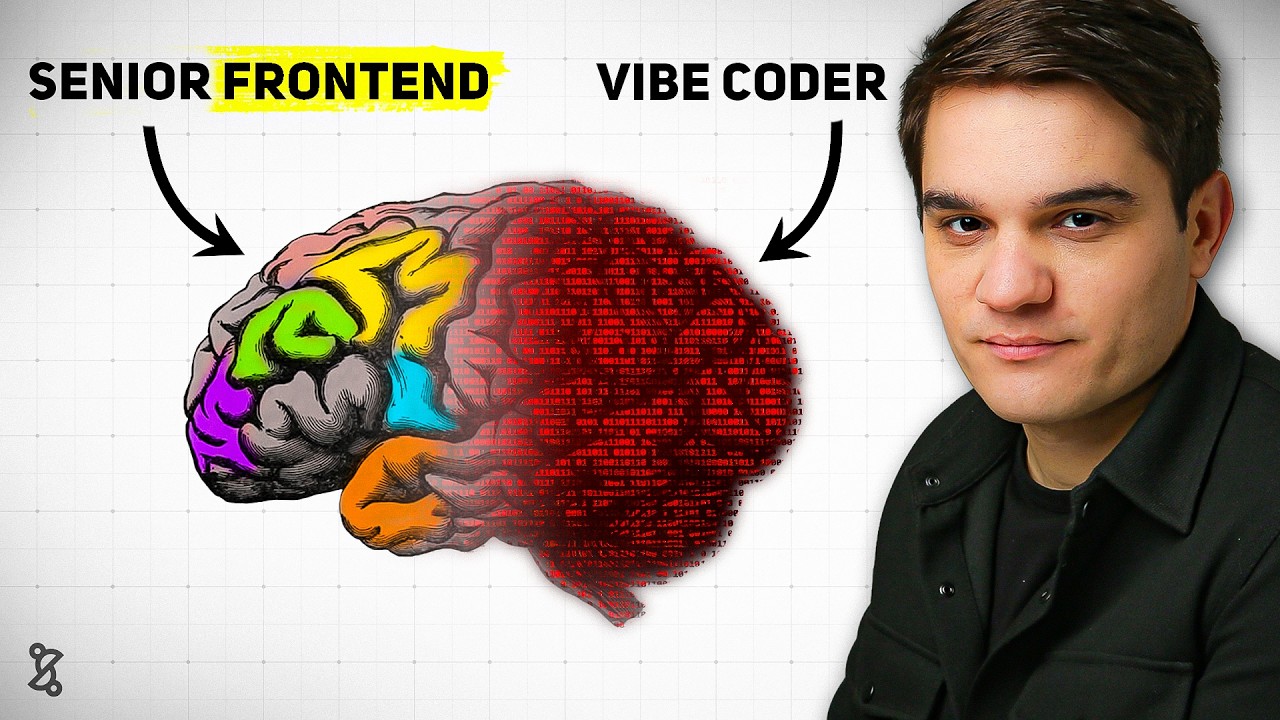
The video emphasizes that front-end engineers can become “AI-proof” by mastering core skills such as front-end system design, code quality optimization, and state/data management, which AI struggles to handle effectively. While AI can automate repetitive tasks like design-to-code conversion and testing, engineers who focus on higher-level problem-solving and maintaining scalable, maintainable codebases will remain essential in the evolving development landscape.
The video addresses concerns front-end engineers may have about AI replacing their roles and highlights three core front-end skills that can make them “AI-proof.” The first crucial skill is front-end system design, which involves creating well-structured architectures with clear boundaries and modular components. While AI can generate visually appealing UIs, it often produces code that is expensive to maintain and extend due to poor architectural decisions. Good system design ensures stable, scalable, and maintainable codebases, enabling engineers to effectively use AI tools without sacrificing quality.
The second skill discussed is the ability to convert design deliverables into working code, known as design-to-code. This task has been heavily impacted by AI, as large language models (LLMs) can efficiently generate HTML and components from design inputs. However, this mechanical aspect of front-end work is becoming less central, and engineers who only perform these repetitive tasks risk being replaced or marginalized. Instead, front-end roles will evolve to focus more on higher-level problem-solving and system design.
Web performance and automated testing are also examined. While AI can assist with performance optimization and generate tests quickly, these areas are becoming less of a differentiator for engineers. AI excels at repetitive tasks like resizing images or writing boilerplate tests, freeing engineers to focus on diagnosing complex issues and setting testing strategies. The video emphasizes that automated testing coverage has improved significantly with AI assistance, making it a valuable tool rather than a threat.
Code quality remains a significant challenge where AI falls short. AI-generated code often includes hardcoded values that reduce responsiveness and consistency, as well as redundant or poorly structured components that hinder reusability and maintainability. Engineers must develop deep expertise in reviewing, refactoring, and optimizing AI-generated code to avoid accumulating technical debt. This granular knowledge, combined with system design skills, is essential for maintaining high-quality front-end applications in an AI-assisted development environment.
Finally, the video highlights the importance of understanding state and data management in front-end development. Effective state modeling reduces redundancy and complexity, which AI struggles to handle well on its own. Engineers who master these principles can better guide AI tools and maintain efficient, scalable applications. The speaker encourages front-end developers to deepen their knowledge in system design, code quality, and state management to stay relevant and excel in the evolving landscape shaped by AI technologies.