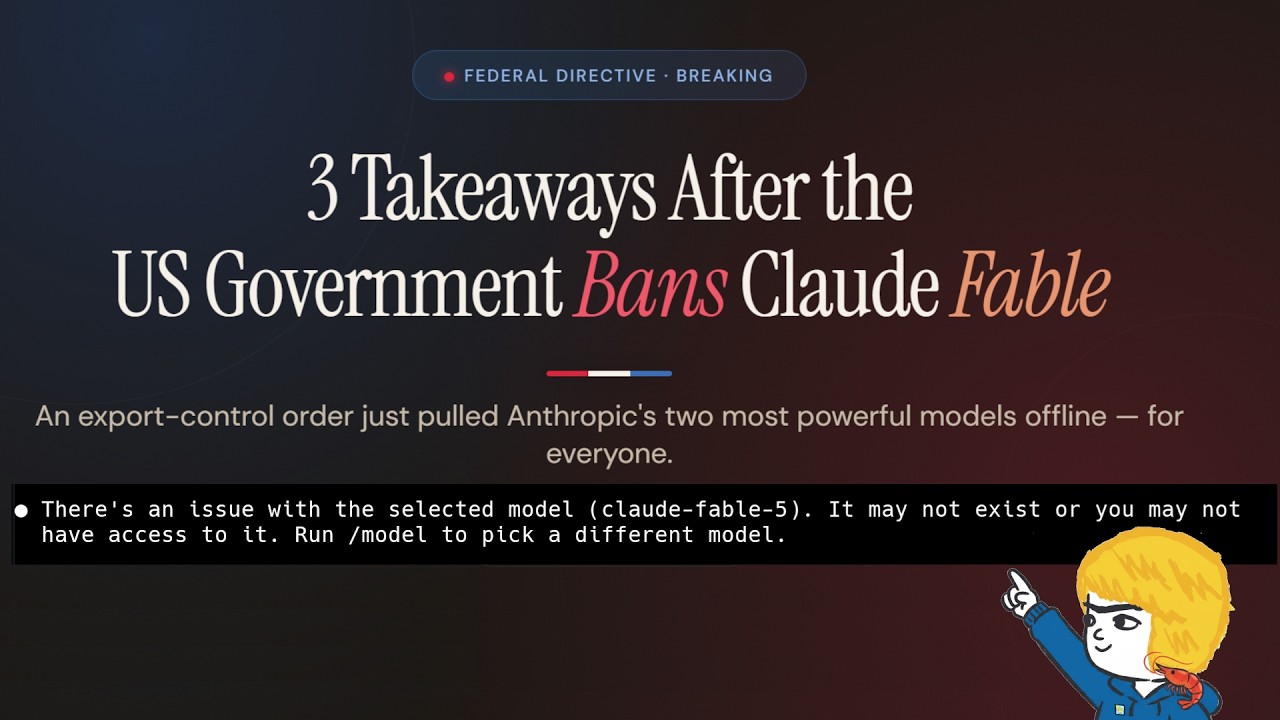
The recent removal of Anthropic’s AI model, Fable 5, following a US government directive has sparked significant discussion in the AI community. Just days after its release, access to Fable 5 was suspended globally due to national security concerns, specifically related to a discovered jailbreak vulnerability. This vulnerability was relatively narrow, involving the model’s ability to fix code, a capability also present in other AI models like OpenAI’s GPT-5.5, which remains accessible. Anthropic complied by disabling access for all users, including foreign nationals and employees, highlighting the challenges in distinguishing user nationalities and the broad scope of the directive.
This incident underscores the importance of open-source AI and decentralization. The fact that a single government and company could abruptly shut down access to one of the most advanced AI models illustrates the lack of user control over such technologies. Advocates argue that having local AI models running independently on personal hardware, free from external restrictions, is crucial for maintaining access and control. However, the high cost of hardware and resources needed to run top-tier models locally presents a barrier, emphasizing the need for decentralized distribution methods to prevent monopolization and censorship.
Another key takeaway is the inherent limits faced by AI deployment, both economically and in terms of usability. Fable 5’s brief availability suggests that running such powerful models is expensive and potentially unsustainable at subsidized rates. This creates a divide where only wealthy entities can afford access to cutting-edge AI tools, raising concerns about equitable access. Additionally, the reclassification of highly capable models as national security threats indicates a ceiling on how openly these technologies can be deployed, reflecting growing regulatory and safety concerns.
There is also speculation about the timing and motivations behind the ban. Anthropic, which is reportedly preparing for an IPO, has heavily marketed the dangers of its models, possibly to increase hype and demand. The government’s swift action to ban Fable 5 shortly after its release could be seen as convenient, halting further compute costs for Anthropic while simultaneously boosting the model’s perceived power and desirability. This dynamic raises questions about the interplay between corporate strategy, regulatory actions, and public perception in the AI industry.
In conclusion, the Fable 5 ban is a landmark event demonstrating that powerful AI models can be controlled or disabled overnight by external authorities. While this may lead to future compromises, such as more restricted or regulated versions of AI models, it also highlights the urgent need for decentralized AI development and distribution. The incident serves as a reminder of the complex balance between innovation, security, accessibility, and control in the rapidly evolving AI landscape. Observers anticipate ongoing negotiations between AI companies and governments as they navigate these challenges.