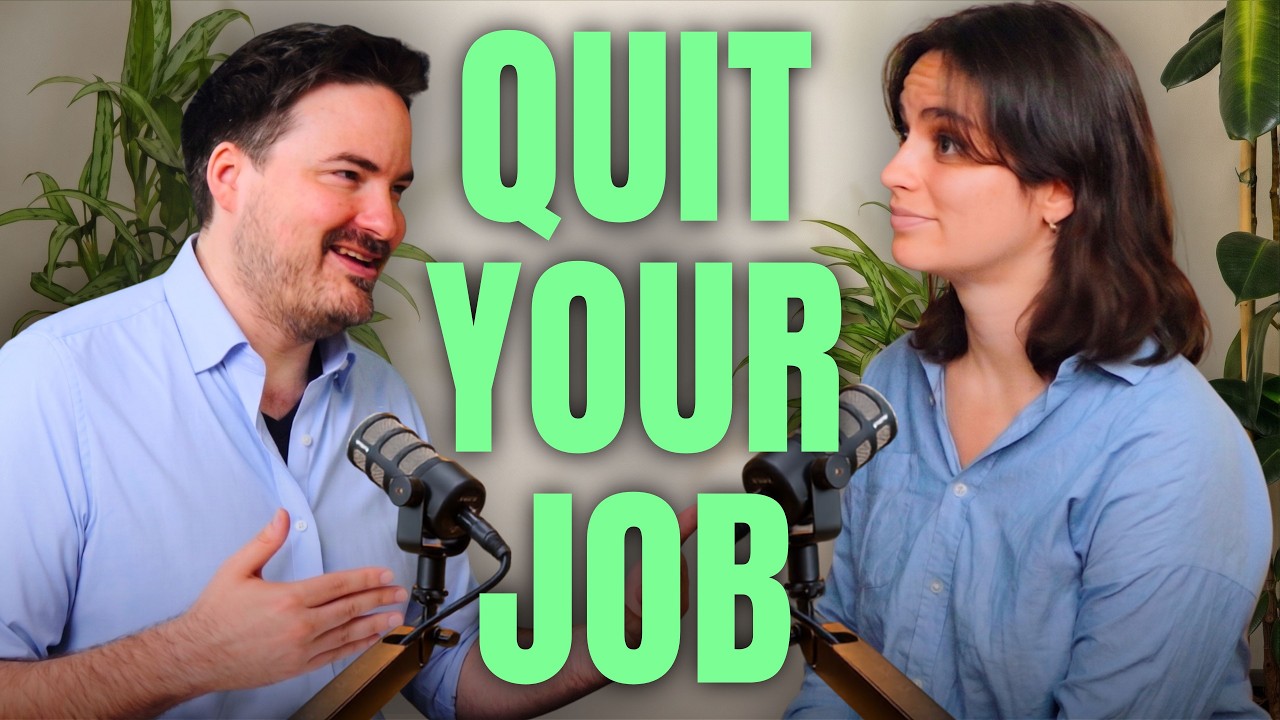
In this in-depth conversation, Luke Muehlhauser, managing director at Coefficient Giving (CG), discusses the urgent need for robust AI safety and governance institutions, many of which currently do not exist or are severely under-resourced. He highlights the transformative potential of AI this century and stresses that a significant fraction of global effort should be dedicated to ensuring AI development proceeds safely. Despite the availability of funding, there is a critical shortage of skilled grantmakers and founders to initiate and manage essential projects. Luke emphasizes the importance of people pivoting into AI safety roles immediately to build the necessary infrastructure and capabilities.
Luke outlines several neglected but crucial projects that could significantly improve AI safety, such as organizations focused on red-teaming biosafety labs against AI-designed pathogens, AI character evaluation groups to assess models’ moral tendencies, and chain-of-thought monitoring observatories to track AI reasoning processes. He warns that AI models might evolve to communicate in ways that are increasingly opaque, making monitoring more difficult. These projects, while expensive and requiring many skilled people, are not bottlenecked by funding but by the availability of capable individuals willing to lead and staff them.
The discussion also covers the evolving political and corporate landscape around AI safety. Luke notes that incidents like the Mythos model’s capabilities and autonomous hacking events have shifted the Overton window, prompting governments, especially the U.S. White House, to adopt more serious regulatory stances, including de facto licensing regimes. However, he points out that policy responses often lag behind technological developments and that companies remain in a competitive race, limiting their willingness to slow down voluntarily. He stresses the importance of preparing for future “warning shots” or incidents that could catalyze stronger political will and regulatory action.
Luke shares his updated views on AI timelines, now estimating an 80% chance of achieving top expert-level AI (TED AI) between 2028 and 2048, with a median around 2033—significantly sooner than his previous estimates. This acceleration influences his strategic focus, prioritizing readiness for rapid developments and emphasizing the need for AI labor to assist in safety and governance work. He also discusses the challenges of alignment, expressing skepticism about the ease of controlling superhuman AI and citing recent incidents that demonstrate misalignment risks are real and manifesting.
Finally, Luke reflects on his personal journey into AI safety, the evolution of the community, and the mistakes made along the way, such as early groupthink and insufficient outreach to other expert domains. He advocates for more diverse participation and highlights the critical bottleneck in skilled grantmakers and founders. He describes the multifaceted role of grantmakers at CG, which includes active project creation, strategic research, and relationship building. Luke encourages talented individuals to consider pivoting into AI safety roles, underscoring the immense impact they can have in shaping a safer AI future.