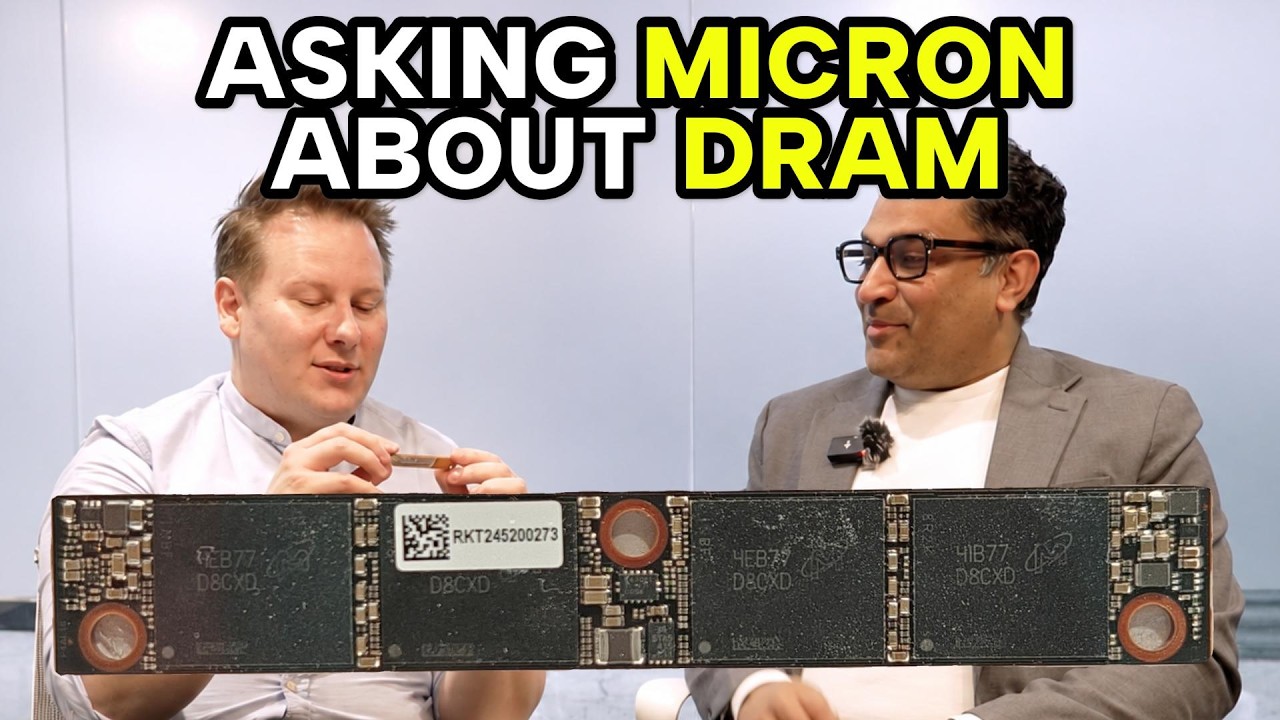
The video features an in-depth discussion on the current state and future of memory technology, particularly in the context of the booming AI supercycle. Praveen from Micron explains that while memory has historically been seen as a cyclical industry, the current surge in demand is driven by fundamental shifts in computing needs, especially with AI requiring vast amounts of fast and dense memory. Memory has evolved from being a simple PC component to a critical element across consumer devices, automotive applications, and enterprise servers, fueling a supercycle that is reshaping the industry globally.
A significant focus is placed on High Bandwidth Memory (HBM), with Micron recently achieving volume production of HBM4, which offers improved bandwidth and power efficiency over previous generations. Praveen highlights the increasing manufacturing complexities with each new HBM generation and the need for innovation not only in product design but also in manufacturing processes. The discussion also touches on the balance between JEDEC standardization and custom solutions, where standardization aids adoption but custom HBM variants cater to specific high-performance customer needs.
The conversation then shifts to Low Power DDR (LPDDR) memory, which is experiencing renewed interest, especially LPDDR5X and the upcoming LPDDR6. Micron has developed a broad portfolio of LPDDR products to meet varying demands for capacity and speed, particularly in data center applications where LPDDR is relatively new. LPDDR6 is designed from the ground up to support both traditional consumer and data center needs, unlike LPDDR5, which was retrofitted for data center use. The integration of LPDDR in SoC modules and the challenges of servicing these complex systems are also discussed.
Praveen elaborates on Micron’s strategic approach to manufacturing capacity, emphasizing long-term planning based on industry trends and geopolitical factors rather than short-term market fluctuations. The company is investing heavily in expanding manufacturing capabilities across the US, India, Singapore, and Japan to meet growing demand. AI and machine learning are also leveraged to optimize manufacturing processes and accelerate technology ramp-up, helping Micron maintain a competitive edge in a rapidly evolving market.
Looking ahead, Micron is focused on delivering a comprehensive portfolio of memory and storage solutions tailored for accelerated computing, including HBM4, SoCs, and next-generation Gen6 SSDs. The company plans to continue innovating with future HBM generations and LPDDR standards, preparing for the increasing complexity and capacity demands of AI workloads. Praveen underscores Micron’s commitment to being a product- and technology-first company, working closely with customers to anticipate and meet future needs while navigating the challenges of a highly competitive and fast-moving industry.