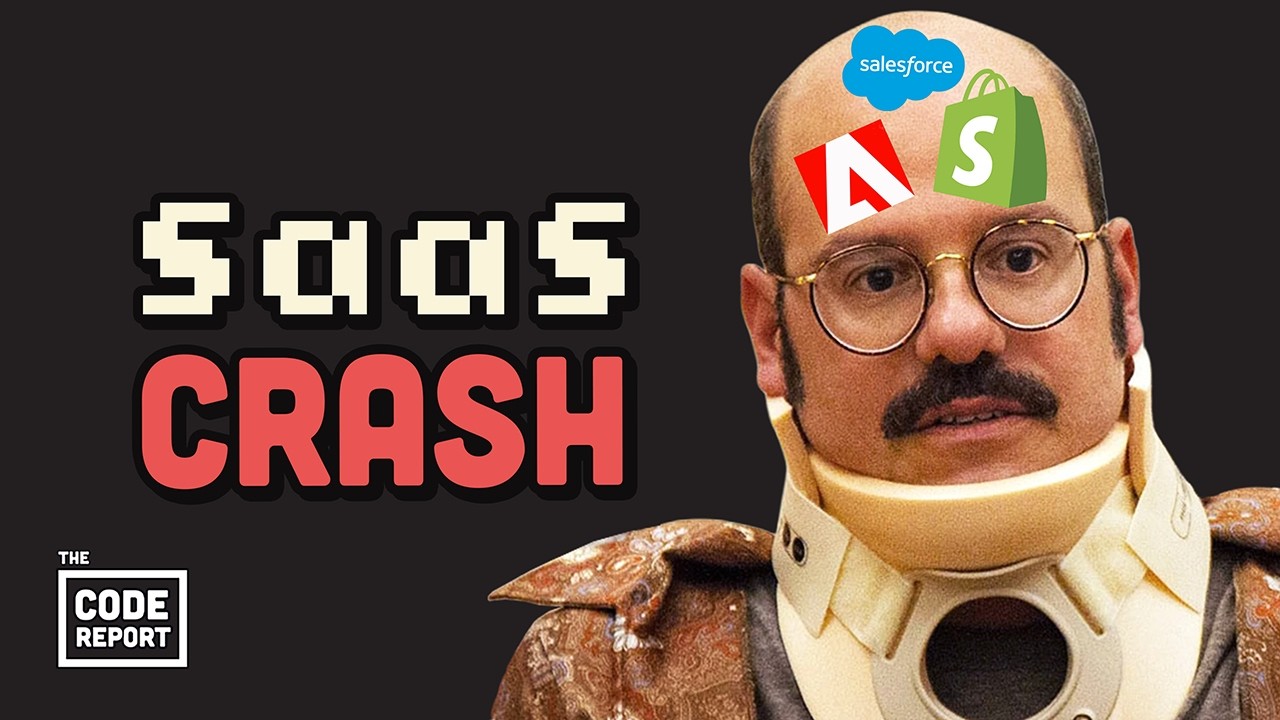
The video discusses the recent turmoil in the SaaS (Software as a Service) business model, highlighting how advancements in AI are threatening the traditional approach where customers pay recurring fees to access software. Major SaaS companies like Adobe, Salesforce, and Shopify have collectively lost around $1 trillion in market capitalization, not due to economic factors like interest rates, but because AI is rapidly automating tasks that previously required multiple human users. As AI agents become capable of replacing entire teams in seconds, the need for purchasing multiple software seats diminishes, undermining the core revenue model of SaaS businesses.
One of the key developments is OpenAI’s release of the Codeex app for MacOS, which acts as a command center for managing AI agents and agentic workflows. This tool empowers non-developers to build and manage applications themselves, reducing reliance on traditional software development teams. Underpinning this is the new Codeex 5.3 model, which is faster, more advanced, and integrates a wide range of skills, enabling it to handle tasks across product development, from coding to research and image generation.
Competition in the AI space is intensifying, with Anthropic’s Claude Opus 4.6 model excelling not just in code generation but also expanding into areas like legal analysis and financial modeling. Meanwhile, open-source alternatives are gaining traction. Alibaba’s Qwen 3 Coder Next allows companies to self-host powerful coding models, eliminating vendor lock-in and the need for multiple expensive SaaS subscriptions. Similarly, Zhipu AI’s GLM5 and the viral Minimax M2.5 model are pushing the boundaries of open, affordable, and high-performing AI, making premium AI capabilities accessible without hefty corporate expenses.
The video also highlights how major tech companies are pivoting to AI-driven platforms. Microsoft’s GitHub Agent HQ has evolved from a simple code hosting service to a comprehensive AI agent orchestration platform, automating project management, QA, and DevOps. Google, while quieter on the Gemini front, is making strides with Waymo’s world model, which demonstrates advanced simulation and prediction capabilities. These AI systems can autonomously handle complex business functions like forecasting and logistics, rendering many traditional SaaS dashboards obsolete.
In summary, the video argues that as AI makes intelligence abundant and automates more tasks, the traditional SaaS model—charging per human user—becomes unsustainable. The profit margins that SaaS companies have enjoyed are at risk as businesses shift to AI-driven solutions that require fewer human seats. However, the video concludes on an optimistic note for developers, suggesting that new opportunities will arise for those who can leverage modern AI tools and platforms, such as Warp’s Oz, which enables large-scale cloud-based agent orchestration.