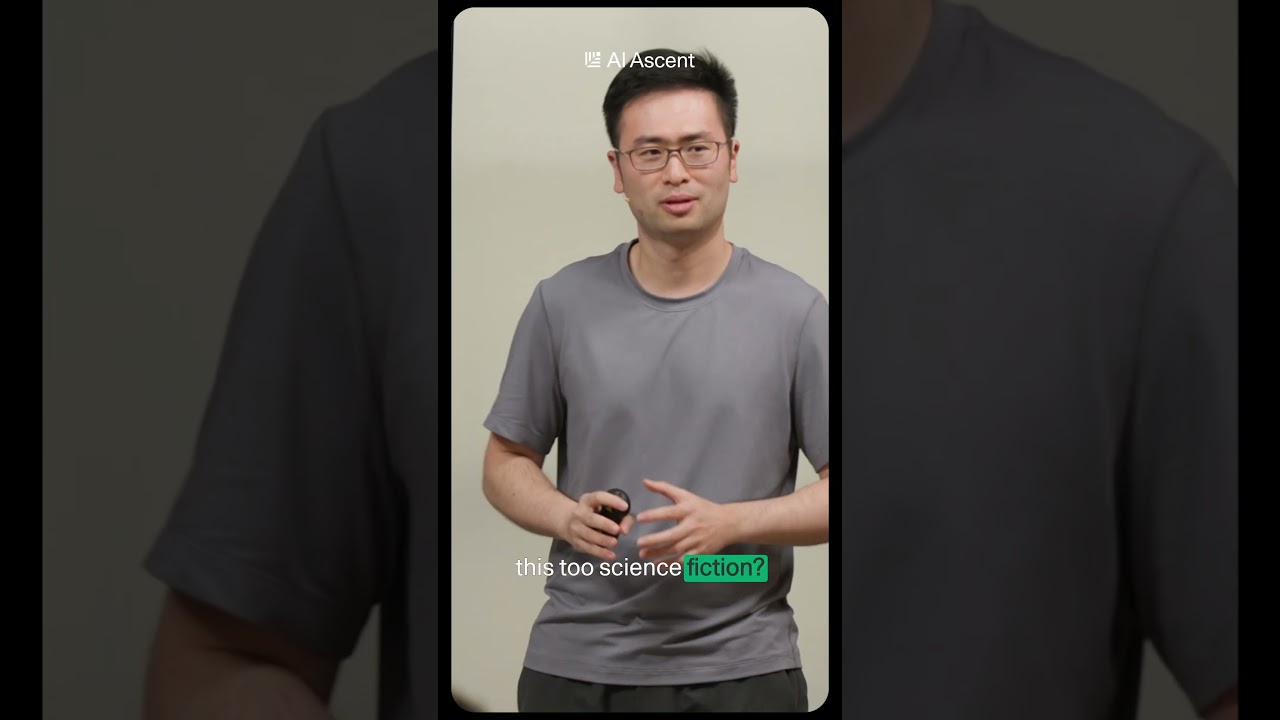
In the video, NVIDIA’s Jim Fan likens his robotics research to unlocking achievements on a civilizational technology tree, with three major milestones remaining before robotics is fully solved. The first milestone is passing the physical Turing test, where robots perform tasks indistinguishably from humans across a wide range of activities. He humorously notes that this might not apply to drunk humans but emphasizes that this test measures efficiency in terms of energy input and labor output. He estimates this achievement to be just 2 to 3 years away.
The second milestone involves creating a physical API for robotics, enabling fleets of robots to be configured and controlled like software through APIs and command lines. This would allow for highly automated, “lights-out” factories that function as printers of atoms, taking digital designs and autonomously producing fully assembled products. Additionally, such automation could revolutionize scientific research by enabling wet labs to conduct experiments and discoveries in chemistry, biology, and medicine without human intervention.
The final and most advanced milestone is physical auto research, where robots themselves design, improve, and build subsequent generations of robots beyond human capabilities. This stage represents a form of agentic auto research, where robotic systems autonomously drive their own evolution and innovation, potentially accelerating technological progress exponentially.
Jim Fan addresses skepticism about these futuristic goals by drawing parallels to the rapid advancements in AI over the past decade and a half. He points out that it took 14 years to progress from the early days of AlexNet in 2012, which barely recognized simple images, to the sophisticated AI systems of 2026. Given that technology advances exponentially rather than linearly, he confidently projects that by 2040, robotics will have reached the endgame, fully solving the challenges that remain.
In conclusion, Jim Fan expresses optimism and a sense of purpose for his generation, suggesting that while humanity missed the age of exploration on Earth and is not yet ready for interstellar travel, we are perfectly positioned to solve robotics. He encourages belief in the field, asserting that if we believe in robotics, robotics will believe in us, highlighting the transformative potential of this technology for the future.