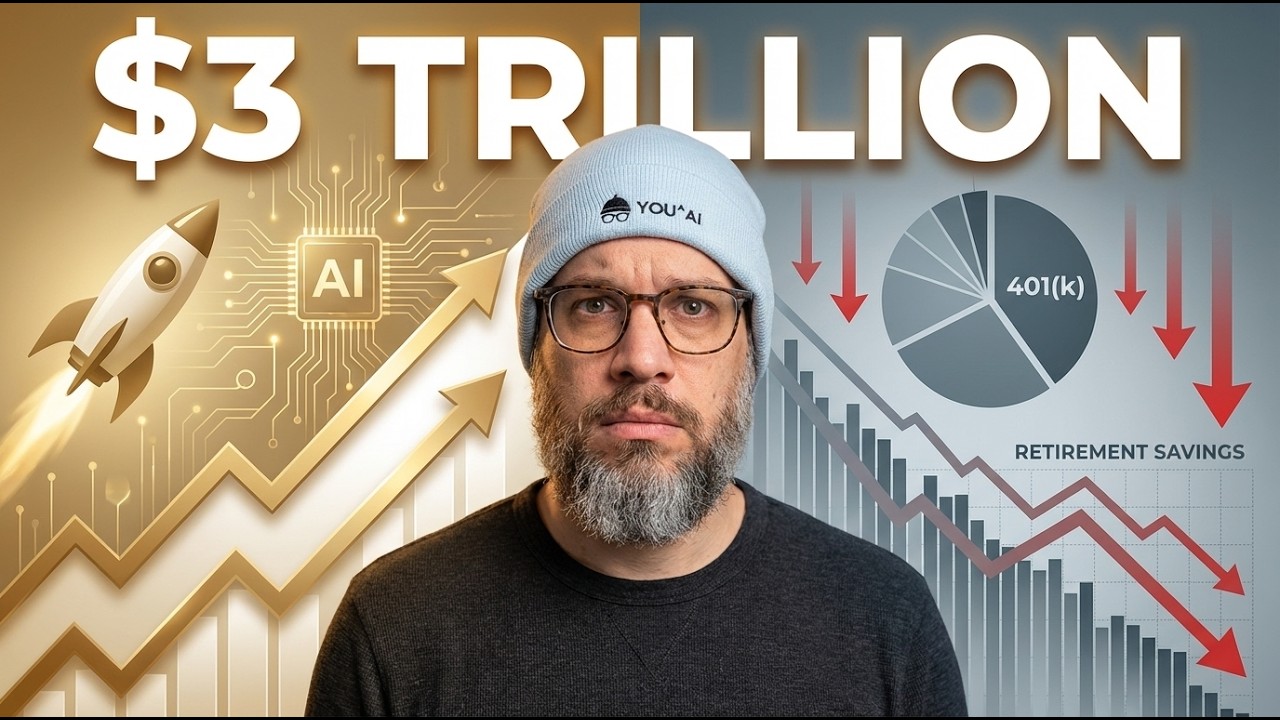
Three major AI companies—SpaceX, OpenAI, and Anthropic—are planning massive IPOs in late 2026 and early 2027, collectively valued at over $3 trillion. These IPOs will rely heavily on public investors, including retirement accounts like 401(k)s and index funds, to provide the liquidity needed for these offerings. A recent example highlighted was a small investment fund with stakes in SpaceX and Anthropic that saw its stock price surge over 1500% due to speculative demand, illustrating the intense public interest and limited supply of shares available. This scenario is expected to be magnified tenfold when these tech giants go public, creating a highly volatile and speculative market environment.
The IPOs are structured to sell only a small fraction of the companies—around 3.3% for SpaceX—while insiders retain the vast majority of shares. This limited float creates scarcity, driving up prices artificially as demand far exceeds supply. The companies will benefit from this setup by raising enormous sums of capital at inflated valuations without diluting insider ownership significantly. This scarcity-driven pricing resembles a “ticket master” problem, where the price reflects access rather than intrinsic value, leading to extreme volatility and potential risks for public investors who are essentially forced to buy at high prices.
A critical factor amplifying this dynamic is the recent change in NASDAQ’s index inclusion rules, which now allow companies like SpaceX to be added to major indexes within just 15 trading days of going public. This fast-track inclusion means index funds, which hold trillions of dollars in assets, will be legally required to buy these stocks immediately at whatever price they open at, despite the limited supply. This automatic demand from index funds and retirement accounts will further inflate prices, benefiting insiders who can sell their shares after lockup periods expire, often at substantial profits, while everyday investors bear the risk of overvaluation.
The broader market implications are significant. These three IPOs alone plan to raise nearly $200 billion, dwarfing the $47 billion raised by all US IPOs combined last year. This concentration of capital into a few mega AI companies means other startups and investors may face delays or diminished valuations as the market’s capacity is stretched thin. Additionally, some of these companies, like OpenAI, are burning through cash rapidly and may not be profitable for years, relying heavily on public markets as a last resort for funding after traditional lenders have declined. This raises questions about the sustainability of their valuations and the risks being transferred to public investors.
In conclusion, while these AI companies are fundamentally strong and have significant demand for their products, the market structure around their IPOs is designed to maximize capital raised through scarcity and forced buying by index funds. This creates a risky environment for average investors whose retirement accounts will be automatically invested at potentially inflated prices. The video urges investors to be aware of these dynamics and consider whether they want to participate in this process or adjust their investment strategies accordingly, emphasizing that this is not just a speculative bubble but a structural challenge in how these massive IPOs are being executed.