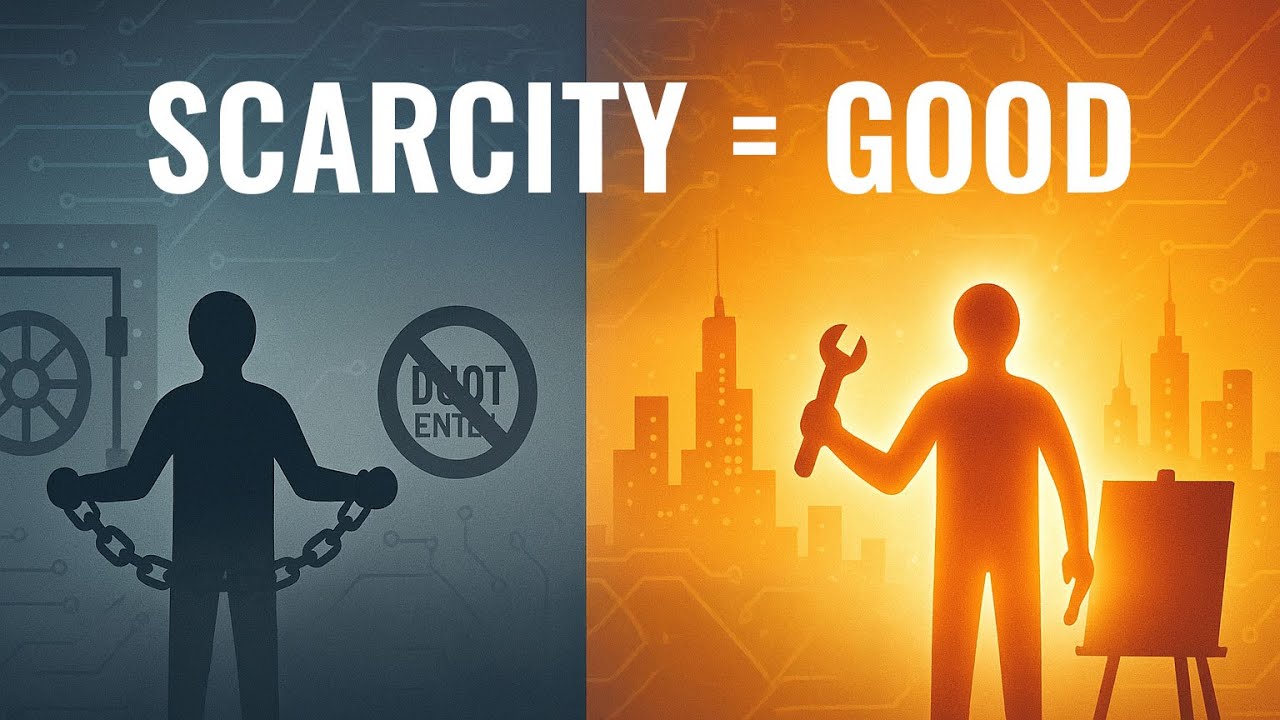
The video explores the evolving role of humans in a world increasingly dominated by AI creations, suggesting that humans may shift from being creators and builders to becoming enforcers of scarcity and limitation. The speaker uses the Marvel Cinematic Universe as a metaphor to illustrate this transition. The original Iron Man movie is highlighted as a compelling story largely because of its focus on scarcity—limited time, resources, and a high-stakes situation that made Tony Stark’s creativity and heroism meaningful. This scarcity created tension and engagement, making the story resonate deeply with audiences.
In contrast, the later Marvel movies are criticized for losing this sense of limitation, expanding their scope to cosmic scales with endless multiverses and virtually immortal characters. This abundance of options and removal of constraints, the speaker argues, diminishes the emotional impact and engagement of the stories. The lack of scarcity leads to a sense of over-saturation and reduced value, making it harder for audiences to connect with the narrative or care about the stakes involved.
The speaker then connects this idea to the broader human experience, noting that scarcity has always been a fundamental part of life—whether it’s money, resources, or opportunities. AI, however, promises a future of unprecedented abundance, where virtually anything can be created on demand, potentially eliminating many traditional limitations. Despite ongoing challenges like energy and data requirements, the potential for AI to generate limitless content and solutions could transform how we experience creativity and value.
However, this abundance brings its own challenges, including feelings of listlessness, restlessness, and a loss of meaning when everything is available without effort. The speaker suggests that in such a world, humans will need to take on the role of curators and limiters, deciding what should be scarce and valuable. This new form of creation involves imposing thoughtful constraints to maintain quality, meaning, and focus, rather than simply producing more and more content or options.
Finally, the video reflects on the paradoxical nature of scarcity, which can be both protective and valuable. Using personal anecdotes about physical distance as a form of scarcity that provides safety, the speaker emphasizes the need to develop a positive relationship with scarcity in an age of abundance. The future is uncertain and difficult to predict, but understanding and managing scarcity will likely be a crucial human responsibility as AI continues to reshape creativity and culture.