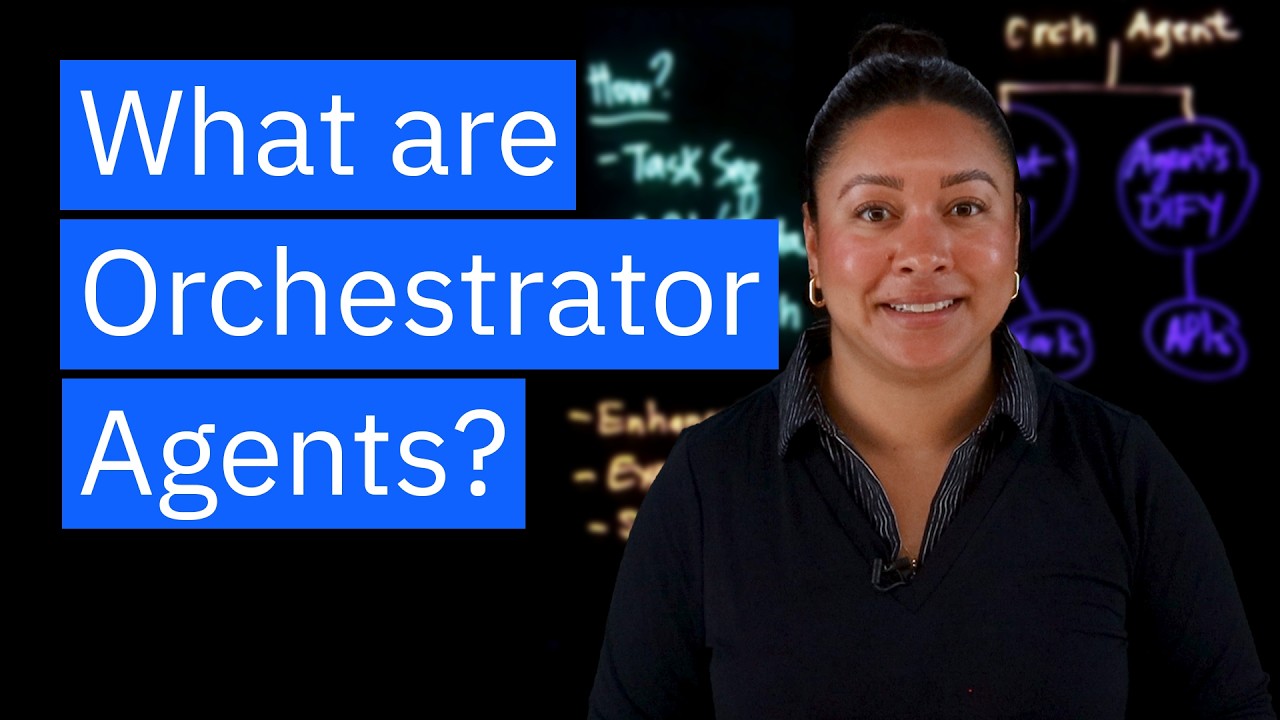
The video discusses the evolution of AI tools, particularly focusing on chatbots, AI assistants, and agents. While AI assistants are designed for users to interact with directly and complete tasks through prompts, agents operate more autonomously, making decisions and initiating workflows without constant supervision. These agents can connect with external tools, such as APIs and data sources, and are often specialized for specific tasks, ranging from business operations like billing and scheduling to technical functions like data retrieval and process automation.
As the adoption of AI continues to grow, so does the number of AI tools being developed and integrated into various workflows. This proliferation can lead to a fragmented AI ecosystem, where different tools operate in silos, complicating coordination, interoperability, and governance. The video introduces the concept of agent orchestration as a solution to this fragmentation, highlighting the need for a more cohesive approach to managing multiple AI tools.
The orchestrator agent is presented as a key player in this orchestration process. Acting like a supervisor, the orchestrator agent oversees how tasks are executed, ensuring that the right specialized agents and assistants collaborate effectively to complete complex workflows. By routing tasks to the appropriate tools, the orchestrator agent facilitates a seamless experience, enhancing overall productivity.
To implement agent orchestration, the video outlines three essential steps: defining the task execution sequence or workflow, setting up API integrations for data access, and utilizing open-source orchestration technology. Once these steps are completed, the orchestrator agent can take over real-time execution, streamlining the process and improving efficiency.
The benefits of using orchestrator agents include enhanced efficiency, improved user experience by breaking down silos, and increased scalability of workflows and decision-making capabilities. By leveraging orchestrator agents, teams can ensure that their AI tools work together harmoniously, reducing complexity and maximizing the value derived from their AI investments.