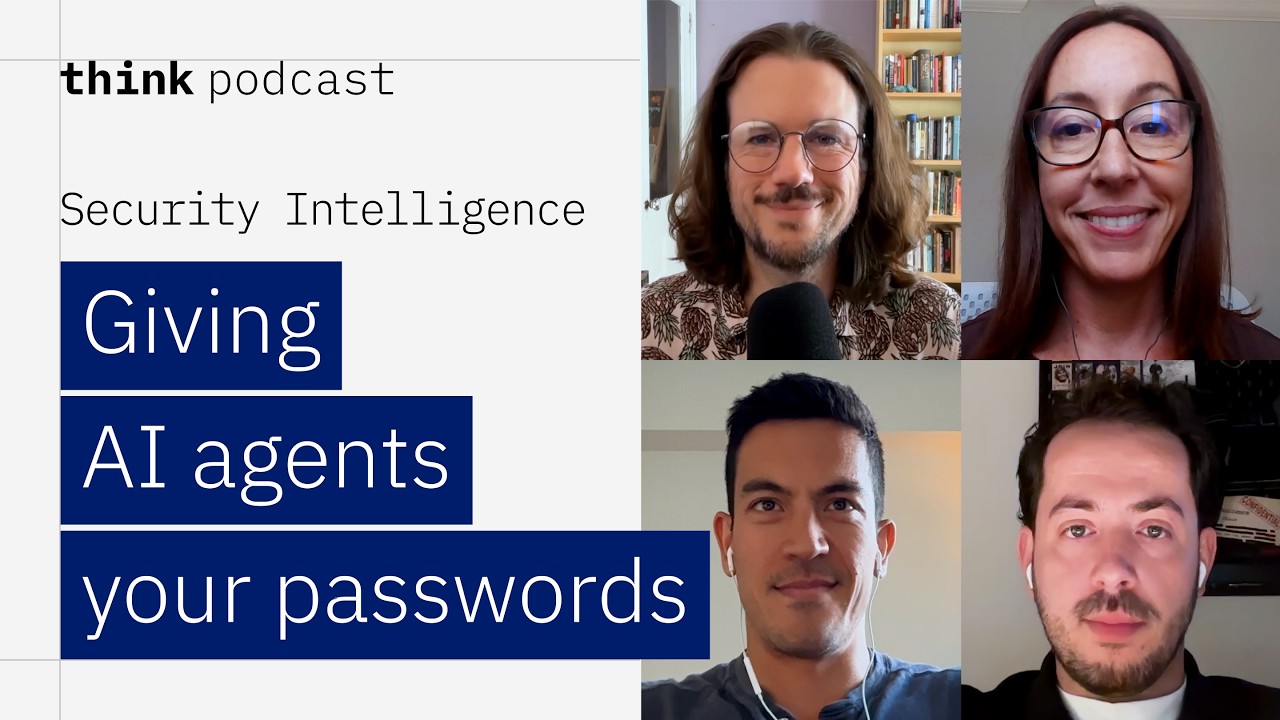
The panel discusses the cautious adoption of AI agents for password management, emphasizing the need for human oversight and safeguards, while highlighting the challenges and benefits of AI-driven vulnerability discovery amid Microsoft’s largest Patch Tuesday. They also address the evolving cyber risk landscape, advocating for balanced strategies that combine AI, skilled personnel, and strategic risk management to prioritize security, ensure business continuity, and foster resilience.
The panel discussion begins with a debate on whether AI agents should be trusted to manage passwords. Apple recently introduced a feature that allows AI to detect weak or compromised passwords and automatically change them. Panelists express cautious optimism but emphasize the importance of human oversight, transparency, and understanding the AI’s decision-making process. Concerns are raised about false positives, the reliability of threat intelligence sources like the dark web, and the risks if the AI system itself is compromised. While AI could help improve password hygiene by reducing user friction, the panel agrees that it should be implemented with proper safeguards and tailored to specific organizational needs.
The conversation then shifts to Microsoft’s largest-ever Patch Tuesday in June 2026, which addressed over 200 vulnerabilities. This surge in disclosed vulnerabilities is attributed to AI-driven vulnerability discovery, which accelerates the identification of flaws that have likely existed for years. Panelists view this as a positive development, as it increases visibility and enables defenders to patch issues more quickly. However, they caution that not all vulnerabilities are exploitable, so prioritization is critical. The volume of patches from multiple vendors, including Google Chrome and Oracle, is creating significant workload challenges, prompting defenders to leverage AI to help manage and prioritize patching efforts effectively.
The panelists emphasize that the lesson from the increasing volume of vulnerabilities is not simply to patch faster but to prioritize based on exploitability and business impact. They highlight the importance of shifting security left by integrating secure development practices early in the software lifecycle to reduce vulnerabilities before deployment. This proactive approach, combined with AI-assisted detection and prioritization, can help organizations manage the growing complexity of vulnerability management. The discussion underscores that security is not just reactive but requires strategic planning and continuous improvement to minimize risk effectively.
The final topic addresses the growing acceptance of cyber risk among executives, driven by the recognition that preventing all cyber incidents is impossible. Organizations are shifting focus from outright prevention to minimizing harm and ensuring business continuity during and after attacks. Panelists caution that this risk tolerance should not lead to neglecting prevention or detection capabilities, as both are essential for effective incident response. They also discuss the challenges posed by budget constraints and the need for security teams to communicate risk in business terms, balancing security controls with innovation and operational speed.
Throughout the discussion, the panel stresses the importance of maintaining skilled technical personnel alongside strategic leadership to effectively manage cyber risk in an AI-driven environment. They warn against over-reliance on vendors or high-level management without sufficient technical understanding. Ultimately, the role of security professionals is evolving to enable business objectives securely, prioritizing risks, and fostering resilience. The episode closes with a call for balanced approaches that integrate AI tools, human expertise, and strategic risk management to navigate the complex cybersecurity landscape.