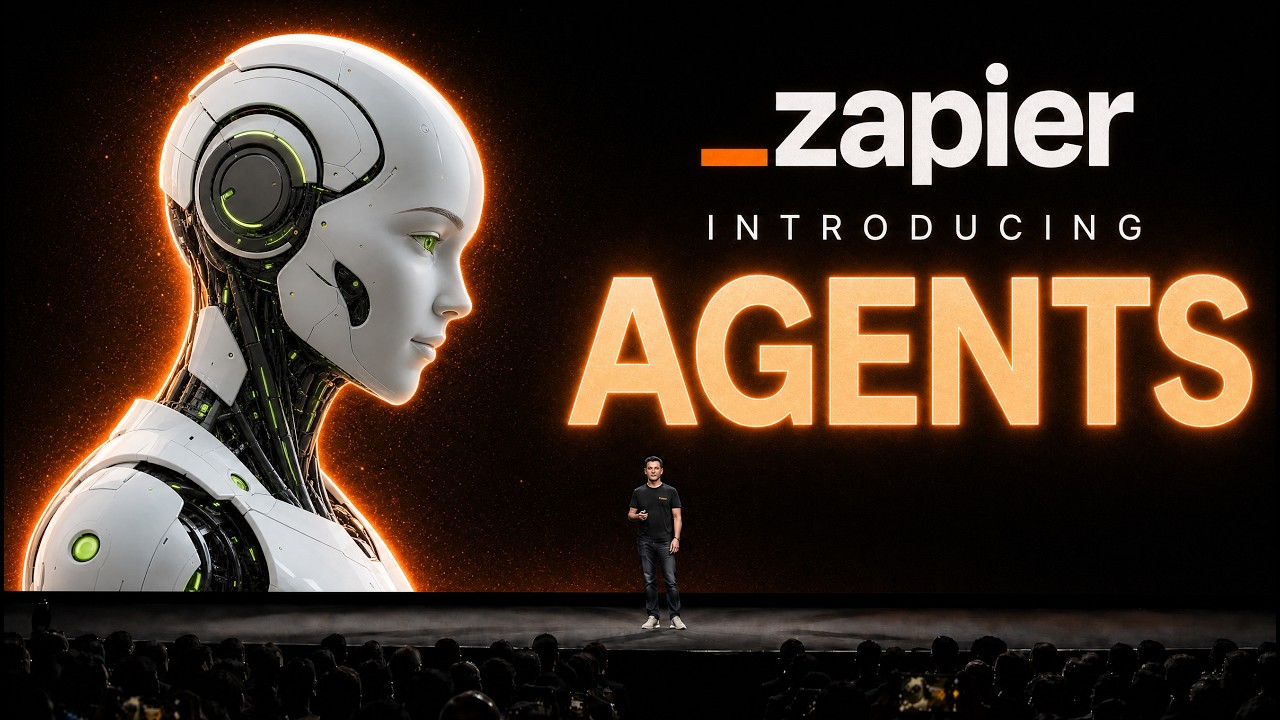
The video begins by highlighting the limitations of traditional AI usage, where users manually interact with AI tools like ChatGPT by typing queries and copying responses. The presenter introduces Zapier as a solution that automates tasks across over 9,000 apps, allowing AI to perform work autonomously, even while users sleep. The video promises a comprehensive tutorial, starting with clarifying the differences between chatbots, workflows (called Zaps), and agents, before diving into advanced tools like the MCP server and SDK that enable deeper AI integration with apps.
The presenter explains that chatbots simply respond to queries without interacting with external apps, while workflows or Zaps automate specific, predefined tasks triggered by events, such as saving email attachments automatically. Agents, however, are more advanced; they are goal-oriented and can independently determine the steps needed to achieve a task using a set of tools and guardrails. This distinction is crucial because agents can make judgment calls and handle complex workflows, unlike rigid Zaps.
Next, the video introduces Zapier’s MCP (Multi-Connection Proxy) server and SDK as powerful tools that allow AI agents to reliably execute tasks across multiple apps through a single connection. The MCP server acts as a centralized execution layer, ensuring consistent and secure interactions with apps like Gmail and Google Calendar. The presenter demonstrates setting up MCP with VS Code, granting selective permissions to the AI agent, and shows how it can pull emails and schedule meetings by coordinating multiple apps seamlessly.
The SDK, built on TypeScript, offers a type-safe way to integrate app connections directly into custom projects or coding environments like Cursor or VS Code. The presenter walks through installing the SDK, authenticating it, and using it to write scripts that perform complex multi-step tasks, such as rescheduling meetings and notifying attendees via Slack. This approach allows developers to embed AI-driven automation deeply into their own applications, extending beyond what traditional agents or Zaps can achieve.
In conclusion, the video presents a full ecosystem where Zaps automate simple workflows, agents handle complex goals, and the MCP and SDK enable AI to connect with thousands of apps reliably and securely. This unlocks new possibilities for AI-driven automation and integration, empowering users and developers to build smarter, more capable AI assistants. The presenter encourages viewers to explore these tools via links provided and invites them to share ideas for AI agents they would like to create.