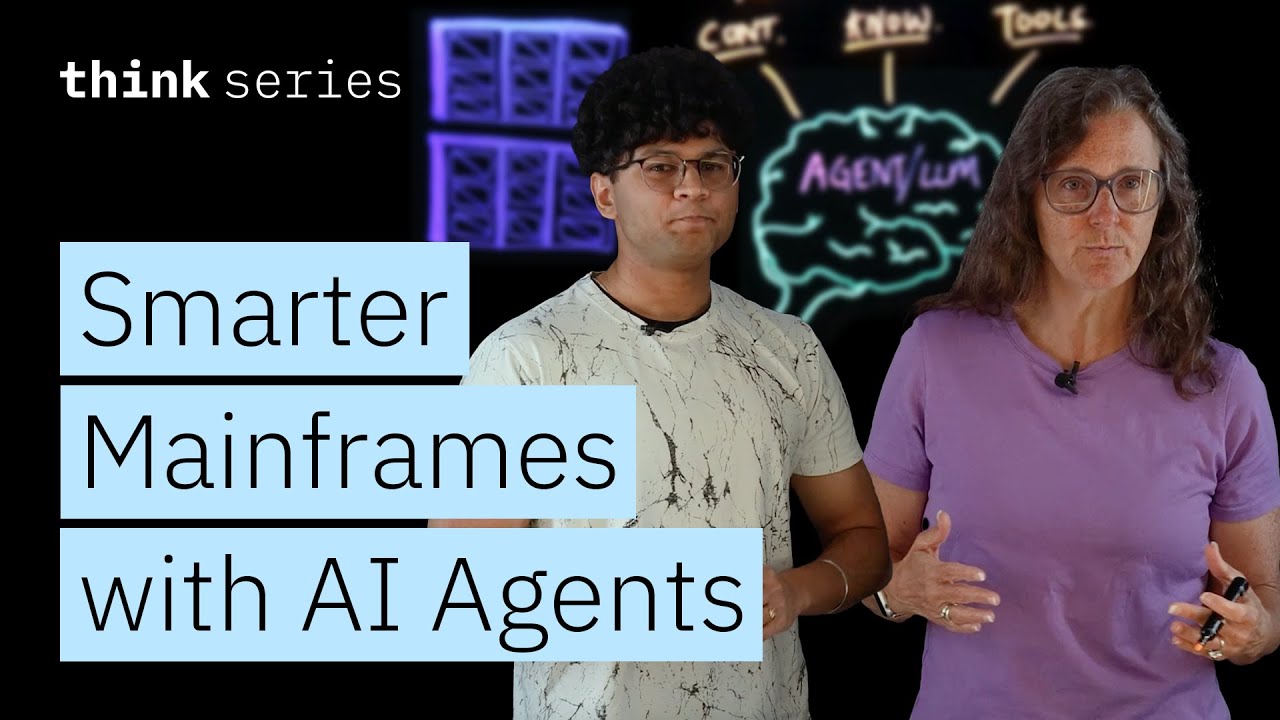
The video discusses how integrating AI agents with mainframe systems enhances enterprise computing by enabling intelligent, context-aware decision-making and automated resource management across multiple sysplexes, surpassing traditional hardware alerts and narrow machine learning models. This advancement improves system reliability, optimizes performance, and allows system administrators to focus on innovation rather than routine tasks, making mainframe operations more efficient and engaging.
The video explores the integration of AI agents with mainframe computing, combining foundational enterprise technology with cutting-edge AI capabilities. It begins by describing the current setup of enterprise systems, which are divided into various sysplexes running different applications and business processes. A key feature in these systems is the “Call Home” facility, which proactively sends simple hardware-related alerts, such as overheating or potential part failures, allowing maintenance to be scheduled ahead of time to prevent downtime. While effective, these alerts are relatively basic and limited to straightforward hardware thresholds.
The video then introduces AI agents as a significant advancement over traditional machine learning models and large language models (LLMs). Unlike earlier models that were narrow in scope and could only raise flags or make simple predictions, AI agents can perceive inputs, make informed decisions, and take actions. For example, an AI agent could rebalance workloads across systems or generate detailed reports to help system administrators make better decisions. This ability to handle complex, multi-dimensional business contexts makes AI agents far more powerful and useful in managing mainframe environments.
A critical component of these AI agents is their “memory,” which is divided into context and knowledge. Context refers to the business objectives the agent is trying to optimize, such as minimizing downtime or managing CPU usage. Knowledge comes from various data sources, including structured and unstructured data like Call Home alerts and SMF records. The agent uses this combined information, along with specialized tools such as summarization models or problem identification sub-agents, to analyze the situation and decide on the best course of action, whether that be a recommendation or an automated remedy.
The video emphasizes the complexity of managing multiple sysplexes independently and the benefits of applying AI agents across the entire environment. Instead of shutting down development or test systems during high load periods, AI agents could intelligently adjust resource allocation to maintain better overall system performance. This holistic approach allows for smarter decision-making that takes into account the entire ecosystem rather than isolated parts, improving efficiency and reducing unnecessary downtime.
Finally, the video highlights the broader impact of integrating AI agents into mainframe operations. By automating the analysis and decision-making processes, system programmers and administrators can spend less time on routine data processing and more time on innovative projects and experimentation. This shift not only enhances productivity but also makes the work of system administrators and site reliability engineers more engaging and less tedious. Ultimately, bringing AI technology into mainframe computing promises to improve system reliability and operator satisfaction, making enterprise computing more efficient and enjoyable.