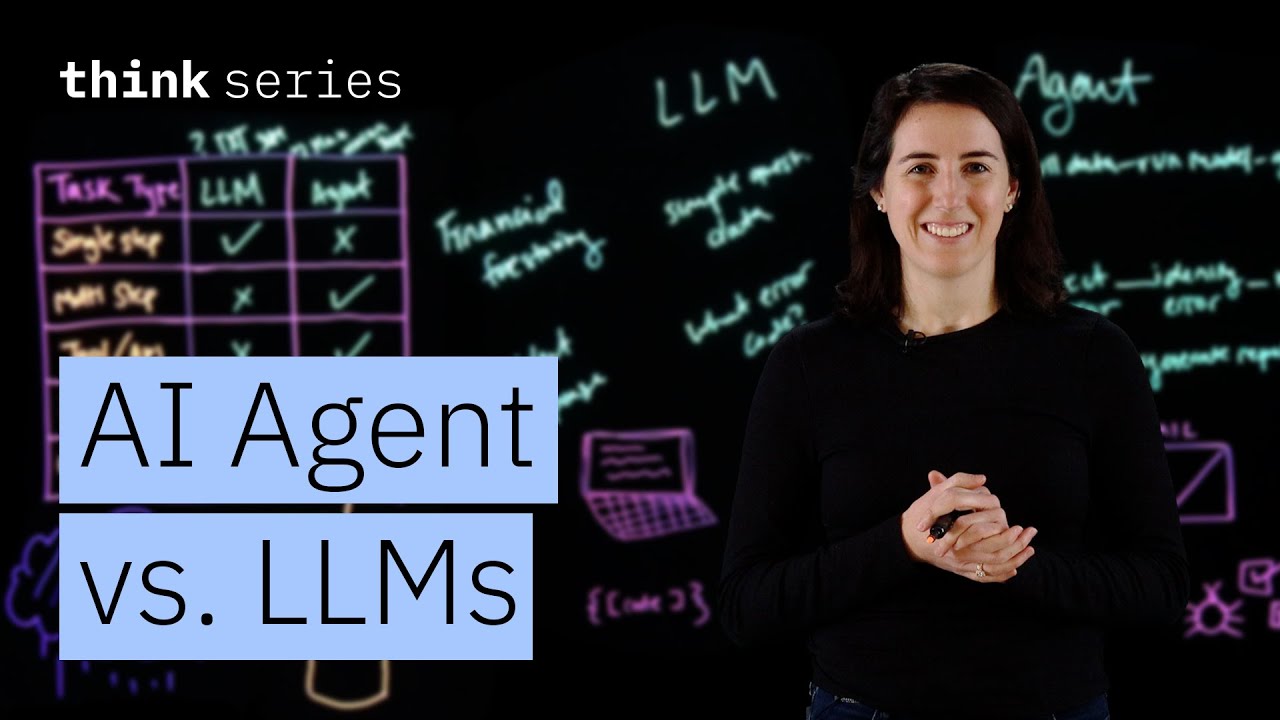
The video compares two approaches to handling AI tasks: using large language models (LLMs) and building agentic systems. It begins with a coffee shop analogy to illustrate the difference. An agentic system is like a barista who asks a series of detailed questions to fulfill your order, ensuring thoroughness but potentially feeling cumbersome. In contrast, an LLM approach is like a barista who quickly understands your intent and suggests the perfect drink without requiring you to specify every detail. The key message is that sometimes, a simple LLM prompt can achieve the desired result more efficiently than a complex agentic system.
LLMs, such as GPT-4, excel at single-step tasks that require generating text, answering questions, summarizing, or translating. They are best used when the task is straightforward, low in complexity, and speed is important. Examples include writing emails, summarizing documents, translating text, or generating ideas. LLMs provide fast, direct responses without the overhead of planning or tool integration.
Agents, on the other hand, are more suitable for complex, multistep tasks that require planning, decision-making, and the use of external tools or systems. Agents can search the web, run code, interact with APIs, and operate autonomously, often using LLMs as a component. They are ideal for automating workflows, conducting data analysis, acting as research assistants, or managing conversational systems where multiple steps and tool integrations are necessary.
The video provides several scenarios to clarify when to use each approach. For example, writing a blog post or generating a code snippet is best handled by an LLM due to their simplicity and speed. In contrast, tasks like researching competitors, compiling data, and emailing reports, or debugging code and deploying it to GitHub, are better suited for agents because they involve multiple steps and require orchestration across different tools.
In summary, the video emphasizes the importance of choosing the right tool for the task at hand. LLMs are powerful for simple, direct tasks, while agents are necessary for more complex, multistep processes. Before building an elaborate agentic system, it’s worth considering whether a straightforward LLM prompt could achieve the same result more efficiently. The overarching advice is to keep things simple when possible, as simplicity often leads to faster and cleaner solutions.