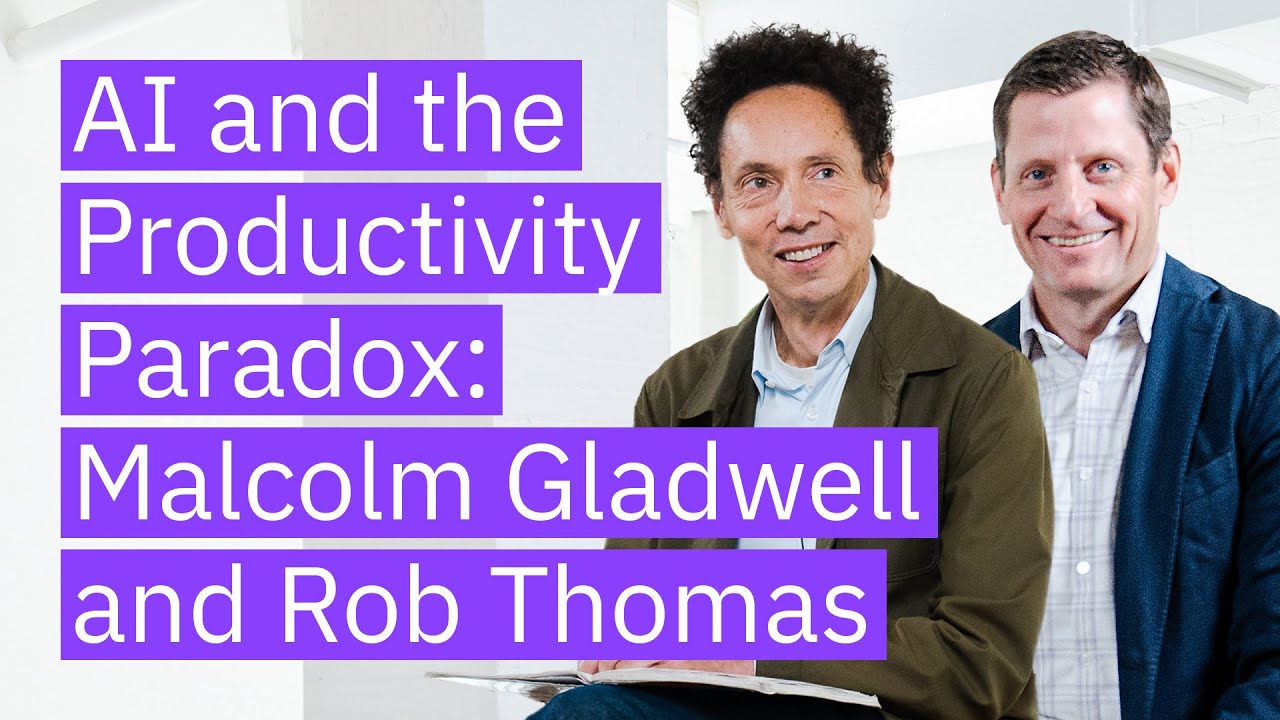
In a discussion about the evolution of artificial intelligence (AI) and its implications for productivity, Rob Thomas reflects on his 25 years at IBM. He recalls his early days as a consultant, where he often felt unprepared to advise clients on technology. This experience taught him the importance of learning quickly and taking risks, emphasizing that everyone is often figuring things out as they go. The conversation then shifts to the historical context of AI, noting that while the technology has evolved significantly, its roots can be traced back to early computing efforts. Thomas expresses the view that AI’s development has been more of an evolution than a sudden revolution.
Thomas highlights key milestones in AI that changed perceptions, such as IBM’s Deep Blue defeating chess champion Garry Kasparov and Watson winning Jeopardy. These events showcased AI’s potential and expanded expectations about what could be achieved. He points out that recent advancements, particularly in large language models, have garnered significant attention for their applicability in consumer technology. However, he likens this to the early days of the internet, suggesting that while these developments are exciting, they are part of a larger, ongoing evolution in technology.
The conversation then delves into AI’s applications across various industries, including sports and shipping. Thomas discusses a project with Sevilla Football Club, where AI was employed to assess talent by analyzing both quantitative and qualitative data. He also shares a case with a shipping company, Tricon, which used AI to streamline paperwork processes, significantly reducing spoilage of perishable goods. These examples illustrate how AI can solve real-world problems by enhancing efficiency and decision-making in diverse sectors.
As the discussion continues, Thomas emphasizes the importance of transparency in AI systems, particularly in understanding the reasoning behind AI-driven decisions. He notes that organizations must be able to answer the “why” behind AI recommendations to avoid falling into the trap of opaque algorithms. Furthermore, he observes that many industries are already utilizing AI, but there remains untapped potential in sectors that have yet to embrace these technologies fully.
Finally, Thomas introduces the concept of the “productivity paradox,” suggesting that while there are fears surrounding AI, it may actually be the key to driving future economic growth. With declining population growth and rising debt levels, he argues that productivity improvements, largely driven by AI, will be crucial for sustained economic development. He also reflects on the rapid pace of change in AI, coining the term “AI years,” which suggests that advancements are occurring at an unprecedented speed. As he works on a book exploring the long-term value of AI, Thomas acknowledges the challenge of creating content that remains relevant in such a fast-evolving landscape. Explore IBM AI Solutions → Artificial Intelligence (AI) Solutions | IBM
AI news moves fast. Sign up for a monthly newsletter for AI updates from IBM.→ https://ibm.biz/BdKzXV
This is a paid advertisement from IBM. The conversations on this podcast don’t necessarily represent IBM’s positions, strategies or opinions.