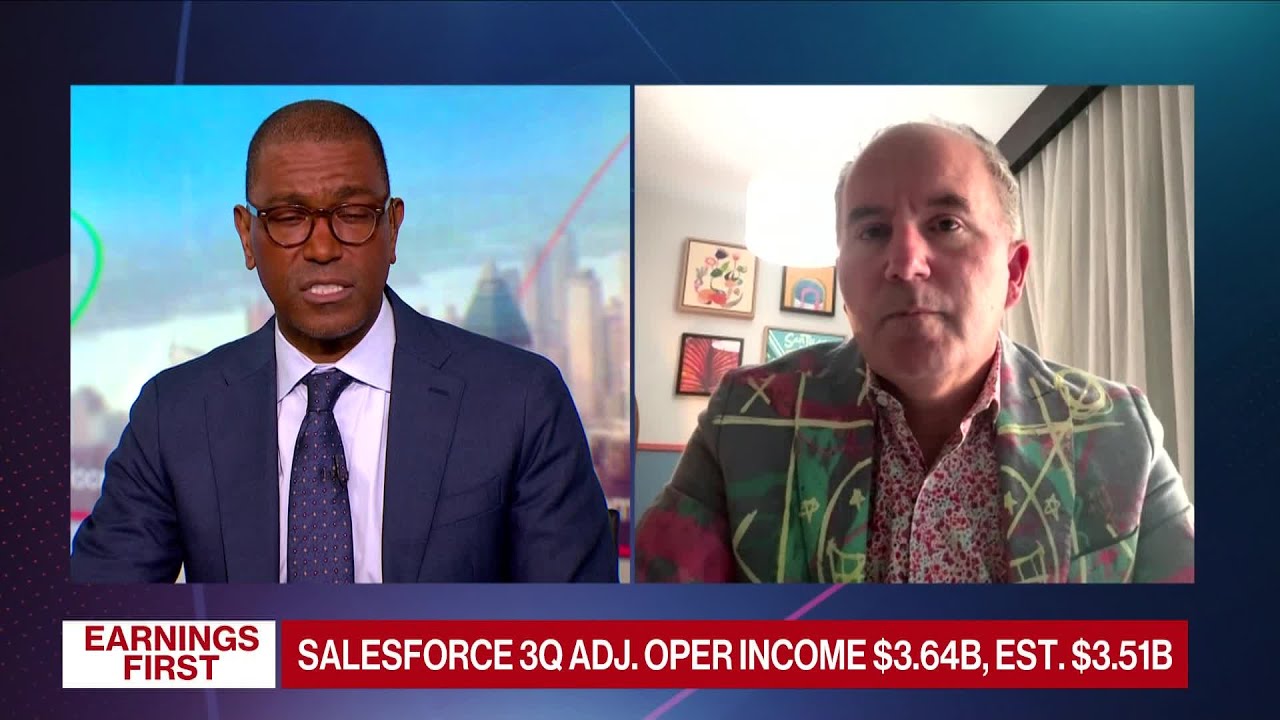
In the discussion, the speaker highlights growing jitters around the AI sector, particularly concerning the time horizon for returns and whether current investments are justified. Recent results from companies like Salesforce, MongoDB, and CrowdStrike serve as validation points, indicating that the AI revolution is progressing beyond initial hype into more tangible second, third, and fourth derivative effects. This momentum is expected to continue strongly into 2026, especially within software use cases, signaling deeper adoption and integration of AI technologies.
Despite the excitement, the speaker points out that only about 3% of companies in the U.S. have fully embraced AI, suggesting that the market is still in its early stages. This low adoption rate challenges the notion that the AI sector is a bubble, as there remains significant room for growth globally. The demand for AI-related hardware, such as brand video chips, is extremely high, with supply lagging behind by a factor of 12 to 1, particularly in regions like Asia. The U.S. is currently leading the global tech race, especially against China, which adds a geopolitical dimension to the AI and semiconductor industries.
The conversation also touches on the ongoing tensions between the U.S. and China, especially regarding semiconductor sales and technology transfer. Despite political challenges and trade restrictions, the speaker believes that the U.S. will maintain its dominance in chip technology and will not cede the market to Chinese companies like Huawei. This competition is framed as a high-stakes poker game between Washington and Beijing, with significant implications for global tech leadership and economic growth, including opportunities for countries like India.
Partnerships within the AI ecosystem are also emphasized as a critical factor for accelerating progress. For example, Snowflake’s strengthened collaboration with Anthropic to integrate advanced AI models into its platform exemplifies how companies are staking their claims in this competitive landscape. The speaker notes that despite some criticisms around financing and corporate strategies, the scale of investment—estimated at $3 to $4 trillion over the next four years—underscores the seriousness and long-term commitment to AI development.
In conclusion, the speaker is optimistic about the future of AI and tech stocks, predicting a continued upward trajectory with an expected 10% increase in tech stock values next year. The metaphor of bears watching the party through the window captures the idea that skeptics are observing but not participating, while the AI revolution and related market activities continue robustly into the early hours. This suggests that now is a critical time for investors to be aggressive rather than cautious, as the AI-driven transformation is still in its early and most dynamic phase.