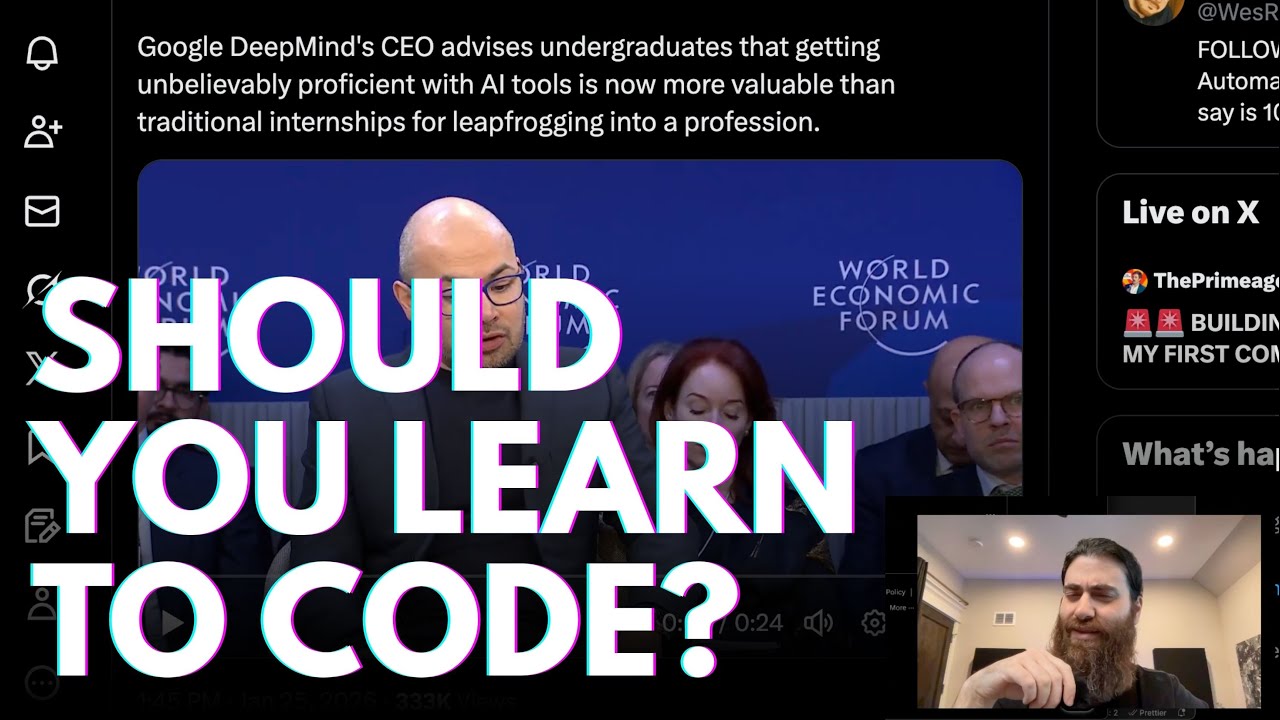
The video argues that relying solely on AI tools for coding leads to shallow, non-transferable skills and warns that such “AI coding” jobs will likely become low-paying and commoditized. Instead, it emphasizes the importance of building real, foundational coding and software engineering skills, using AI as a supplement rather than a replacement.
The video critiques recent advice from Demis Hassabis, CEO of Google DeepMind, who suggested that undergraduates should focus on becoming highly proficient with AI tools rather than pursuing traditional internships. The speaker argues that while Hassabis claims mastering AI tools can leapfrog students into professional roles, this advice is misleading and potentially harmful. The speaker points out that even those building these AI systems, like Hassabis himself, rarely have time to fully explore their capabilities, and that relying solely on AI tools for career advancement is risky.
The core argument is that “AI coding”—using AI agents to generate code through prompts—lacks depth as a skill. The speaker compares prompting an AI to ordering food from DoorDash: it produces results, but doesn’t teach you how to cook. Similarly, using AI to build software doesn’t teach you the fundamentals of coding or software engineering. The speaker warns that becoming dependent on AI tools without understanding the underlying technology leaves individuals with shallow, non-transferable skills.
The video further criticizes the idea of skipping traditional internships in favor of AI tool proficiency. Internships, the speaker argues, provide invaluable experience in communication, collaboration, and problem-solving within real teams—skills that AI prompting cannot replace. The speaker cautions that advice from tech CEOs often serves corporate interests and may not be in the best interest of students or early-career professionals.
To illustrate the point, the speaker draws analogies to other fields: you wouldn’t learn to play piano by having an agent compose for you, nor would you become a chef by having a robot cook your meals. Similarly, true coding ability comes from hands-on experience, not just prompting AI. The speaker suggests that while there may be future roles for people who are only proficient at prompting AI, these jobs will likely be low-skill and low-paying, akin to call center work.
Ultimately, the speaker advises viewers to focus on developing real, foundational skills in coding and software engineering, using AI as a tool to enhance—not replace—their abilities. As AI tools become easier to use and require less specialized prompting, the value of simply knowing how to prompt will diminish. Those with deeper technical skills will be able to leverage AI more effectively and remain competitive in the job market. The video concludes by urging caution against hype-driven advice and encouraging viewers to build lasting, transferable skills.