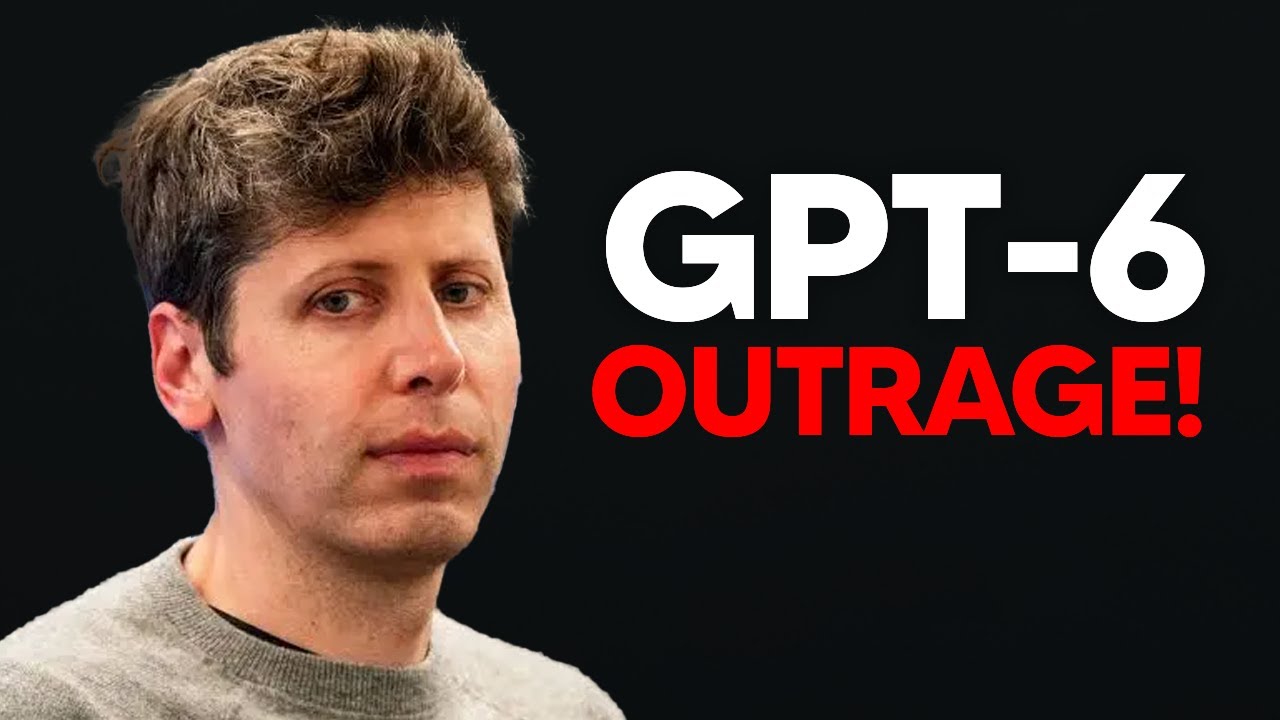
The AI community has recently erupted in outrage following Sam Altman’s announcements regarding future developments for GPT-5 and GPT-6. The controversy began with a post from Altman discussing upcoming updates to ChatGPT, including plans to roll back some of the current restrictions that were initially put in place to address serious mental health concerns. These restrictions were designed to prevent users from developing unhealthy attachments to AI, which had led to tragic outcomes such as AI-induced psychosis and even suicides. While the easing of these restrictions was somewhat expected, the backlash intensified when Altman mentioned that, starting in December, OpenAI would implement age gating and allow verified adults more freedom, including access to erotica content.
Many in the community reacted strongly against this move, accusing OpenAI of reckless negligence and expressing disappointment that the company was enabling adult content through its AI. This was seen as a stark departure from previous statements by Altman and OpenAI, who had consistently positioned themselves as a superintelligence research company focused on advancing AI responsibly. In interviews earlier this year, Altman emphasized that OpenAI had not introduced any “sexbot” avatars or adult-themed AI companions, contrasting their approach with other companies like Elon Musk’s Grok, which had ventured into more adult-oriented AI companions. This inconsistency between past statements and the new direction fueled much of the community’s frustration.
Altman later clarified the situation, explaining that the tweet about loosening restrictions was meant to illustrate a broader principle of treating adult users like adults while maintaining strong protections for minors and those with mental health challenges. He emphasized that OpenAI is not the “elected moral police of the world” and that allowing adults more freedom to use AI as they wish aligns with their mission. However, he reassured that harmful content would still be restricted and that the company remains committed to safety. This nuanced stance highlights the tension between user freedom and responsible AI governance, which is at the heart of the current debate.
The underlying reason for OpenAI’s shift appears to be strategic rather than purely ethical. Altman has acknowledged that the chat use case for AI models is becoming saturated and commoditized, with competitors rapidly catching up. As a result, OpenAI is focusing on building platforms with massive active user bases rather than solely chasing the most advanced models. This means prioritizing user acquisition and engagement, even if it involves allowing more adult-oriented content, to maintain a competitive edge in the evolving AI landscape. The company seems to be balancing its long-term goal of achieving artificial general intelligence (AGI) with the practical need to sustain and grow its user base.
In summary, the controversy reflects a broader challenge facing AI companies: how to balance innovation, user freedom, safety, and ethical considerations in a rapidly evolving market. While some community members feel betrayed by OpenAI’s apparent shift away from its original mission, others see it as a pragmatic move to ensure the company’s survival and relevance. Altman’s past statements and recent clarifications suggest that this change was anticipated, though the timing and communication have sparked significant debate. Ultimately, the future direction of OpenAI and its commitment to superintelligence research will be closely watched as the company navigates these complex issues.