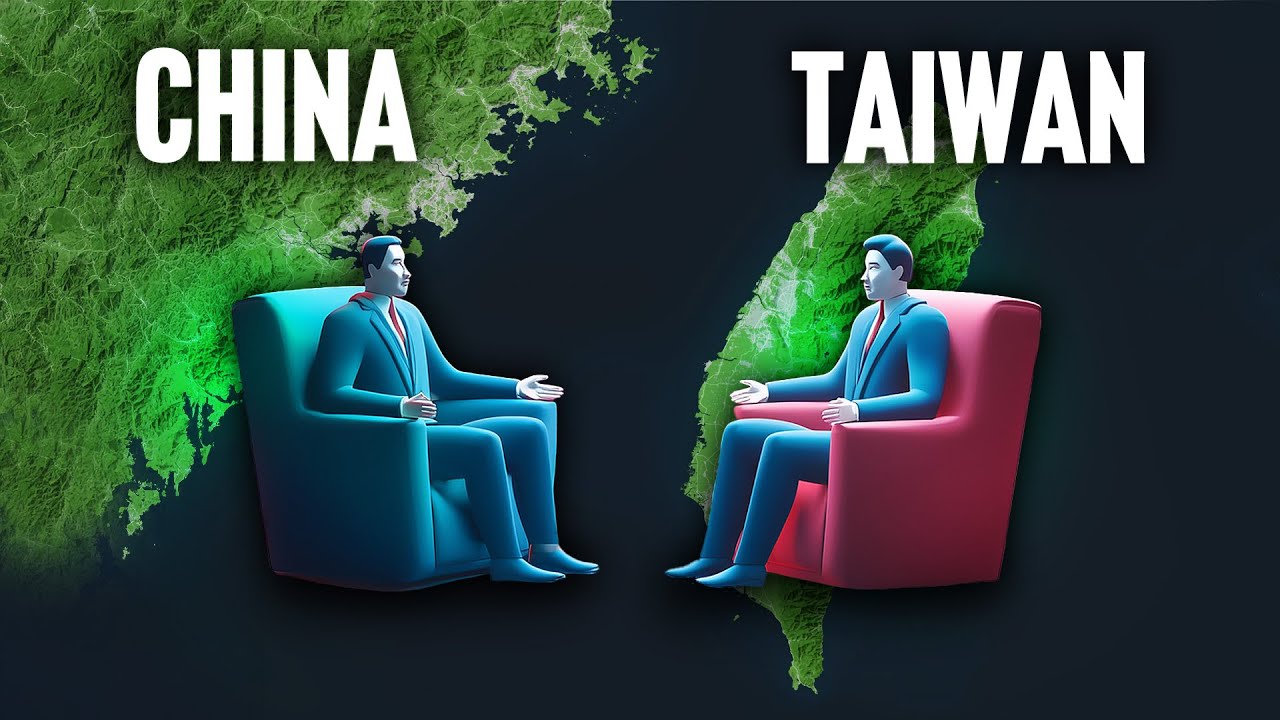
The video presents a simulated debate between two AI-generated scholars representing the Chinese and Taiwanese perspectives on the China-Taiwan conflict, judged by five AI models on argument quality. The Chinese side frames the conflict as an unfinished civil war, emphasizing historical unity, the lack of a peace treaty since 1949, and viewing Taiwan as a breakaway province artificially separated by foreign interference. They argue that Taiwan’s current push for independence is illegitimate, as it remains Chinese territory with shared ethnicity, language, and culture. The Taiwanese side counters by highlighting their continuous governance since 1945, democratic evolution, and distinct identity, asserting that the People’s Republic of China (PRC) has never governed Taiwan, making reunification claims legally and politically weak.
The debate delves into international law and legitimacy, with the Chinese side stressing the one-China principle recognized by most countries and the United Nations, arguing territorial integrity supersedes self-determination except in cases like decolonization. The Taiwanese side challenges this by pointing out that diplomatic recognition does not erase their sovereignty, comparing their situation to other divided states like East and West Germany, and emphasizing democratic consent and political culture as key to legitimacy. Both sides dispute analogies and historical comparisons, with Taiwan rejecting comparisons to breakaway regions and China dismissing Taiwan’s claims of independence based on prolonged separation and democratic governance.
Military and economic dimensions are central to the discussion. China asserts its military restraint and legal right to use force if peaceful reunification fails, framing Taiwan’s defensive measures and foreign arms purchases as escalations. Taiwan responds by condemning China’s military provocations and emphasizing its democratic resilience and strategic deterrence, including the “silicon shield” of its semiconductor industry. Economically, both acknowledge deep interdependence, but Taiwan stresses diversification and autonomy, while China warns that Taiwan’s strategic position makes permanent separation geopolitically untenable and economically risky.
The debate also explores international alliances and geopolitical realities. Taiwan highlights growing global democratic support and values-based partnerships, while China counters with skepticism about the willingness of other countries to risk economic and military confrontation over Taiwan. Both sides acknowledge limitations in formal military alliances but differ on the effectiveness of deterrence strategies and the long-term sustainability of the status quo. The Chinese side argues that time favors their growing military strength and eventual reunification, while Taiwan insists that democratic consolidation and popular will will prevent forced integration.
In conclusion, the judges favored the Taiwanese arguments overall, praising their coherent use of analogies, evidence, and emphasis on democratic legitimacy versus military coercion. The Chinese side’s reliance on force rhetoric and flawed comparisons, such as equating Taiwan’s democracy with terrorism, weakened their position. The Chinese perspective was noted for strong points on international diplomacy and economic interdependence but was critiqued for emotional appeals and overconfidence in military and geopolitical leverage. The video ends with reflections from the Chinese side acknowledging these weaknesses and suggesting a more balanced, legalistic approach focusing on autonomy and realistic political solutions might be more effective.